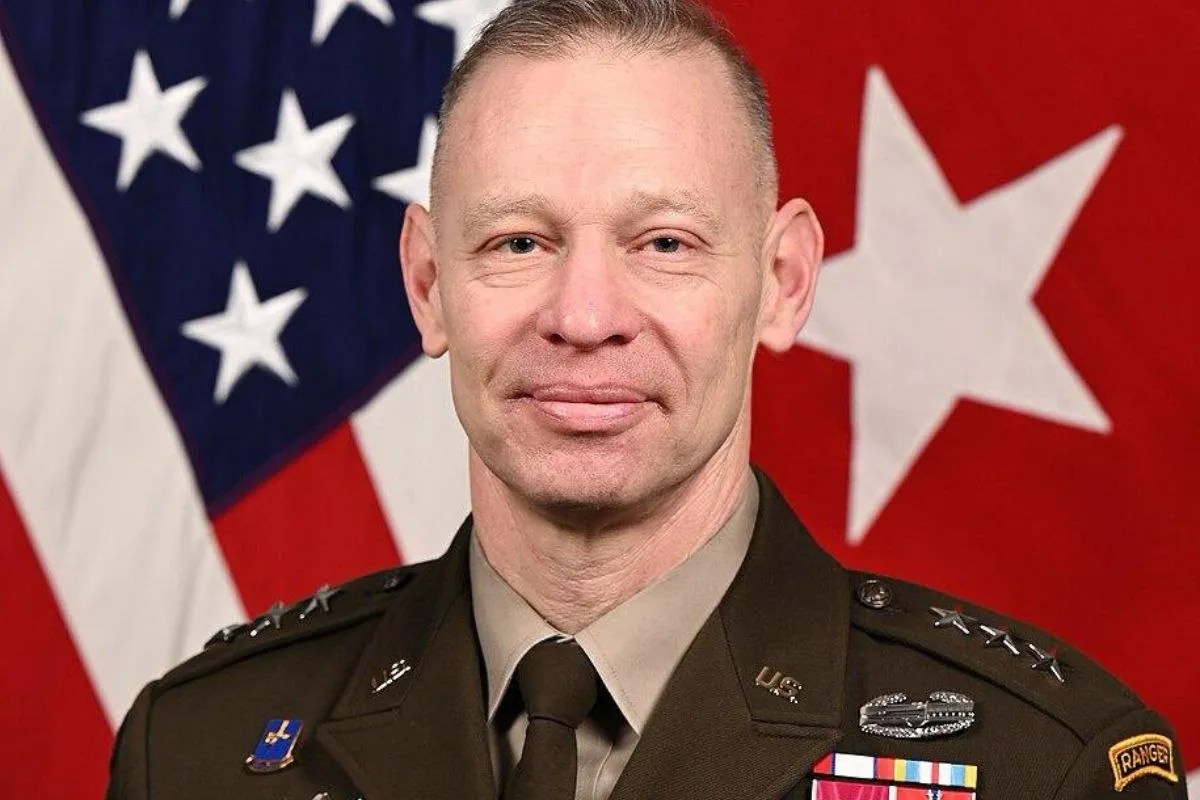
High-ranking military officers aren't supposed to get caught playing fast and loose with classified strategy. Yet, the recent firing and subsequent investigation of U.S. Army Lieutenant General Brett Sylvia proved that high security clearance offers zero immunity when institutional discipline breaks down.
When a top military planner responsible for sensitive strategy coordination gets ousted over classified disclosures, it sends shockwaves through the defense establishment. Sylvia's case isn't just another bureaucratic scandal. It exposes the fragile mechanics of how high-level defense secrets leak to reporters, the heavy reliance on modern encrypted communication trails, and the aggressive internal crackdowns led by Defense Secretary Pete Hegseth.
How the Investigation Unraveled
The downfall of a three-star general doesn't happen overnight. Investigators from the Air Force Office of Special Investigations (OSI) dug into communication patterns after suspicions arose regarding unauthorized disclosures about sensitive military planning involving Iran and the Russia-Ukraine conflict.
According to investigative findings, Sylvia met multiple times with a journalist who was actively working on a book project. Crucially, these sit-downs bypassed the Pentagon's public affairs office entirely. No official clearance was sought, and no administrative oversight was logged.
The pressure mounted quickly inside the Department of Defense. Officials report that Sylvia failed multiple polygraph tests administered during the probe. Investigators also scrutinized digital footprints, noting attempts to scrub communication trails through encrypted messaging apps like Signal. Deleting text logs or attempting to mask digital interactions as accidental mistakes didn't fool federal investigators tracking the data chain.
The Stakes Behind Iran and Ukraine Disclosures
Why did these specific leaks trigger such a severe reaction from the administration?
Sylvia served as the head of strategy, plans, and policy on the Pentagon's Joint Staff (the J5 position). This role sits at the absolute center of gravity for mapping out active and prospective military postures. While officials noted that central battle planning for certain Middle Eastern theatres fundamentally rests with regional commands like Centcom under Admiral Brad Cooper, Sylvia's strategic vantage point gave him deep access to sensitive state information.
Leaking operational details regarding ongoing tensions with Iran and the grinding war in Ukraine creates immediate friction for national security. When sensitive briefings find their way into manuscript drafts or media reports, it compromises diplomatic positioning and operational security.
Defense officials made it clear that state secrets belong to the institution, not the individual officer. Pentagon spokesperson Sean Parnell emphasized that leaking classified details for personal, professional, or political visibility is a direct betrayal of command trust.
A Wider Crackdown on Military Information Control
Sylvia's termination is part of a much broader, uncompromising purge within the upper echelons of the Pentagon. He is notably the second high-ranking officer removed from the critical J5 position under Hegseth's leadership, following the forced retirement of his predecessor, Lieutenant General Joseph McGee.
The administration's stance is blunt. President Donald Trump addressed the incident directly, signaling that the hunt for government leakers remains a top internal priority. Trust within the Joint Staff is built on absolute adherence to protocol. Once an officer fails polygraph screenings and admits on video to sharing unauthorized operational insights with the press, career survival becomes mathematically impossible.
The fallout from this investigation serves as an expensive reminder to military leadership. In an era where encrypted applications and book deals tempt insiders to trade institutional security for influence, internal digital forensics have become ruthlessly efficient.
Keep your communications transparent, follow institutional channels, and recognize that trying to erase a digital paper trail only guarantees a faster exit.