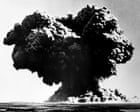
Seventy-four years after Britain detonated its first atomic bomb off Australia's Montebello Islands, Prime Minister Andy Burnham has finally ordered an independent inquiry into what happened to the men who were there and what was done with their medical records.
Announced on November 24, 2026, the panel will be chaired by Bishop James Jones—the same figure who led the independent panels into Hillsborough and Gosport. It's a non-statutory inquiry backed by the Office for the Prime Minister and Cabinet, with First Secretary of State Louise Haigh acting as sponsor minister. For roughly 22,000 service personnel, scientists, and civilians who took part in Britain's nuclear testing programme between 1952 and 1967, plus their families, this feels less like a breakthrough and more like a grueling marathon hitting its final stretch.
Honestly, it's hard not to feel angry reading the timeline. Young men on National Service were sent to remote Pacific and Australian sites—places like Christmas Island during Operation Grapple—with minimal protective gear, told to follow orders, and left wondering for decades why they or their children faced rare blood disorders, cancers, and unexplained illnesses.
Why the Nuclear Test Veterans Inquiry Matters Right Now
You don't launch an independent panel chaired by the Hillsborough chair unless the official story has cracked wide open. For years, veterans and campaigners asked straightforward questions about blood and urine samples taken during Cold War atomic and hydrogen bomb trials. Where did those samples go? Who analyzed them? Why couldn't ex-servicemen get straight answers about their own health histories?
In July 2026, the Ministry of Defence published a major records-discovery exercise covering blood and urine testing policies between 1952 and 1967. Ministers stated that the exercise found no evidence of intentional concealment of medical records. Yet skepticism hasn't budged an inch. Former veterans minister Tobias Ellwood went on record in September 2026 calling the wider handling of the scandal "an absolute cover-up" and raising alarm over whether Parliament had been properly briefed on medical records.
Put yourself in a veteran's shoes for a second. You're in your late eighties or nineties. You've watched mates die young. You've spent years fighting Whitehall paperwork just to see what tests were run on your blood after a detonation. A government internal-style review saying "nothing was hidden on purpose" doesn't settle the score when campaigners point to decades of stonewalling and incomplete disclosures.
That's why bringing in Bishop James Jones carries real weight. In both Hillsborough and Gosport, families fought entrenched institutional defensiveness before independent scrutiny forced painful truths into daylight. Burnham has also moved work on memorialisation, education, and research out of the MoD and into the Office for the Prime Minister and Cabinet, signaling an attempt to strip the defence establishment of sole control over the narrative.
What the July 2026 Records Exercise Left Unanswered
Looking closely at the GOV.UK records exercise on blood and urine testing, the document lays out how testing policies shifted across the Navy, Army, Air Force, and Atomic Weapons Establishment between 1952 and 1967. It also notes ongoing work examining Technical Cooperation Programme records for material involving British service personnel.
Here's the catch, though. Paper trails in archives don't automatically answer human questions. A policy memo can tell historians what rules existed on paper in 1957. It doesn't always tell a sick veteran why his file was missing or incomplete when he needed it decades later. Even when officials say no deliberate cover-up was found, veterans and journalists who spent years digging into these files see gaps that demand independent testing.
The Limits of a Non-Statutory Panel
Let's be real about how inquiries work in Britain. Because this panel is non-statutory—like the Hillsborough and Gosport independent panels—it doesn't automatically carry the same statutory compulsion powers as a full public inquiry under the Inquiries Act.
That distinction isn't technical hair-splitting. It's the single biggest test Bishop Jones's panel will face once its terms of reference are set. Campaigners and legal observers have already flagged a tough reality: uncovering the full truth may require pressing past national security exemptions, navigating legal privilege, and hearing from former officials or outside experts who are long retired or never held government posts.
There's also the clock. Most of the men who stood on beaches, ships, or airfields during the 1950s and 1960s are elderly. Every year an inquiry drags on, firsthand testimony disappears forever. Burnham has said the panel will be relentless in pursuing the facts and that veterans have waited too long. Good. Now the terms of reference need teeth, clear timelines, and zero wiggle room on document production.
Compensation Remains the Unfinished Fight
Truth matters deeply, especially for families trying to make sense of generational grief and medical mysteries. Still, truth without practical support leaves a bitter taste.
Right now, Britain still doesn't have a dedicated compensation scheme specifically built for nuclear test veterans. Veterans who believe illness or injury stemmed from their service can pursue claims through the War Pension Scheme if they served before April 6, 2005, while organizations like Help for Heroes have pressed for a bespoke compensation scheme.
From a policy standpoint, ministers often separate historical truth-finding from financial payouts. Veterans, understandably, see them as two halves of the same coin. You can't separate a moral duty to face the past from the material reality of caring for aging ex-service members and supporting affected families.
Common Myths Around British Nuclear Tests
Whenever atomic testing hits the headlines, myths spread fast—and bad history hurts everyone's case.
- Myth: Every single health problem among veterans is automatically proven in court to come from radiation. Medical science on low-dose or mixed radiation exposure decades later is complex, and proving direct causation in individual cases has historically been difficult. That doesn't mean the concerns aren't real or worthy of thorough investigation; it means rigor matters.
- Myth: Nothing was ever recorded or studied at the time. That's not true. The MoD's 2026 discovery exercise itself shows blood and urine testing policies existed and evolved over the testing era, even if veterans argue key records or explanations fell short.
- Myth: Only frontline troops near blast zones were involved. Around 22,000 personnel—including sailors, airmen, soldiers, scientists, and civilians—took part across multiple operations and locations between 1952 and 1967.
What makes this moment genuinely consequential is that the government isn't just talking about past science anymore. It's talking about institutional candour—a theme tied directly to the wider push around the Hillsborough Law and public accountability. If public bodies can hide behind secrecy or bureaucracy for generations, trust in the state erodes far beyond the veteran community.
Practical Next Steps for Veterans, Families, and Researchers
If you're a nuclear test veteran, a descendant trying to piece together family history, or someone following how Britain handles legacy state scandals, don't sit back waiting for headlines to trickle out. Take concrete steps now:
- Gather every scrap of service and medical history you already hold. Pull together service numbers, posting dates, locations (such as Christmas Island or Australian test sites), discharge papers, and civilian GP or hospital records. Having dates and units straight saves months later.
- Read the primary government releases directly. Check the GOV.UK announcement on the Independent Panel and the July 2026 blood and urine testing discovery reports so you know what officials claim they found—and where gaps remain.
- Watch for the panel's terms of reference and submission channels. Once the terms of reference are published, pay close attention to how Bishop Jones's team invites evidence, testimonies, or records from veterans and families.
- Connect with established veteran support and campaigning groups. Organizations supporting nuclear test veterans and broader military charities like Help for Heroes track policy shifts, pension rules, and inquiry updates closely.
- Document family health timelines carefully. Keep clear, factual notes on diagnoses, dates, and medical correspondence rather than relying on memory alone—especially if you plan to engage with researchers, legal advisors, or the panel once processes open.