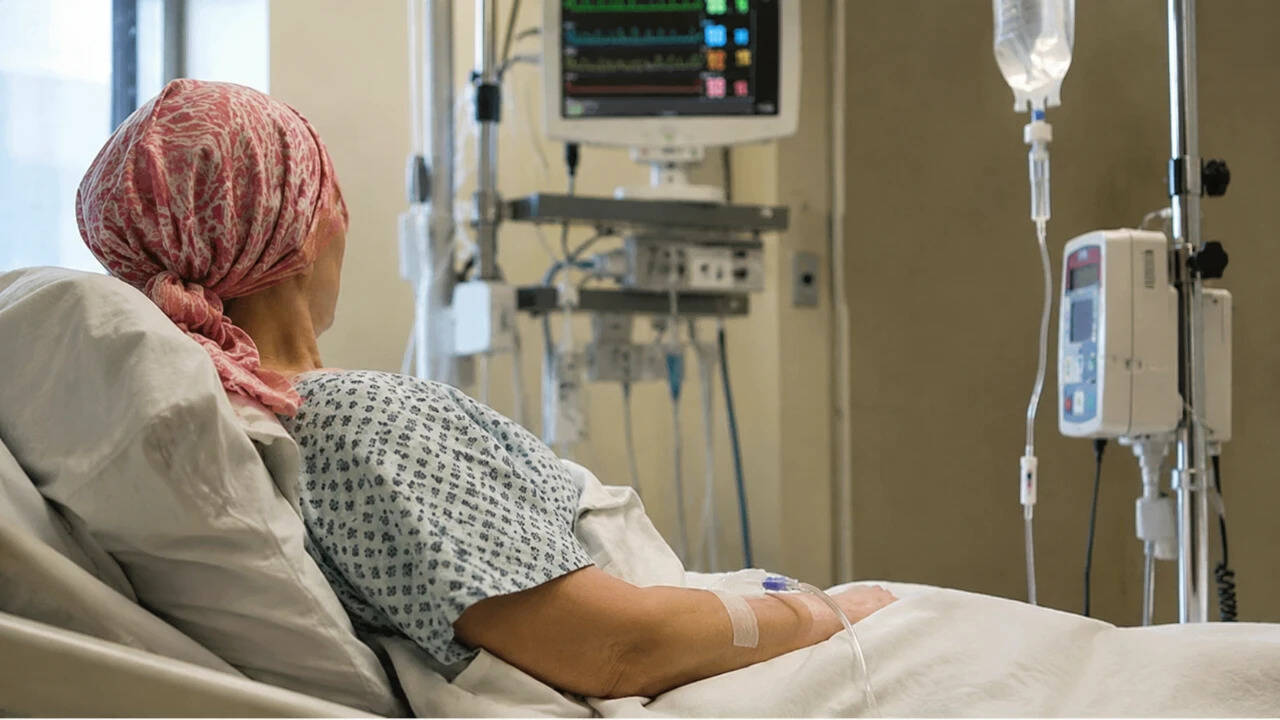
When a humanitarian worker contracts a deadly virus abroad and gets flown back to British soil, panic usually follows. Headlines scream about imported outbreaks, social media fills with bad epidemiological hot takes, and everyone suddenly fancies themselves an infectious disease expert. Let us clear the air right now. A British healthcare worker diagnosed with Ebola in the Democratic Republic of the Congo is being medically evacuated to the UK for high-containment treatment, but your daily routine does not need to change by even one percent.
The logistics behind moving a patient infected with a high-consequence pathogen are precise, highly rehearsed, and tightly controlled. According to official government documents reviewed by international media, the patient remains in a stable condition and will land on British soil via a specialized transport unit before heading straight to an isolated high-consequence infectious disease facility. This isn't a random commercial flight or an improvised trip. It's a military-grade medical operation designed from decades of protocol to keep the pathogen locked down from the second it touches tarmac.
Understanding the True Contagion Reality
People hear Ebola and immediately picture airborne Hollywood contagion scenes. That is completely wrong. Ebola is not airborne, it does not spread through casual contact, and you cannot catch it by walking past someone on the street or sitting next to them on public transit. Transmission requires direct contact with broken skin or mucous membranes coming into contact with the blood, secretions, organs, or other bodily fluids of infected people, or surfaces contaminated with those fluids.
Because of this specific transmission mechanic, medical workers are always the ones at the highest risk when they deploy to outbreak zones. They are working hands-on in grueling conditions, managing complex clinical care, and dealing with massive viral loads. When an infection happens, it is an occupational hazard of humanitarian service, not an indicator of a ticking time bomb waiting to explode in a London tube station.
The UK Health Infrastructure Is Built for This
Britain is not winging this. The UK Health Security Agency and the National Health Service maintain rigorous containment protocols precisely because imported cases, while rare, do happen. Since 1976, only four confirmed cases have ever been recorded on British soil. Each time, the system has isolated the vector immediately, treated the patient under intense biological containment, and prevented any secondary transmission to the general public.
Look at what other European nations did recently. Switzerland and France managed similar medical evacuations for humanitarian doctors returning from African outbreak zones without triggering domestic flare-ups. France handled cases from DR Congo missions, and Switzerland airlifted patients from Nigeria. These systems work because modern containment units use negative-pressure isolators, specialized personal protective gear, and dedicated waste management systems that render the virus contained at every single step.
The Scale of the Crisis in DR Congo
While the risk to the British public stays near absolute zero, the situation on the ground in Central Africa tells a starkly different story. The ongoing epidemic in the Democratic Republic of the Congo stands as the second-largest on record, piling up more than 10,000 confirmed cases and nearly 5,000 deaths. Local healthcare infrastructure faces staggering pressure, and the brave individuals volunteering through international humanitarian organizations are putting themselves in direct line of fire to contain a virus that thrives on overwhelmed local systems.
When we focus solely on the single patient flying into a Western hospital, we miss the broader humanitarian reality. Hundreds of local health workers and international volunteers keep the lines holding against a brutal viral surge. Supporting those efforts with funding, protective supplies, and logistical backing does far more good than panicking over a secure medical evacuation.
What You Should Actually Focus On
Stop worrying about imported tropical fevers if you live in London, Manchester, or Edinburgh. Your actual health risks involve things you deal with every single day—cardiovascular health, routine seasonal respiratory bugs, and lifestyle factors you can actually control. The British healthcare worker coming home gets the absolute best isolation care science can buy, and the general public faces zero measurable threat.
If you want to understand infectious disease management, look at the discipline and precision of the medical transport teams executing these evacuations. They prove that modern medicine can handle dangerous pathogens safely when protocol overrides panic.