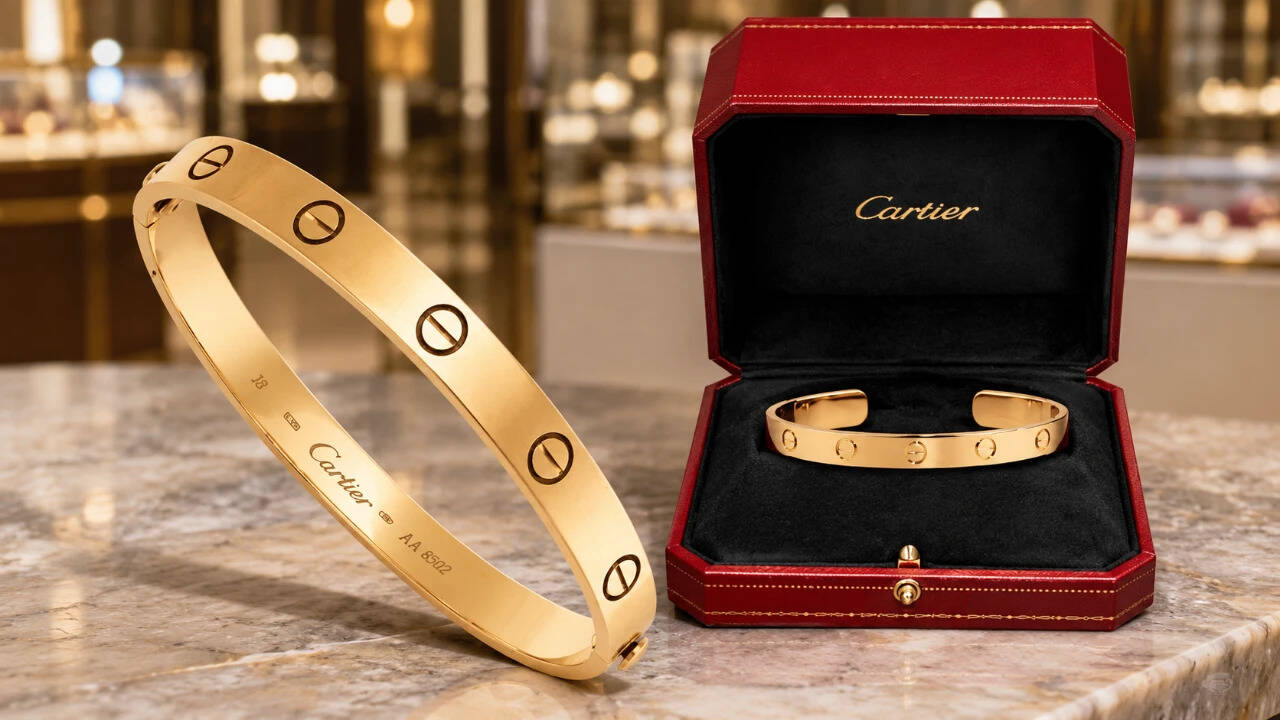
Luxury retailers love telling buyers that a single scratch voids a refund. A London judge just proved how fast that argument falls apart when a store can't back up its claim.
In the dispute reported by The Times of India, Georgia Romain bought an 18-carat gold Cartier bracelet online for £4,550 as a birthday treat after years of saving. When it turned out to be too small for her wrist, she sent it back in July 2025 expecting her money back. Harrods refused, pointing to pre-inspection video footage that allegedly showed scratches and defects on the soft gold surface, and warned that the piece would go to lost property after 30 days if unclaimed. Romain pushed back, noticed the footage didn't show a serial number or match what she remembered of the bracelet's thickness, and took Harrods to London's Mayor's and City County Court without a lawyer. Deputy District Judge Elaine Vignoli ordered Harrods to pay £5,131 in total, covering the £4,550 price tag plus interest and court fees.
Here is the part that hits home for anyone shopping high-end goods online. You don't have to eat a four-figure loss just because a store's return department waves a blurry clip or an internal policy in your face.
Why luxury return rejections catch shoppers off guard
Buying fine jewellery or designer goods online feels risky before you even click checkout. You can't feel the weight on your wrist, check the clasp tension, or see how a rigid cuff sits against your skin in natural light. Sizing mistakes happen all the time, especially with iconic pieces like a Cartier Love bracelet where fit and proportions matter.
When you return an item in that situation, you assume a reputable department store has tight chain-of-custody habits. You figure if they claim damage, they'll have clear, indisputable proof tied directly to your order.
Honestly, that assumption is where buyers get tripped up. High-volume luxury warehouses and return hubs juggle hundreds of parcels, unboxing stations, and security checks. If a store records a quick inspection video without clearly capturing the engraving or serial number alongside the alleged mark, you're left wondering if you're even looking at the same bracelet. That exact doubt is what Romain raised in her emails to Harrods, and according to the court proceedings, Harrods didn't answer her serial-number question directly before rejecting the return and telling her the bracelet was legally hers.
What UK distance selling rules actually mean in practice
If you're shopping online in the UK, statutory rules exist specifically because you can't inspect goods in person before buying. Official guidance on online and distance selling and Parliament's research briefing on distance selling of consumer goods outline how cancellation and refund rights work when you buy remotely rather than walking out of a shop.
Under UK distance selling rules, shoppers generally get a 14-day cooling-off period to cancel an online order without needing to give a reason, followed by a window to send the goods back. Businesses also have clear obligations to give pre-contract information, including details on cancellation rights and return costs.
Where things get messy in real life is handling and diminished value. You're allowed to inspect goods the way you reasonably could in a store to check things like fit or basic appearance, not wear them out to dinner for two weeks and call it a "try-on." Retailers often push back hard when soft metals like 18-carat gold pick up micro-scuffs, arguing the item can't be resold as new.
Still, a policy line isn't the same thing as court proof. As Judge Vignoli found on the balance of probabilities, Harrods hadn't proven the scratches were there when the bracelet arrived back with them, nor did the court accept the claim that minor scuffs had made an 18-carat gold piece worthless—with the judge remarking that if it were genuinely worthless, she'd happily take it home herself.
Why "no scratches allowed" gets tricky with gold
Soft gold is a magnet for fine marks. Even sliding a rigid bangle over a knuckle or resting it against a hard surface can leave faint hairline signs if you aren't careful.
That doesn't give a retailer a free pass to invent damage or skip basic verification. If a store claims a customer ruined an expensive item, the burden of proof matters. Without clear evidence connecting the alleged flaw to the exact serial number and the moment of return, a blanket refusal looks a lot weaker in front of a judge than it does in a customer-service email.
Winning a dispute without burning out
Going up against a household name like Harrods sounds intimidating, especially without a solicitor. Romain represented herself in county court and walked away with the full £4,550 purchase price plus interest and court fees, bringing the payout to £5,131, though she said afterward that she's never buying from Harrods again and is going back to saving rather than making another big splurge.
From years of watching consumer disputes play out, two things separate people who recover their money from people who give up: paper trails and calm persistence. Customer service teams often rely on standard scripts at first. A polite, specific question asking for verifiable proof—like serial-number visibility, date-stamped inspection records, or clear photos of the claimed defect—forces them to show their hand.
There's also a real trade-off to be honest about. Small claims and county court take time, patience, and emotional energy. Even when you're in the right, waiting months for a hearing isn't fun, and there's never a guarantee in any legal case. For a £4,550 bracelet, fighting makes complete sense; for a £45 top, your time might be worth more than the refund.
Practical steps before and after a luxury return
If you're ordering high-value jewellery or luxury items online, a few simple habits can save you massive headaches if the fit is wrong:
- Film your unboxing and repacking. Record a continuous, unedited video showing the sealed parcel, opening the box, checking the item's condition and serial number or hallmarks, trying it gently for fit, and placing it back into the packaging.
- Keep every piece of packaging and paperwork. Hold onto the original boxes, pouches, authenticity cards, serial records, and return forms until the refund actually clears your bank.
- Ask specific, written questions if a return is rejected. Don't just argue feelings—ask in writing for clear evidence linking any claimed damage to your specific item and serial number.
- Check your payment method's protection options. Know your bank or card issuer's dispute and chargeback timelines before deadlines slip past you.
- Decide early whether to escalate. Weigh the cost of the item against the time needed for formal complaints or a county court claim, and keep every receipt and email organized from day one.