Buyout rentbacks sound strange at first. You sell your oceanfront or bluffside home to a public agency or land trust, take the payout, and then keep living there as a tenant until rising water or cliff erosion makes the place unlivable.
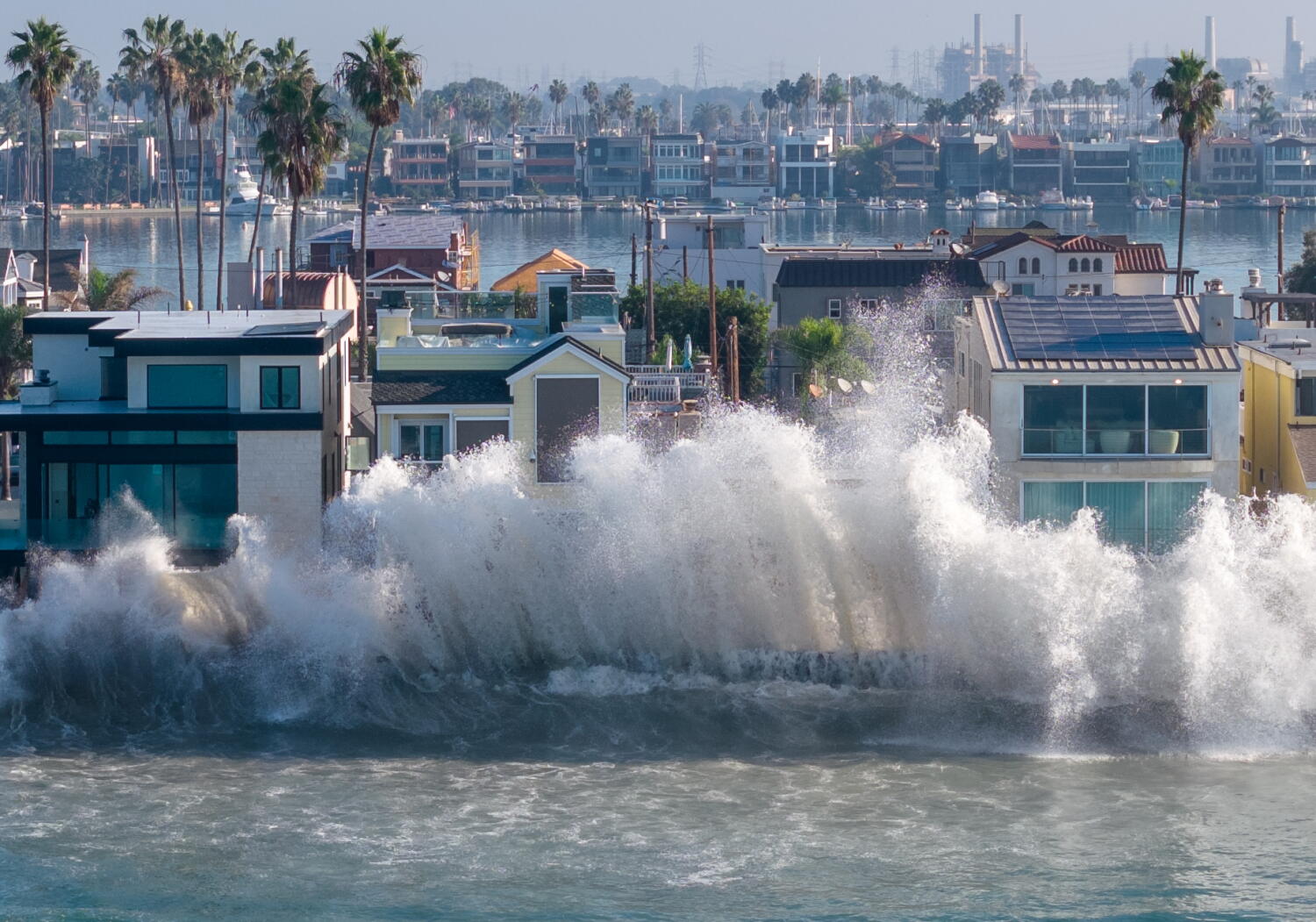
Yet right now, with an El Niño pushing warm water toward the Pacific coast, stacking on autumn king tides, and slamming beaches with winter storm energy, that awkward middle ground looks smarter than waiting for a disaster to force everyone's hand. California's Ocean Protection Council has flagged temporary sea-level bumps of 6 to 12 inches in some areas alongside high odds of a strong El Niño through early 2027, and Governor Gavin Newsom declared a preemptive state of emergency in September 2026 to prepare coastal communities and highways. Researchers from USC, UCLA, and partner agencies have even noted that this winter's overlapping high tides, storms, and elevated ocean levels could offer a preview of how parts of California's shoreline behave with one to two feet of permanent sea-level rise.
Honestly, traditional coastal policy has trapped people in two bad choices. Either you hang on, pour money into seawalls and sand replenishment, and hope the bluff holds one more winter, or you get pushed out only after storm surge wrecks your house. Buyout rentbacks—often called leasebacks—try to separate the money tied up in your property equity from the exact day you pack boxes and leave.
How Buyout Rentbacks Actually Work on the Coast
At its core, a buyout with a rentback splits ownership from occupancy. Instead of forcing a family to sell and move out immediately, a participating government agency, conservation group, or housing entity buys the threatened parcel at an agreed price and leases it back to the seller—or sometimes another renter—for a defined period or until clear physical triggers are met.
Think about what changes when that happens. The homeowner gets liquidity while property values still reflect coastal desirability rather than post-storm ruins. At the same time, the public entity gains control over the land and can stop throwing good money after bad on shoreline armoring meant to prop up private structures that won't last forever.
Coastal researchers studying these policies—including Andrew G. Keeler, Megan Mullin, Dylan E. McNamara, and Martin D. Smith in their Journal of Environmental Studies and Sciences work on buyouts with rentbacks—point out why timing matters so much. When homeowners own threatened property outright, they have strong financial and political reasons to demand seawalls, riprap, or beach nourishment to protect their asset. Once a public agency owns the parcel and sets clear limits on how long it can be occupied, the incentives shift toward an orderly exit instead of a chaotic scramble after a cliff collapses.
The Georgetown Climate Center's Managed Retreat Toolkit also highlights practical upside beyond a single household. Leasebacks can help public agencies assemble larger contiguous tracts of land rather than ending up with a checkerboard of bought-out lots mixed with stubborn holdouts. They can also give families breathing room to plan school moves, job shifts, and housing searches on their own schedule instead of under emergency pressure.
Why El Niño Makes This Conversation Urgent Again
Every big El Niño acts like a stress test for California's shoreline. Warm water pushed eastward via Kelvin waves can temporarily elevate coastal water levels, while a shifted winter storm track sends repeated swells into Central and Southern California. When successive storms strip sand away faster than beaches can rebuild—and collide with high astronomical tides or king tides—water reaches bluffs, roads, piers, and homes that normally stay dry.
In Sausalito and around Mission Bay, recent high-water events have already shown what happens when seasonal tides, warm ocean pulses, and coastal exposure overlap—look at the flooded path in the photo above. Along bluff towns like Pacifica, erosion has long been a visible warning of how fast sand and weak coastal rock can give way under wave attack.
What makes El Niño tricky for homeowners is psychological as much as physical. A bad winter scares people, then a calmer stretch lures them back into thinking everything will be fine. That stop-start cycle is expensive. Emergency repairs, repeated sand hauling, and patchwork armoring often buy time without solving the underlying math of rising baseline seas.
What People Get Wrong About Managed Retreat
Whenever coastal retreat comes up, myths spread fast. Let's clear up the biggest ones before judging the idea.
Myth 1: Managed retreat means the government seizes homes overnight. Voluntary buyouts and rentback agreements are built around negotiated sales and clear terms, not instant confiscation. The real friction isn't sudden seizure; it's getting local governments, funders, and homeowners to agree on price, timelines, and rules before a crisis hits.
Myth 2: Buyouts automatically bankrupt taxpayers. They can certainly cost a lot upfront, especially along high-value California real estate. Still, researchers note that buyouts can offset future disaster recovery bills, repeated public infrastructure repairs, and ongoing defensive spending—while rental income from a leaseback can help cover part of the carrying cost and offset lost property tax revenue for a time.
Myth 3: A rentback lets you stay forever. No. If a leaseback had no sunset date or physical trigger, it would just delay the problem while leaving the state or nonprofit holding a deteriorating coastal asset. To work, the exit trigger has to be real, transparent, and enforced.
The Hard Questions Nobody Can Brush Aside
I like the logic behind buyout rentbacks, and I think it deserves serious testing in California. That doesn't mean it's a magic cure-all. Far from it.
First, there's the equity and fairness question. Should public dollars go toward buying out multimillion-dollar oceanfront homes when California faces massive housing affordability pressures and flood or wildfire risks in lower-income communities too? Critics rightly ask who gets prioritized, how fair market value is calculated once climate risk starts showing up in home prices or insurance availability, and whether public funds stretch further elsewhere.
Second, being a coastal landlord is messy. As the Georgetown Climate Center notes, leasebacks aren't a fit for every homeowner or every property. If a home is already inches from a crumbling cliff, renting it out—even short-term—raises safety, liability, and habitability headaches. Who pays for roof leaks, storm damage, or bluff stabilization during the rental window? If maintenance stops completely, livability drops; if the agency spends heavily to maintain a doomed house, the financial case weakens.
Third, politics along the coast gets fierce. Local officials worry about shrinking tax bases, losing beach access or coastal character, and angering residents. Environmental advocates, meanwhile, watch closely to make sure emergency declarations or coastal projects don't quietly weaken protections under the California Coastal Act or lock in new hard armoring that harms neighboring beaches.
Data and real-world track records are still growing, too. While leasebacks and buyouts have been studied and tried in places like Mecklenburg County, North Carolina, scaling a rentback model across diverse California bluffs, lagoons, and harbors is an open policy challenge rather than a settled formula.
Practical Next Steps for Homeowners and Local Leaders
If you own property near a bluff, beach, bay, or low-lying coastal road in California, don't wait for a winter storm to force a rushed decision.
- Check local hazard maps and coastal plans: Look up your city or county's sea-level rise vulnerability assessments, bluff setback rules, and Local Coastal Program updates so you know how planners view your parcel over the next 10 to 30 years.
- Audit your insurance and financing exposure: Review flood and property coverage early, ask what happens after partial storm damage, and factor rising insurance or repair costs into any plans to sell, remodel, or hold long term.
- Track state and regional resilience programs: Follow guidance from the California Ocean Protection Council, the California Coastal Commission, and local council meetings where managed retreat, buyouts, or pilot adaptation grants are debated.
- Push for clear triggers, not vague promises: If your community ever explores a buyout rentback pilot, insist on plain rules upfront—how prices are set, who handles maintenance, what happens in a severe El Niño storm, and when the lease ends.
For city leaders and planners, the lesson of this winter is simple: waiting until waves chew away the backyard turns retreat into a panic. Testing flexible buyout options while options still exist gives families and towns a fighting chance to move on their own terms.