The race to succeed Governor Gavin Newsom just stopped being a polite, abstract debate about California's future and turned into a heavy-hitting ideological street fight.
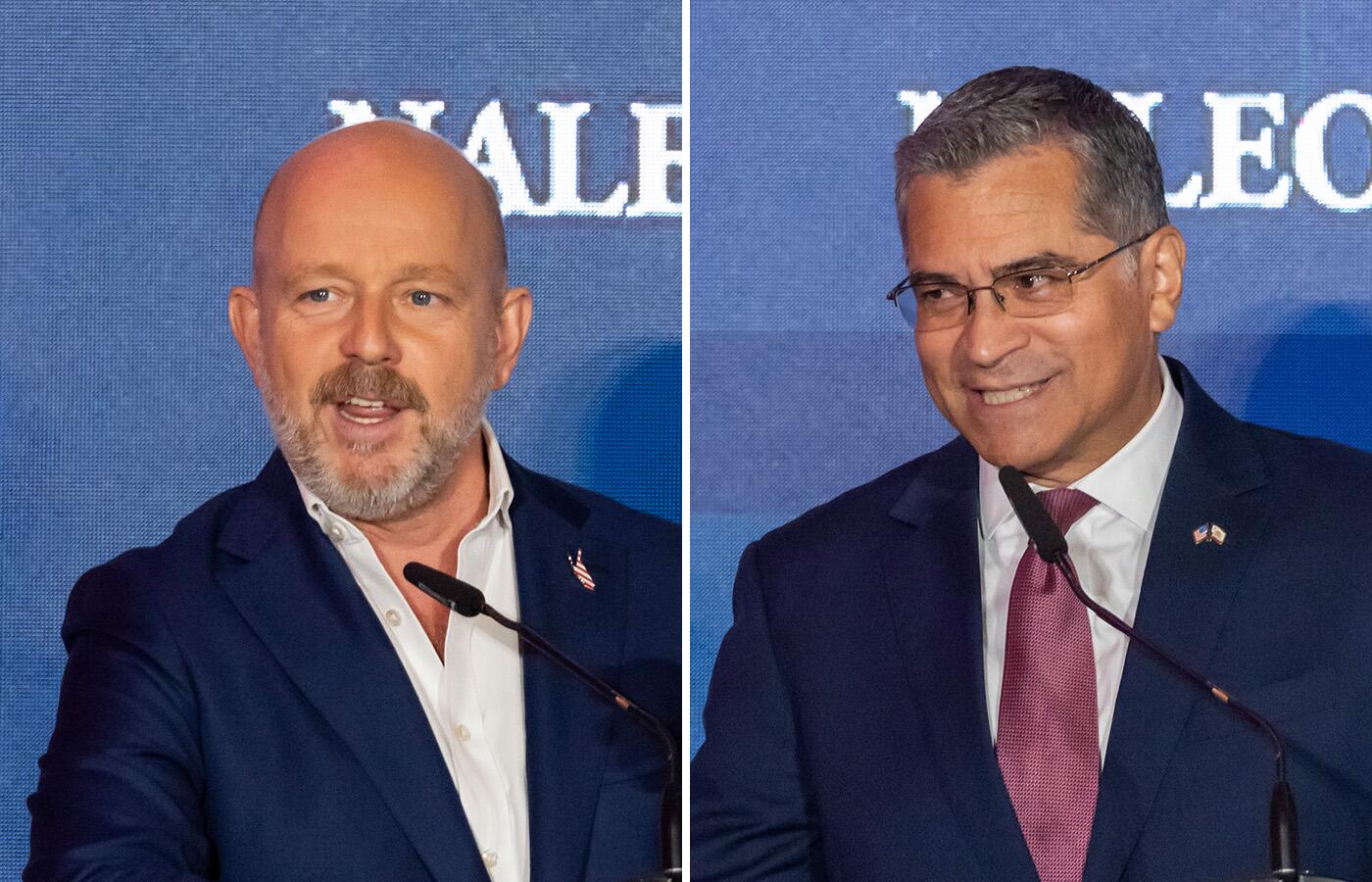
At the National Association of Latino Elected and Appointed Officials (NALEO) conference in downtown Los Angeles, Democratic former Health and Human Services Secretary Xavier Becerra and Republican populist commentator Steve Hilton laid out two radically different paths for the Golden State. If you thought this election would be a quiet coronation for the state's dominant political party, these dueling speeches just proved how volatile the road to November is going to be.
This isn't just about party labels. It is a direct clash over what California actually represents. Is it a proud sanctuary and a model of progressive social safety nets, or is it a cautionary tale of over-regulated, unaffordable one-party rule?
The Battle lines Drawn in Downtown Los Angeles
The NALEO stage served as a perfect backdrop for this clash. The Latino electorate is the largest demographic voting bloc in California, making up a massive share of the state's workforce and community power. Both candidates knew the stakes.
Becerra took the stage with the home-field advantage of a veteran California politician who has held virtually every major office, from state assemblyman to member of Congress, state attorney general, and federal cabinet secretary. He framed his campaign around a classic, personal narrative: the son of Mexican immigrants who rose through the ranks to represent the working class.
"Here's what we are fighting for: a California where every child gets a great education, every family can afford a home, and no one loses their health care because of where they were born or how much money they have."
— Xavier Becerra
He didn't just lean on his resume. He actively defended the state's expansive healthcare policies, including the controversial and expensive choice to provide taxpayer-funded Medi-Cal coverage to low-income undocumented immigrants. To Becerra, denying people primary care is both inhumane and fiscally foolish, as it ultimately forces taxpayers to foot the much higher bill for emergency room visits.
Hilton's Counter-Attack on Sacramento Mismanagement
Steve Hilton didn't back down. The British-born former Fox News host and advisor to David Cameron went straight for the jugular. Rather than playing defense in front of a largely Latino audience, Hilton focused entirely on affordability, pitching a business-friendly, populist vision.
He attacked the "Sacramento political class" and labeled Becerra as the ultimate embodiment of a stale, sixteen-year era of single-party control. His message was simple: California is broken, and more of the same won't fix it.
He targeted the state's healthcare expansion directly, promising to strip state-funded healthcare coverage from undocumented immigrants as part of a broader effort to slash state spending and rein in a ballooning budget deficit. Hilton argued that working-class taxpayers are being crushed by high gas taxes, soaring utility bills, and an impossible cost of living, while Sacramento prioritizes expensive social programs over basic economic relief.
What the Latest Polls Actually Tell Us
If you look purely at the topline numbers, you might think the race is already over. The latest Public Policy Institute of California (PPIC) poll shows Becerra holding a comfortable lead, pulling 61% of likely voters compared to Hilton's 36%.
But don't let those numbers fool you into thinking the electorate is entirely happy with the status quo. The very same poll revealed deep anxieties running through the California electorate:
- Pessimism is soaring: A record-high 80% of California adults believe the nation is heading in the wrong direction.
- The budget is a major worry: With the state facing persistent deficits, 89% of Californians say the imbalance between government revenues and spending is a serious problem.
- Cost of living is painful: A solid majority of residents report experiencing real financial hardship due to inflation, gas prices, and housing costs.
Hilton is betting that this underlying economic pain will cross traditional party lines. He's running on a bold proposal to eliminate the state income tax on the first $100,000 of earnings and replace the rest with a flat tax. It is a high-stakes gamble in a state where registered Democrats outnumber Republicans by nearly two to one, but in an era of deep economic frustration, simple pocketbook messages carry a lot of weight.
The Hidden Issues Shaping the Debate
While the candidates traded shots over taxes and immigration, the underlying policy fights in California are becoming highly unconventional.
Take the sudden, overwhelming voter backlash against artificial intelligence data centers. The PPIC poll showed that Californians across all political spectrums strongly oppose building new AI data centers in their neighborhoods. Voters are increasingly worried about the massive strain these facilities place on the state's fragile electrical grid, especially as energy costs continue to climb.
At the same time, there is a growing disconnect on environmental policy. While most Californians tell pollsters they support ambitious climate goals, they are fiercely pushing back against the concrete sacrifices required to get there. Many oppose the state's planned ban on new gas-powered cars and express anger over high electricity rates driven by the transition to renewable energy.
This leaves both candidates walking a tightrope. Becerra has to defend the state's aggressive green transition while acknowledging that middle-class families are struggling to pay their utility bills. Hilton, meanwhile, is championing fossil fuels and tax cuts, a message that plays incredibly well in the Central Valley but faces steep resistance in the coastal metropolitan areas.
Why This Race is Anything But Predictable
We have seen this movie before in California politics. A conservative candidate promises a tax revolt, only to get washed away by the state's deep-blue voter registration reality. But 2026 is different.
First, the transition away from Gavin Newsom represents a major reset. Newsom's national ambitions often made him a lightning rod for criticism, and voters are feeling a distinct sense of fatigue.
Second, Becerra's primary campaign was surprisingly sluggish at first. He struggled to gain early traction in a crowded Democratic field before consolidating his support in the final weeks leading up to the June primary. His victory was less of an enthusiastic progressive wave and more of a pragmatic consolidation of traditional Democratic factions.
Hilton is trying to build an unlikely coalition of rural conservatives, working-class moderate Democrats, and independent voters who are simply tired of struggling to pay rent. Whether he can overcome his ties to national Republican figures in a state that remains deeply hostile to the GOP brand is the defining question of his campaign.
Actionable Next Steps for California Voters
The fight for California's future isn't just happening on debate stages; it is landing directly on your ballot. Here is how you can cut through the campaign spin and prepare for November:
- Monitor the Budget Debates: Keep a close eye on the state's revenue forecasts. The viability of both Becerra's social programs and Hilton's tax-cut proposals depends entirely on how deep the state's fiscal deficit actually runs.
- Review the Ballot Initiatives: The November election will feature critical ballot measures on environmental regulations, housing reforms, and tax policies. Often, these propositions have a far more immediate impact on your daily life than who sits in the governor's office.
- Look Past the Talking Points on Cost of Living: When candidates promise to make California "affordable," look for the fine print. Ask yourself how their proposed changes to utility rates, gas taxes, and housing laws will actually impact your household budget.