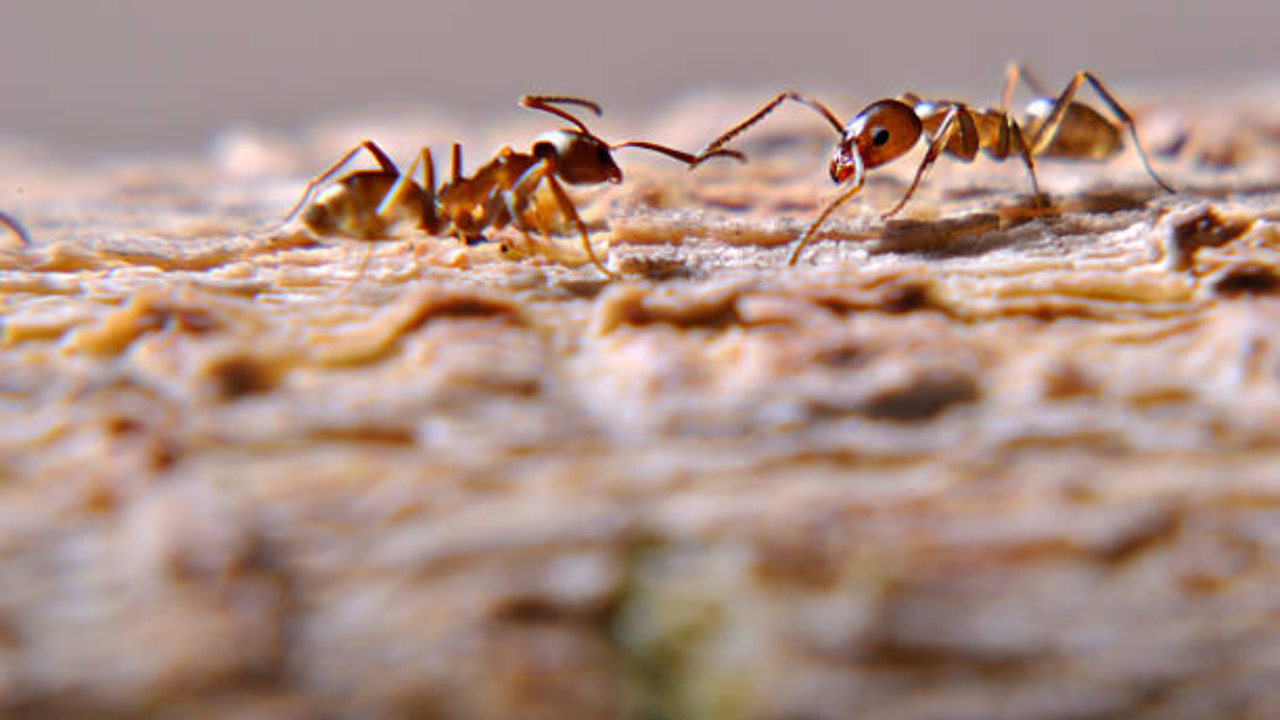
You probably don't think about insect geopolitics while walking down a suburban sidewalk in Southern California. Beneath your sneakers, however, millions of invasive Argentine ants are locked in a brutal, multi-front trench war. Five distinct supercolonies are actively grinding each other down in a conflict that has already claimed fifteen million worker ant lives in a single localized skirmish near Lake Hodges. It sounds like science fiction, but it is real, well-documented entomology.
The sheer scale of this biological carnage mirrors human history's most grueling stalemates. Researchers studying these territorial disputes note that the front lines barely shift by even a few meters over months of continuous combat. Understanding how these massive colonies formed in the first place requires looking back at how cargo ships accidentally distributed a single native South American species across the globe more than a century ago.
How a Global Species Split Into Bitter Rivals
The Argentine ant (Linepithema humile) is uniquely wired. In its native South American habitats, natural genetic diversity ensures that colonies recognize strangers, fight over resources, and maintain clear territorial boundaries. When these insects hitched rides in trans-Atlantic cargo during the 1000s and 1800s, only a fraction of the total genetic pool made it overseas to places like Europe, Japan, and the United States.
Because the imported populations shared nearly identical chemical signatures—their specific scent profile used for nest-mate recognition—they didn't view each other as enemies. Instead of fighting, separate nests merged. They formed a massive, cooperative supercolony that spanned entire continents.
Yet, evolution didn't stop there. As different branches of these introduced ants spread across Southern California over subsequent decades, isolated pockets drifted genetically. Separate groups developed distinct regional variations in their cuticular hydrocarbons. When these expanding empires finally collided decades later, they no longer recognized each other as kin. They smelled like foreigners. That realization triggered an eternal turf war.
The Western Front of the Insect World
Ecologists studying these California battlegrounds often compare the conflict to World War I. UC San Diego researchers mapping the territories discovered a massive dominant supercolony controlling a thousand-kilometer coastal radius. This goliath is constantly pressed on all sides by four smaller, town-sized enclaves.
When researchers visited field sites, combat was visible in roughly forty percent of observations. The borders were razor-sharp, separated by mere meters of dirt and pavement. Squads of worker ants clashed continuously, dragging enemy corpses back to nests and sacrificing millions of lives without gaining strategic ground.
During a six-month observation window near north San Diego, scientists calculated that approximately fifteen million worker ants perished around a single secondary colony's perimeter. Entire generations march out of the nest and die on dusty battlelines, only for the front line to remain stubbornly locked in place the following week.
Why There Is No Peaceful Resolution
Most territorial animals eventually exhibit the "dear enemy effect." When neighbors fight repeatedly without a clear winner, they often scale back aggression, establish demilitarized zones, and coexist peacefully. Familiarity breeds tolerance, even among aggressive rivals.
Argentine ants completely lack this behavioral safety valve. In their native South American river floodplains, seasonal deluges regularly wipe the slate clean, washing away nests and interrupting territorial disputes before a permanent peace can be negotiated. Because their evolutionary history features endless resets rather than diplomatic settlements, modern supercolonies keep fighting until one side is exhausted. They don't know how to stop.
If you are dealing with these pests invading your kitchen or patio, you're merely seeing scout parties from these massive regional armies. Traditional surface sprays rarely work because the underlying supercolony is simply too vast to dent with consumer pesticides. Combatting them effectively requires slow-acting liquid bait stations that foraging worker ants carry back to poison the hidden queens, bypassing the frontline skirmishes entirely. Stop wasting time on quick-fix aerosols and target the core reproductive centers directly.