The Canadian government just broke four decades of political tap-dancing. It took forty-one years, but the Canadian Security Intelligence Service (CSIS) finally stated the obvious in plain English. In an official public statement, the intelligence agency directly blamed Canada-based Khalistani extremists for planting the bomb that blew up Air India Flight 182 in 1985.
For the families of the 329 people who died over the Atlantic Ocean, this is not new information. They knew the truth before the wreckage even settled on the ocean floor. India knew it too. Yet, for generations, official Ottawa treated the worst mass murder in Canadian history with a strange, defensive ambiguity. They treated it like a foreign tragedy that accidentally happened to involve a plane leaving Canada. Don't forget to check out our previous post on this related article.
This formal acknowledgment marks a massive shift in how Canada talks about its own security history. It also signals a potential turning point in a deeply fractured diplomatic relationship with India.
The Decades of Strategic Amnesia in Ottawa
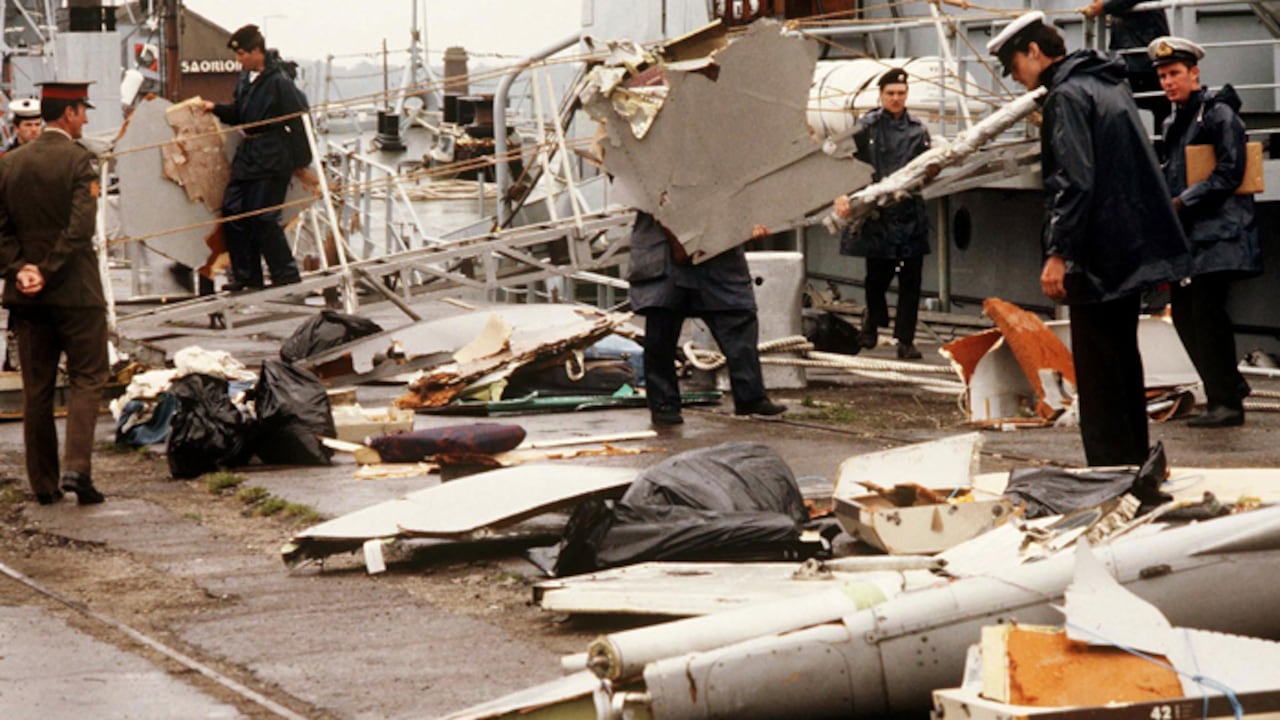
To understand why this admission is a massive deal, you have to look at how Canada behaved for the last forty years. On June 23, 1985, Air India Flight 182, nicknamed the Kanishka, exploded mid-air off the coast of Ireland. The flight was traveling from Montreal to New Delhi via London. A bomb hidden inside a checked suitcase tore the Boeing 747 apart. All 329 people on board died. Most of them were Canadian citizens of Indian origin. Around the same time, another suitcase bomb exploded at Tokyo Narita Airport, killing two baggage handlers. That second bomb was meant for a different Air India flight. If you want more about the context of this, The Guardian provides an in-depth breakdown.
The conspiracy was hatched, funded, and executed inside Canada. It was the deadliest act of aviation terrorism in the world before the September 11 attacks.
Yet, successive Canadian administrations downplayed the political ideology behind the plot. The phrase "Khalistani extremism" was routinely scrubbed from public memorials and official security reviews. For decades, Canadian politicians routinely attended events where the masterminds of this tragedy were openly glorified. Banners and posters featuring Talwinder Singh Parmar, the leader of the terrorist group Babbar Khalsa, frequently hung in public spaces during community festivals.
The silence reached a peak during the administration of former Prime Minister Justin Trudeau. Under his watch, the term "Sikh extremism" was actively removed from a 2018 national security threat report after a wave of political pushback. This political sensitivity created an environment where violent secessionist groups could operate openly under the banner of free speech.
The sudden policy reversal by CSIS under current Prime Minister Mark Carney shows that the old way of handling this issue has run its course. The agency flatly stated that a bomb planted by Canada-based Khalistani extremists destroyed the aircraft. They called it a defining moment for Canada's national security community.
How Massive Intelligence Failures Let the Killers Go Free
The delay in calling out the perpetrators was not just about politics. It was also about covering up an embarrassing string of failures within Canada's law enforcement and intelligence agencies.
Before the bombing occurred, CSIS actually had the mastermind, Talwinder Singh Parmar, under active surveillance. Investigators had intercepted phone calls. They even followed him into a forest where he and his associates tested explosives. Despite these glaring red flags, the warnings were not shared effectively with law enforcement or airport security.
What happened after the bombing was even worse. CSIS investigators erased hundreds of hours of critical wiretap recordings. They destroyed the original tapes. This catastrophic blunder erased concrete audio evidence that could have secured swift criminal convictions in a court of law.
Because the evidence was compromised, the subsequent legal battle turned into a multi-million-dollar farce. The landmark criminal trial collapsed in 2005. The primary suspects walked free due to a lack of usable evidence. Only one person, Inderjit Singh Reyat, was ever convicted. He served time for manslaughter for his role in making the bombs and was released in 2016.
The failure to secure justice left a deep wound. The families of the victims had to watch the Canadian legal system fail them completely. A 2010 public inquiry led by former Supreme Court Justice John Major concluded that a cascading series of errors by the RCMP and CSIS allowed the attack to happen. He called the government's response to the families callous.
The Cost of Playing Vote Bank Politics with Terror
Canada has a massive Indian diaspora, and a significant portion of that community is concentrated in key electoral districts. For decades, domestic political calculations heavily influenced how Canadian leaders handled extremist elements within these communities.
Secessionist groups learned how to exploit this dynamic. They built deep connections within local political circles. They raised significant amounts of money. Some of these funds were diverted toward violent activities, a fact that CSIS highlighted in its recent annual security reports.
By framing their activities as a fight for human rights and self-determination, these radical elements managed to secure political protection. When Indian officials warned Canada about specific individuals planning violence from Canadian soil, those warnings were often dismissed as foreign interference or attempts to suppress peaceful political dissent.
The danger of this approach became undeniable in recent years. The relationship between New Delhi and Ottawa hit rock bottom after allegations surfaced linking Indian agents to the killing of a prominent Khalistani figure in British Columbia. Instead of investigating the broader network of extremist financing and gang violence operating within the country, the previous administration leaned into a public diplomatic war with India.
The latest statements from CSIS show that the security apparatus is finally prioritizing facts over political convenience. Acknowledging that Canada served as the launching pad for a devastating international terror plot is an essential step toward fixing a broken system.
What this Shift Means for India and Future Diplomatic Relations
India has felt vindicated by this announcement. For forty years, New Delhi maintained that Canada was blindly sheltering violent extremists who threatened Indian sovereignty. The explicit naming of Canada-based Khalistani extremists by Ottawa's top intelligence agency validates India's long-term security stance.
This admission offers a potential path forward for bilateral relations. Prime Minister Mark Carney has signaled a desire to repair ties with India since taking office. Rebuilding trust requires a shared understanding of history. By removing the political ambiguity around the Kanishka tragedy, Canada is signaling to India that it is ready to take cross-border security concerns seriously.
However, words on a Facebook post or in an annual report are not enough. The real test will be how Canada handles active extremist networks operating within its borders today.
Actionable Steps for Global Security Tracking
If you are tracking international counter-terrorism policies or studying diaspora politics, here is how you should evaluate the unfolding situation.
- Monitor CSIS policy reports: Look closely at the upcoming 2026 and 2027 public security updates to see if the agency transitions from historical acknowledgments to active enforcement against extremist financing networks.
- Track legislative changes: Watch for any efforts in the Canadian Parliament to update the list of designated terrorist entities. Community organizations are already calling for certain Canada-based extremist groups to be banned under Canadian law.
- Watch bilateral trade talks: The resumption of formal trade negotiations between India and Canada will be the clearest indicator that diplomatic ties are truly recovering.
The era of ignoring home-grown extremism for the sake of domestic political harmony appears to be ending. Canada's formal admission is a late victory for historical truth, but the work of securing the future is still unwritten.