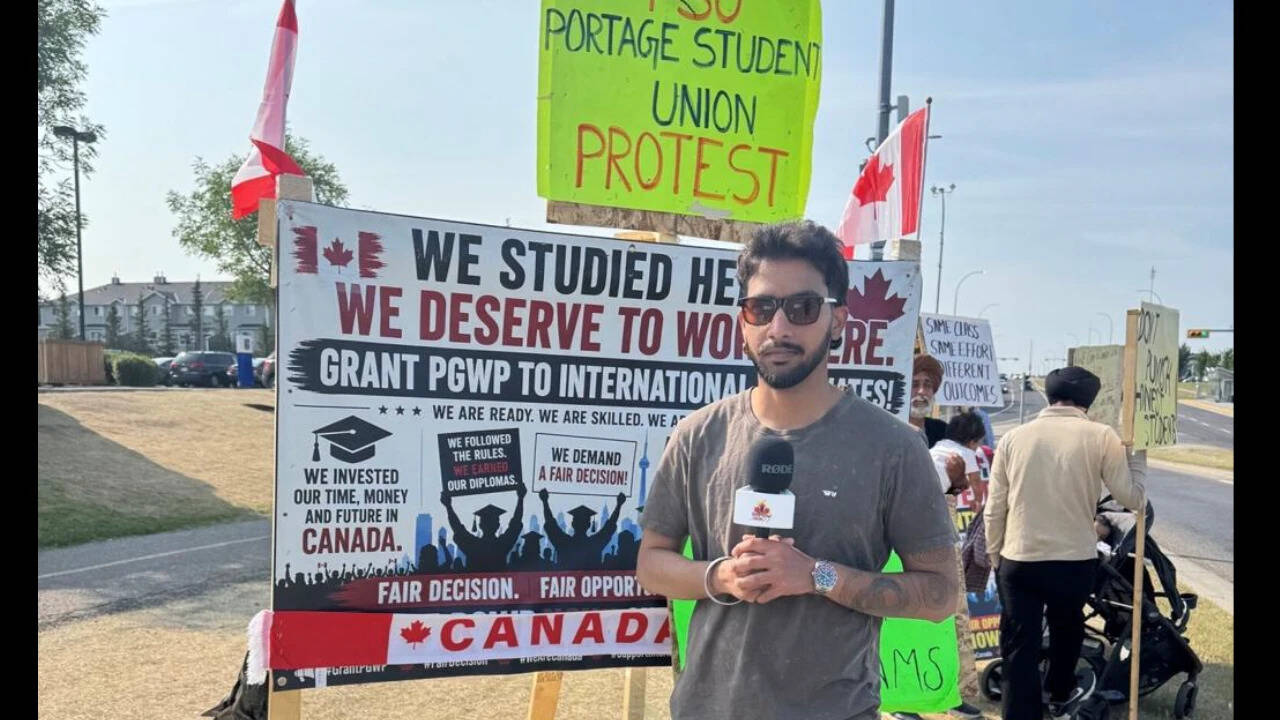
When international students take to the streets to demand fairness, they expect policy changes, not border enforcement agents checking immigration statuses. Yet, that is exactly what happened during a recent demonstration in Canada. Gurpreet Singh thought exercising his right to a peaceful protest would help secure his future. Instead, it fast-tracked an exclusion order forcing him out of the country.
The strategy worked. Students are terrified. Nobody wants to risk deportation just to speak up against sudden policy shifts that invalidate their degrees and work permits.
The Broken Promise of Canadian Study Permits
Singh arrived in Canada from India in 2023. He had a clear plan. He spent roughly $36,000 on his education, earned an administrative professional certificate from CIOT in December 2024, and anticipated transitioning smoothly to a post-graduation work permit. Thousands of other enrollees at institutions like Portage College shared that exact confidence.
Then the rules shifted underneath their feet.
Canada's immigration department updated website guidelines to exclude graduates of specific non-credit programs from receiving work authorization. Singh waited 18 months for a decision while working maintenance-status jobs at a gas station and a concrete plant. His application was abruptly rejected in July. Suddenly, an investment of thousands of dollars and years of labor amounted to a dead end.
When Protesting Becomes an Immigration Risk
Frustration boiled over into public demonstrations. Students gathered to voice anger over policies they felt were applied retroactively without warning. But the August 12 protest in Calgary took a dark turn. Calgary police requested status checks on four people, bringing Canada Border Services Agency (CBSA) officers straight into the crowd.
Twenty people underwent immediate status screenings. Twelve were flagged as potentially inadmissible, and ten ultimately received formal exclusion orders.
Singh admits the crackdown achieved its chilling effect. Organizers note that attendance at subsequent rallies dropped dramatically because students fear enforcement officers are waiting around the corner. Civil liberties advocates, including Amnesty International Canada lawyer Julia Sande, condemned the move as pure intimidation. Syed Hussan of the Migrant Rights Network called it an alarming escalation that mirrors aggressive tactics used to silence dissent abroad.
What This Means for International Education Standards
The clash highlights a massive disconnect between federal immigration targets and the reality on the ground for foreign nationals. Critics argue that using peaceful public assemblies as hunting grounds for inland enforcement undermines fundamental Charter-protected rights. Free speech and peaceful assembly belong to everyone on Canadian soil, regardless of citizenship status.
Over 250 civil rights, labor, and community organizations have signed open letters calling for independent investigations and the withdrawal of these exclusion orders. Meanwhile, individuals like Singh are left reporting to border services every two weeks, scrambling for crowdfunding to cover legal fees, and packing their bags.
If you are an international student navigating changing immigration frameworks, keep a close eye on legal updates, consult independent migration lawyers rather than relying on institutional assumptions, and document every single administrative communication. The system leaves very little room for error.