Capital punishment in America rarely enters the public consciousness until execution dates loom, bringing horrific crimes back into the headlines. Two scheduled executions in Oklahoma and Texas put the death penalty back under the microscope, highlighting cases steeped in extreme violence, legal battles, and profound mental health questions.
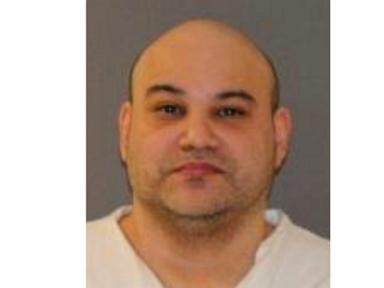
Chief among them is the case of John Allen Rubio, a Texas death row inmate scheduled for lethal injection for the 2003 murders of three young children in Brownsville. The details of the crime remain as jarring today as they were over two decades ago. Rubio, along with his common-law wife Angela Camacho, killed 3-year-old Julissa Quesada, 14-month-old John E. Rubio, and 2-month-old Mary Jane Rubio inside a cramped, windowless apartment. Discover more on a related issue: this related article.
Rubio wasn’t the biological father of the two older children, but he raised them as his own. Following his arrest, investigators documented bizarre and disturbing claims from Rubio, who insisted the children were demonically possessed and that he was a chosen savior meant to purge evil. Defense experts later diagnosed him with paranoid schizophrenia, pointing to a childhood marred by extreme domestic violence, substance abuse, and neglect. Prosecutors, however, argued otherwise, convincing juries that his actions were calculated rather than purely psychotic.
The legal path to Rubio's execution hasn't been straightforward. His initial 2003 conviction was overturned by an appeals court because statements from Camacho were improperly admitted during his trial. Yet, at his 2010 retrial, a jury convicted him a second time and handed down another death sentence. In the weeks leading up to his execution, his defense team fought desperately for a stay, arguing competency issues, but the Texas Court of Criminal Appeals ultimately denied the motion after a district judge found him legally competent to face execution. More reporting by The Washington Post highlights similar views on this issue.
Meanwhile, Oklahoma carried out its own high-profile lethal injection involving James Pavatt. Pavatt was convicted for the 2002 murder of Rob Andrew, an Oklahoma man whose wife, Brenda Andrew, was having an affair with Pavatt. Prosecutors proved the pair meticulously plotted the murder, beginning with cut brake lines on Andrew's car before he was ultimately shot to death. Both Pavatt and Brenda Andrew were tried separately, convicted, and sentenced to death. At a late-stage clemency hearing, Pavatt claimed he was manipulated by Brenda and didn't fire the fatal shot, but the state parole board and courts rejected the plea, noting that conspirators bear equal culpability under the law.
These concurrent executions force a hard look at how the American legal system handles complex criminal culpability, severe mental illness, and co-conspirator dynamics. In Rubio's case, the property where the murders occurred was eventually demolished, replaced by a community garden and park named Tres Angeles—a quiet neighborhood effort to reclaim a tragic space. But as the lethal injections proceed, the debate over capital punishment for defendants with documented psychiatric histories continues to divide legal experts, advocates, and the public alike.