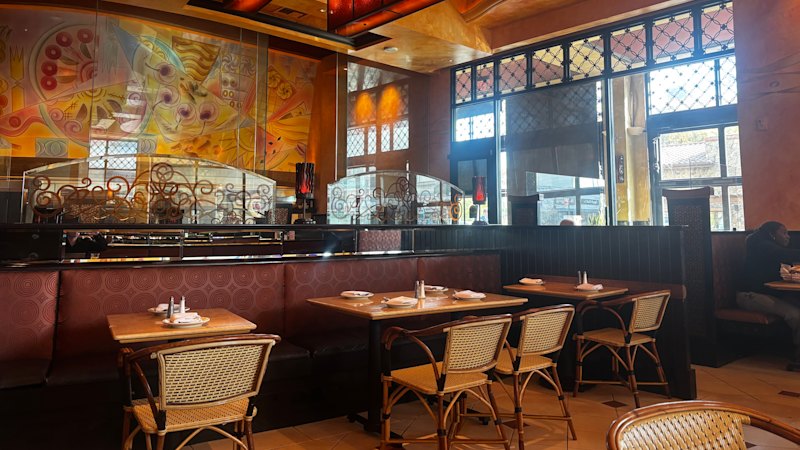
You wouldn't expect a casual restaurant quip to derail the final stretch of a political cycle. Yet here we are. When former President Barack Obama took aim at Donald Trump's White House aesthetic by comparing it to the sprawling, multi-page menu of a Cheesecake Factory, he probably thought it was a safe, relatable punchline.
Instead, it turned into an instant cultural proxy war.
Within hours, the internet split down familiar trenches. Conservative commentators rushed to defend the ubiquitous casual dining chain as a sanctuary of working-class comfort, accusing Obama of snobbery. Treasury Secretary Scott Bessent staged an impromptu lunch stop at a Washington Cheesecake Factory, ordering a French dip cheeseburger to prove a populist point. Meanwhile, Trump's allies fired back by questioning the former president's own dining habits and attacking the modern design of the Obama Presidential Center in Chicago.
It is a fascinating study in modern political signaling. A brand known for its 21-page menu and oversized portions accidentally found itself standing in for the entire American class divide.
Why Mainstream Dining Became a Battleground
Political battles rarely revolve around actual policy details when a juicy cultural symbol is available. Food is personal. Where you eat, or where politicians pretend to eat, sends an immediate signal about authenticity.
When a high-profile figure mocks a mainstream chain, it triggers a predictable populist counter-reaction. Critics instantly frame the remark as evidence of out-of-touch elitism. Figures like Scott Jennings pointed out that elite political figures rarely struggle with grocery bills or choose chain restaurants for date night. On the other side, defenders of the remark argue it was just harmless architectural humor about ornate hotel lobbies and excessive decor.
The reality on the ground is much simpler. Millions of Americans eat at places like The Cheesecake Factory every week without turning it into a referendum on the state of democracy. It is loud, it is bright, and the avocado eggrolls are a known quantity. But in the hyper-polarized lead-up to the midterm elections, nuance doesn't generate clicks or viral clips.
The Real Subtext Behind the Noise
Look past the cable news shouting matches and social media posts, and you will find a deeper anxiety about how political figures relate to everyday economic stress. Voters are dealing with persistent cost-of-living pressures, grocery inflation, and housing costs.
When politicians and commentators spend days arguing over a casual dining punchline, it highlights a strange disconnect. While Washington figures pose with cheeseburgers for cameras or trade insults about high-priced speeches, ordinary patrons are just trying to figure out if they can afford a night out.
The irony is thick. The restaurant itself remains blissfully detached from the partisan circus, quietly serving thousands of plates of pasta and cheesecake daily while politicians use its name as shorthand for cultural authenticity.
Moving Past the Noise
If there is a takeaway from this bizarre news cycle, it is that culture-war optics will latch onto literally anything. A menu with too many options or an interior decorator's choice of gold plating can become a three-day national debate if the right person says it at the right microphone.
Next time a viral political spat erupts over a mainstream brand, skip the commentary. Go grab a slice of cheesecake if you want one. Leave the politicians to fight over the menu.
Obama Mocks Trump and Scott Bessent Over Cheesecake Factory Joke
This video provides context on Barack Obama's remarks and the ensuing political back-and-forth involving Donald Trump and administration officials.