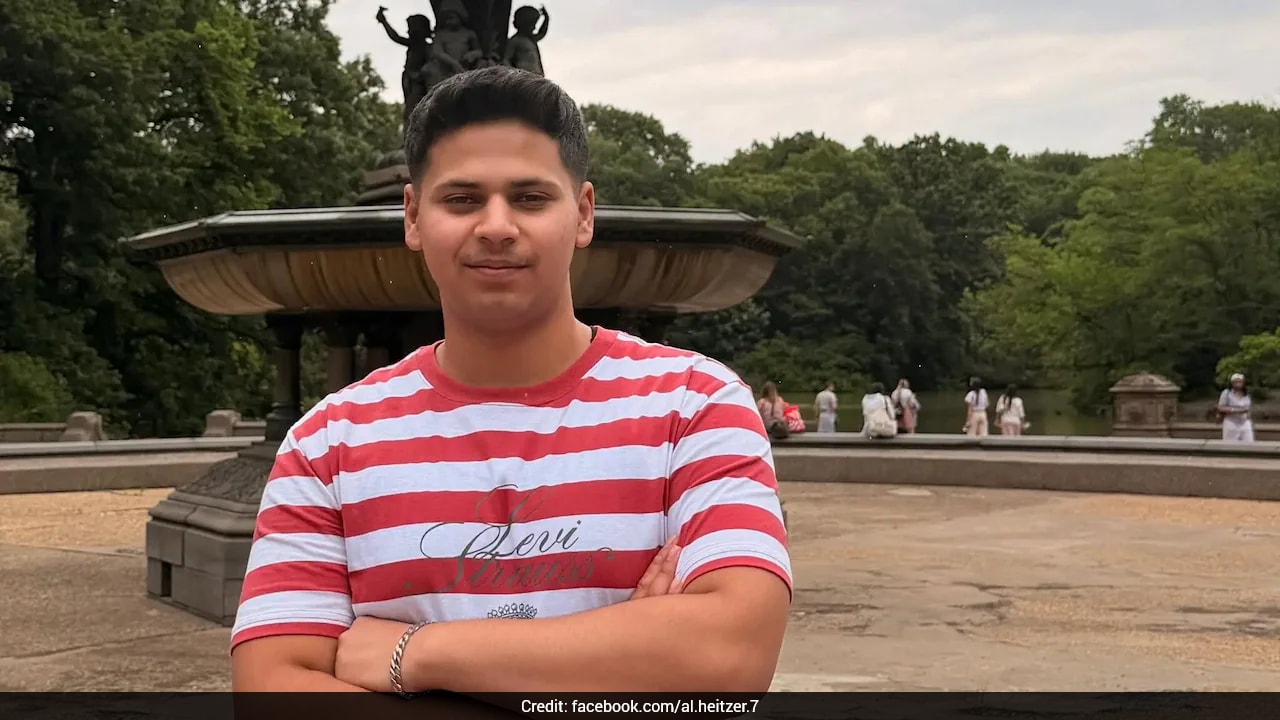
A family trip from India meant to celebrate an 18-year-old's high school graduation ended in absolute horror this week in Central Park. Romanch Mahajan had just learned he was accepted into a university in Jaipur. He spent his day doing what millions of tourists do every single year. He visited the Statue of Liberty, walked the Brooklyn Bridge, and headed to Manhattan's most famous green space for a romanticized piece of old-school Americana.
Then everything went wrong.
While the driver stepped away to take a photo of the family near Cherry Hill, the horse bolted. The carriage Careened onto the sidewalk, sprinting entirely out of control without anyone at the reins. In the ensuing panic, Romanch’s mother fell from the vehicle. The teenager jumped out to save her, shouting for his mom, but hit his head violently on the pavement. He died that night at NewYork-Presbyterian Weill Cornell Medical Center.
It is the first human fatality involving a Central Park horse carriage since they were introduced more than 150 years ago. It should be the absolute last.
For decades, the carriage industry has survived on nostalgia, powerful union backing, and political gridlock. But this tragedy has changed the entire dynamic. Newly elected New York City Mayor Zohran Mamdani, along with City Council leaders and the Central Park Conservancy, are moving swiftly to shut the industry down. The old defense mechanisms don't work anymore. This isn't just about animal rights anymore. It's an undeniable public safety emergency.
The Tragic Mechanics of a Preventable Disaster
We need to talk about exactly why this happened. The Transport Workers Union Local 100, which represents the carriage drivers, immediately suspended the driver and announced it would retire the seven-year-old horse, Sampson. They admitted the driver violated a fundamental protocol. A driver must never leave their horse unattended or step away to snap a photo.
But blaming a single driver ignores the structural absurdity of modern Central Park.
When horse carriages were integrated into the park's design in the 19th century, they shared the roads with pedestrians in long skirts and the occasional cyclist. Look at the park today. The paths are packed tight with electric bikes, high-speed joggers, unpredictable electric scooters, and swarms of tourists. It is a loud, chaotic environment. Horses are prey animals. They get startled. When a 1,200-pound animal panics in a dense crowd, it becomes a unguided missile.
According to the Central Park Conservancy, this wasn't an isolated fluke. It was the eighth horse-related incident in the park over a mere 13 months. The previous seven resulted in flipped carriages, injured horses, and battered passengers, but the city kept looking the other way. The myth of the quaint, romantic carriage ride blinded regulators to the compounding danger.
The Political Failure Behind the Status Quo
New York politicians have promised to ban these rides for years, only to repeatedly back down. Former Mayor Bill de Blasio famously pledged to eliminate horse-drawn carriages on "Day One" of his administration back in 2014. He ran straight into a wall of union opposition and City Council pushback, eventually abandoning the effort entirely. His successor, Eric Adams, only expressed mild opposition near the very end of his single term, doing nothing of substance to alter the industry's footprint.
Mayor Zohran Mamdani is taking a different approach. He ran his mayoral campaign on a progressive platform that included an explicit vow to phase out the carriages. Now, he has the political leverage of a devastated public. Mamdani announced he is working directly with the City Council to implement a "just transition." That means the city won't just yank the licenses overnight and leave working-class families out in the cold. The plan involves helping drivers transition into stable, green-energy jobs or operating modern, electric vintage-style vehicles instead.
City Council Speaker Julie Menin has already scheduled an emergency legislative hearing for next month to fast-track Ryder's Law. This piece of legislation has been sitting in council committees for far too long. The bill outlines a clear two-year phase-out period for horse carriage licenses. It stops the issuance of new permits immediately and provides financial and vocational support to the current workforce.
The Flawed Argument for Better Regulation
The carriage industry is terrified. They know the tide has turned. In a desperate bid to save their livelihoods, union leaders have suddenly pivoted. For years, they rejected stricter regulations. Now, they are begging for them.
The Transport Workers Union is backing a last-minute legislative push to install permanent hitching posts at popular tourist photo spots throughout Central Park. Their argument is simple. They claim that 90% of horse-related accidents can be avoided if drivers can safely tether their animals when stepping away to interact with tourists.
Honestly, that argument is a day late and a dollar short.
Hitching posts don't stop a horse from spooking while it's actively moving down a crowded path. They don't fix the reality of an overworked animal breathing in urban exhaust fumes on a 90-degree summer afternoon. More importantly, the Central Park Conservancy—the very nonprofit that manages the 843-acre park—has officially lost patience. In a striking statement, the Conservancy pointed out that if any other recreational activity inside the park caused eight serious accidents in a little over a year, it would have been shut down instantly.
The standard for what we tolerate in public spaces has shifted. Other major American cities realized this years ago. Chicago banned horse-drawn carriages down its busy Magnificent Mile. San Antonio enacted a similar ban to clear its historic streets. New York isn't leading the charge here. It's lagging behind.
What Happens to the Workers and the Horses
A real solution requires addressing what happens the day after the ban takes effect. There are roughly 130 active carriage drivers and around 200 horses currently operating in Manhattan. You can't just pass a law and ignore the human and animal fallout.
The transition to electric carriages is the most logical path forward. These vehicles mimic the classic aesthetic of early 20th-century automobiles, offering tourists the exact same nostalgic tour of Central Park without the inherent unpredictability of live animals. Drivers keep their tour routes, their union protections, and their ability to earn a living. The economic argument against the ban falls apart the moment you provide a viable mechanical alternative.
As for the horses, animal welfare organizations are already organizing sanctuary placements. Groups like New Yorkers for Clean, Livable, and Safe Streets have verified that regional sanctuaries have the capacity to take in the retired fleet. These animals have spent years walking on hard asphalt, surrounded by sirens and yellow cabs. They deserve to spend their remaining years in a pasture.
The Immediate Next Steps for New Yorkers
The legislative battle will peak at the City Council hearing next month. If you want to see an end to this outdated, hazardous practice, you can't just read the news and feel bad for the Mahajan family.
Call your local City Council representative. Demand that they co-sponsor Ryder's Law without any weakening amendments or industry loopholes. The carriage owners will flood City Hall with lobbyists claiming that a ban ruins the charm of New York. Remind your representatives that a teenager's life is worth more than a manufactured aesthetic.
Stop buying tickets for these rides. Tourism drives this industry. If visitors refuse to pay the 72 dollars for a 20-minute ride, the economics will dictate the end of the business long before the politicians finish debating. Choose to walk the park, rent a bike, or take a pedicab.
Romanch Mahajan’s father told reporters that this incident took his son's dream away. The city owes that family a meaningful response. We can't fix what happened near Cherry Hill, but we can make sure no other family has to watch their child die on a New York sidewalk for the sake of a photo op.