Sixty thousand people poured across a single European border in less than forty-set hours. By the time an uneasy calm settled over the Spanish North African enclave of Ceuta, the human cost hit a devastating milestone. Sixty-seven people are dead.
If you're trying to figure out how a Mediterranean enclave of just 84,000 residents became the center of an international catastrophe, you need to look past the breaking news tickers. The scramble of tens of thousands of people swimming around breakwaters, dodging police, and sleeping in urban parks exposes deep fracture lines in European migration policy. For another perspective, read: this related article.
Here is what actually happened on the ground, why the death toll climbed so high, and what this means for Spain and Morocco moving forward.
Inside the Ceuta Border Breach
The surge didn't happen in a vacuum. Between Thursday and Friday, a massive wave of mostly young Moroccan men, along with families and unaccompanied minors, overwhelmed the perimeter separating Morocco from Spanish soil. Similar analysis on this trend has been published by Wikipedia.
They didn't use sophisticated tunnels or fake documents. They swam around the Tarajal and Benzú breakwaters or rushed the shoreline on foot en masse.
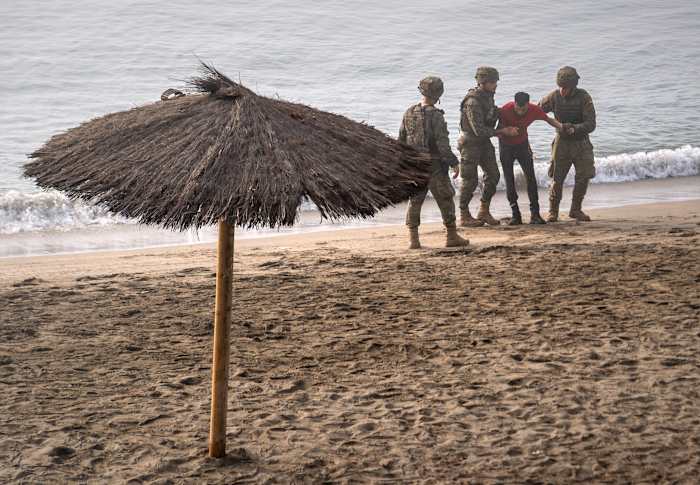
Local security forces were completely outnumbered. Videos from the scene showed crowds surging past bewildered officers, dashing across urban beaches, and spilling directly onto local roads. But the open-door reality was short-lived.
Spanish Interior Minister Fernando Grande-Marlaska confirmed that the situation has flipped dramatically. Security forces ramped up presence, troops deployed, and the vast majority of the tens of thousands who crossed have already been sent back or chosen to return to Morocco.
Why the Death Toll Rose to 67
Behind the chaotic statistics lie individual tragedies. The Spanish government confirmed that 67 lives were lost during the border rush.
The fatalities stem from two primary dangers:
- Drownings: Many individuals attempted the dangerous swim across coastal currents without proper gear or swimming capability.
- Crush injuries and stampedes: Panic and massive human pressure at the breakwater barriers led to fatal trampling incidents.
Human rights advocates and local union leaders have pointed fingers at human trafficking rings. Smugglers routinely exploit vulnerable youth with false promises of an easy entry into the European Union, leaving them to face deadly sea conditions or crushing physical barriers.
In response to the disaster, Madrid announced plans to install a 500-meter-long floating containment barrier along the sea fence to block future mass swimming attempts.
The Political Fallout and Legal Flashpoints
You have to ask: what triggered such a sudden, massive rush?
Local officials in Ceuta point directly to a recent Spanish Supreme Court ruling. That legal decision made it significantly harder for authorities to execute immediate summary returns—known as "hot returns"—for migrants intercepted arriving by sea. Word spread quickly across social networks and local communities in Morocco, sparking a spontaneous migration wave.
The political shockwaves extend far beyond North Africa. Conservative European leaders seized on the chaos to demand harsher border enforcement. Italian Prime Minister Giorgia Meloni publicly called for a suspension of the Schengen agreement, which governs passport-free travel across the European Union.
Meanwhile, life inside Ceuta remains strained. While thousands have crossed back, local president Juan Jesús Vivas noted that the city of 84,000 is far from normal. Basic services were stretched past their limits, and local infrastructure absorbed a heavy shock. A handful of stranded individuals like 23-year-old Moroccan Mohamed Hatri remain determined to stay despite closed shops and cut-off food supplies, highlighting the deep desperation driving these crossings.
What Happens Next at the Border
The immediate crisis phase is winding down as Spain forces a mass reversal of the crossings. Yet, the structural vulnerabilities remain completely unresolved.
Enclaves like Ceuta and Melilla represent the European Union's only direct land borders with Africa. As long as severe economic disparities persist alongside relaxed legal loopholes or political disputes between Madrid and Rabat, these flashpoints will keep happening.
Deploying temporary buoys and ramping up troop numbers act as heavy bandages on a systemic wound. Until European and North African authorities establish sustainable frameworks that address the root causes of irregular migration, border towns will remain on edge waiting for the next surge.