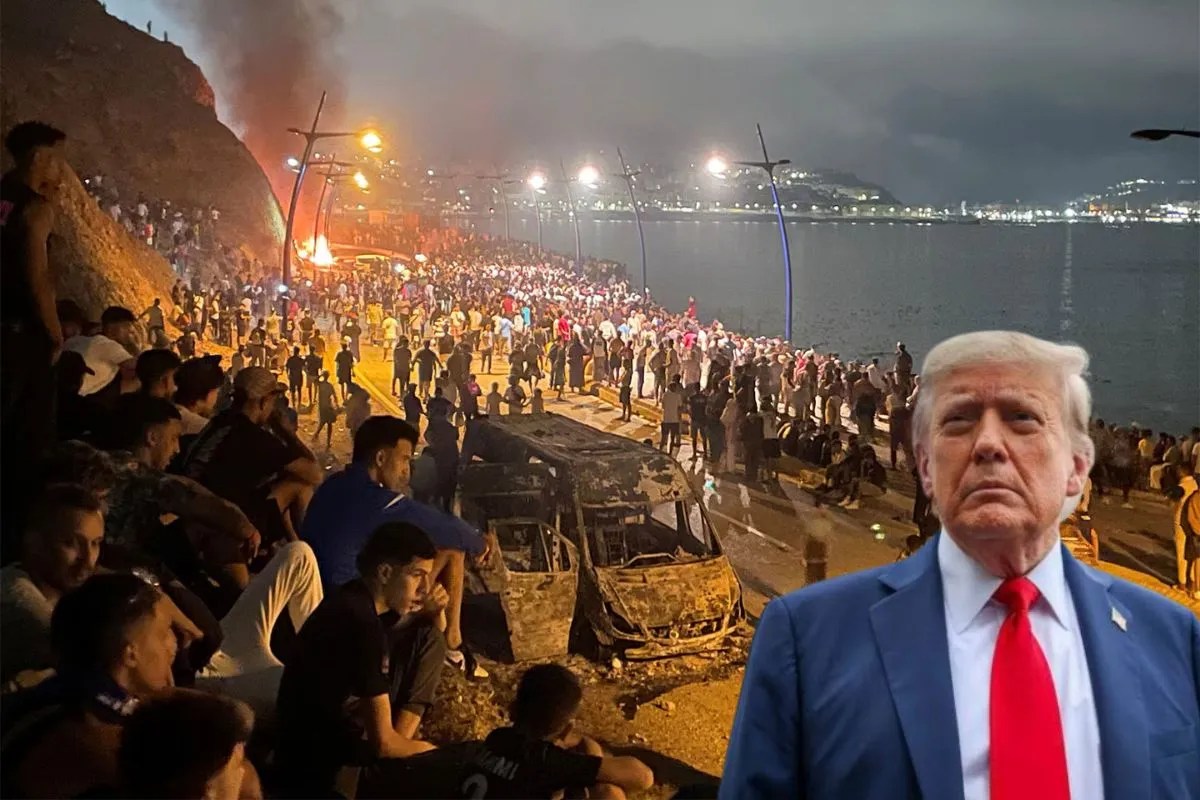
Tens of thousands of people crossed a heavily guarded border in a single day, and the fallout is rewriting European security rules.
If you are wondering why international headlines are suddenly obsessing over a tiny stretch of land in North Africa, you are not alone. The recent surge of roughly 60,000 migrants entering the Spanish enclave of Ceuta from Morocco has forced governments into emergency mode. It is messy, politically charged, and far from over.
What Actually Happened at the Border
Ceuta is one of Spain’s two autonomous cities on the northern coast of Africa, sharing a direct land border with Morocco. This makes it the only land bridge connecting the European Union to the African continent.
When roughly 60,000 individuals managed to cross the frontier by swimming around maritime barriers and scaling high perimeter fences, local infrastructure collapsed almost instantly. Reports from outlets like The New York Times and the Financial Times showed that digital platforms and encrypted social media channels played a major role in organizing the massive movement. People spent weeks coordinating the attempt, driven by shrinking employment options in Morocco and legal confusion following a recent Spanish Supreme Court ruling regarding maritime deportations.
Moroccan border forces did little to stop the initial rush. The human toll was immediate, with dozens of fatalities reported during the dangerous crossings and chaotic rushes.
The US State Department Steps In
Washington didn't ignore the chaos. The U.S. Department of State raised its official travel advisory for Ceuta to Level 3: Reconsider Travel, pointing to the volatile unrest and unpredictable security environment.
While mainland Spain remains at Level 2, the advisory for Ceuta explicitly warns that the uncontrolled arrival of migrants creates dangerous conditions. In response, Spain’s government deployed the Spanish military, the Spanish National Police, and the Guardia Civil to restore order.
High-ranking officials haven't minced words. U.S. Assistant Secretary of State Dylan Johnson criticized the handling of the crisis, calling it a direct failure to secure national frontiers. Meanwhile, Spanish Prime Minister Pedro Sánchez announced plans to reinforce security measures, build physical sea barriers to streamline repatriations, and crack down on transnational smuggling rings.
Why This Crisis Changes the Game
Border crises happen, but this one hits differently for a few major reasons:
- The Scale: 60,000 entries in a matter of days is an unprecedented shock for a small territory that spans less than 20 square kilometers.
- The Legal Bottleneck: Recent court rulings have complicated swift deportations, leaving local authorities legally trapped while trying to manage large crowds.
- The Political Shockwave: Right-wing political parties across Europe are using the crisis to demand tougher border controls, pushing immigration to the top of the continental agenda.
What Comes Next
Spain faces a brutal balancing act. Humanitarian obligations clash directly with domestic security demands and international warnings. If you are tracking European politics or planning travel through the region, keep a close eye on local updates. The situation in Ceuta is a glaring reminder of how fragile international borders can be when migration pressures meet legal and political gridlock.