When tens of thousands of people suddenly swim, wade, and swarm across a narrow stretch of North African coastline into European territory, things break fast. That is exactly what happened when an estimated 60,000 individuals breached the border into the Spanish enclave of Ceuta.
Politicians in Madrid are pointing fingers, local residents are furious, and the rest of Europe is watching with intense anxiety. If you want to understand why this border crisis tore open deep political divides across Spain, you have to look past the breaking news footage and examine the compounding policy failures that led up to it.
The Breaking Point at the Border
Ceuta is tiny. It spans barely 7 square miles on the northern coast of Africa, sharing Europe's only land borders with Morocco. When a massive wave of humanity—mostly young men—rushed the Tarajal and Benzú breakwaters, local infrastructure collapsed instantly.
Local reception centers operated at thousands of percent above capacity. Streets filled with people looking for shelter, local businesses shut their doors out of sheer uncertainty, and emergency resources vanished overnight.
The human cost was tragic. Dozens of people lost their lives during the rush, either drowning in the cold waters or getting caught in deadly stampedes along the barriers.
Why Did This Happen Now
Prime Minister Pedro Sánchez blamed human-smuggling networks for exploiting social media and weaponizing a recent Spanish Supreme Court ruling regarding maritime interceptions. Smugglers allegedly convinced crowds that border enforcement had effectively vanished.
Critics point to a different culprit entirely. Earlier in the year, Madrid pushed a massive regularization program for undocumented residents. Opposition leaders and international observers argued that granting legal status to hundreds of thousands of people created a massive pull factor.
European leaders noticed. Twenty-two EU heads of government penned a letter expressing serious alarm over Madrid's immigration policies, arguing that lax signals reverberate across the entire Schengen zone.
The Political Fallout Across Spain
The crisis did not just test border guards; it exposed raw nerves in Spanish domestic politics.
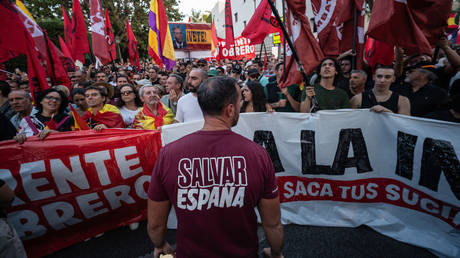
Prime Minister Sánchez flew to Ceuta only to be met by angry crowds chanting for his resignation and declaring that the territory was under siege. Local leaders demanded a national emergency declaration, accusing the central government of reacting too late and leaving them to handle a catastrophe alone.
Meanwhile, right-wing figures and anti-immigrant politicians descended on the enclave to score political points. Their presence sparked fierce counterprotests from residents, highlighting local fears that the city's unique multicultural fabric—where multiple communities have lived side by side for generations—was fraying under the pressure.
Within days, most of the migrants who made the crossing walked back across the border to Morocco or were processed out by authorities, leaving the enclave quiet once again. But the political shockwaves are just beginning.
Madrid faces mounting pressure from both European allies and domestic critics who demand tighter border controls. The illusion that geographic separation protects Europe from regional instability has vanished, and the debate over how Spain handles immigration will shape every election cycle to come.