A small inflatable vessel caught fire in the middle of the English Channel, triggering a massive cross-border emergency response that pulled 157 people out of the water. This wasn't just another routine interception. It exposes the terrifying reality of what happens when overloaded smuggling boats meet mechanical failure on open water.
French and British authorities coordinated to save everyone on board after the vessel went up in flames near the boundary of French and British waters. No casualties were reported, which feels like pure luck given the scale of the disaster averted. Let's break down what actually happened and why this specific incident marks a dangerous turning point for maritime security.
The Anatomy of a Channel Disaster
The sequence of events started long before the flames broke out. Surveillance centers had been tracking the small boat since it departed from the Boulogne-sur-Mer area.
Overnight, five individuals on the vessel required immediate evacuation and were pulled onto a French lifeboat. The remaining passengers refused further assistance.
Why didn't authorities force them off? French maritime officials explained a grim operational reality. These rubber boats are structurally fragile and severely overloaded. Forcing a mass boarding during an intervention risks capsizing the vessel instantly, turning a rescue operation into a mass drowning.
So, they monitored it. Then, the engine caught fire.
The vessel's integrity disintegrated rapidly on Tuesday morning. Occupants had no choice but to jump straight into the freezing water, relying entirely on the quick deployment of international rescue assets.
The Multi-Agency Scramble
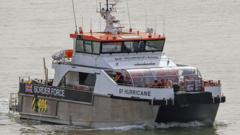
Saving 157 lives in open water is no small feat. It required an immediate joint effort between French patrol vessels, UK Border Force ships, and the Royal National Lifeboat Institution (RNLI).
The Eastbourne all-weather lifeboat launched around six in the morning. French units picked up 103 people, while British vessels scooped up the remaining 54. Everyone was subsequently transported back to Boulogne-sur-Mer.
This operation highlights how tightly linked French and British emergency response teams are on the water, regardless of political friction over migration policy on land. When a boat burns or sinks, maritime law and human decency dictate that nearby vessels drop everything to pull people out.
The Unspoken Danger of Overloaded Vessels
Most people look at these crossings and focus entirely on border politics. They miss the mechanical hazard staring them in the face.
Smugglers cram dozens—sometimes over a hundred—people into cheap, unseaworthy rubber dinghies fitted with undersized outboard motors. These engines run hot, poorly maintained, and completely unprotected from fuel leaks.
When you mix gasoline, cheap plastics, open flames from makeshift stoves or cigarettes, and zero ventilation, an engine fire is basically a ticking clock. This incident proves that the danger isn't just about capsizing in rough waves. It's about sudden, catastrophic structural failure miles from shore.
What Happens Next
The political fallout from this event will be immediate. Governments on both sides of the Channel face intense pressure to shut down these routes completely. Prime ministers talk tough about being relentless against smuggling gangs, but criminal networks keep adapting. They shift launch sites, use larger taxi boats, and exploit favorable weather windows whenever they open up.
For now, 157 people are safe in France, and emergency services are catching their breath. But the underlying crisis remains entirely unsolved.
Stop looking at these events as isolated accidents. They are symptoms of a broken system where desperate people trust criminals with floating tinderboxes.
This video provides context on how rapidly boat fires can escalate into major maritime emergencies requiring immediate international search and rescue intervention.
http://googleusercontent.com/youtube_content/1