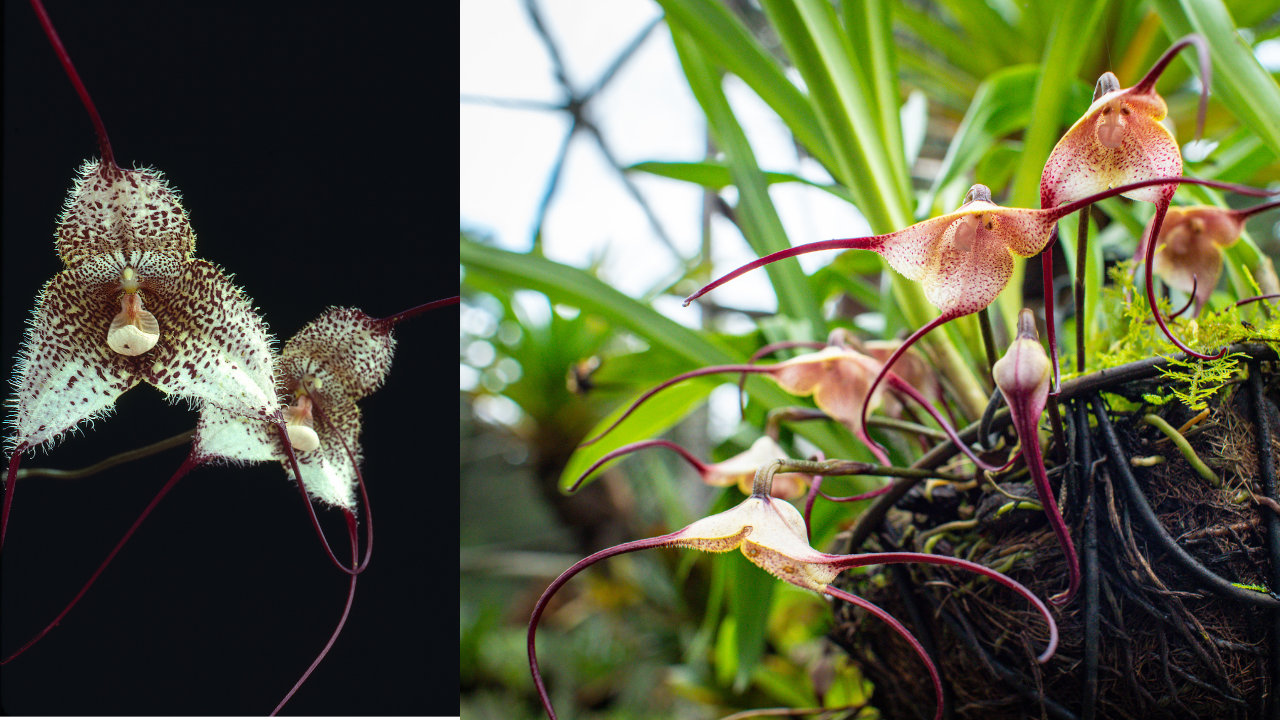
You won't find fangs or capes in the high cloud forests of the Andes. Instead, you'll stumble across something far stranger hanging from moss-draped branches: Dracula orchids. These bizarre little plants pull off uncanny impersonations of monkeys, goblins, and skull-faced phantoms. When Plant Heritage recently slapped an official National Plant Collection designation on Chester Zoo's massive holding of these rare specimens, most casual readers scrolled past. They missed the actual crisis playing out behind greenhouse glass.
Let's look at the numbers. Chester Zoo houses over 75 of the 147 officially recognized Dracula orchid species. That is more than half the entire genus locked away in specialized care. But why do these eerie, vampire-named blooms demand our attention right now? The answer involves shrinking habitats, illicit poaching, and some of the weirdest evolutionary survival tactics in the plant kingdom.
The Truth About the Little Dragon
The name doesn't come from Bram Stoker's famous count. It stems from the Latin root meaning "little dragon," pointing directly to the elongated, fang-like sepals dripping from the blossoms. If you peek inside a Dracula roezlii, you aren't greeted by symmetrical petals. You are staring straight into something that looks suspiciously like a miniature human skull.
Evolution didn't design these faces for our amusement. These plants evolved in high-altitude, cool, perpetually dripping cloud forests across Ecuador, Colombia, and Peru. They demand exact atmospheric moisture and chill temperatures. If you turn up the thermostat even slightly in a nursery, they drop their leaves and die. Horticulturists at Chester Zoo spend every single day fighting humidity levels and mimicking natural canopy shade just to keep them alive.
How Fungus Gnats Drive Pollination
Forget sweet nectar and pleasant fragrances. Dracula orchids survive through deception. They emit a pungent, earthy odor mimicking rotting mushrooms and decaying fungi.
This scent acts like a neon sign for fungus gnats. The tiny insects fly straight into the trap, mistaking the flower's lip for a tasty patch of fungi. While crawling around inside the damp floral chamber, they pick up pollen packets and transport them to the next unfortunate bloom. It is a brilliant evolutionary loop. But it also means these orchids are hyper-dependent on specific micro-ecosystems. Break the forest canopy, destroy the rotting wood where gnats breed, and the entire reproductive cycle collapses overnight.
Why the Wild Populations Are Disappearing
Cloud forests aren't just delicate; they're frontline casualties of modern economic pressure. Illegal mining operations chew through remote Andean hillsides daily. Timber extraction clears out the mature trees these epiphytes cling to.
Worse yet, plant thieves target rare botanical specimens. Collectors around the globe pay absurd sums for wild-collected Dracula orchids. Poachers strip them directly from native branches, smuggling them across borders without caring whether the species can survive the trip. Because many of these orchids have extremely restricted native ranges—sometimes existing on just a single fog-shrouded mountain slope—removing a few dozen plants can drive an entire species to the brink of extinction.
What Conservation Groups Are Doing Right Now
Plant Heritage awards National Plant Collection status to inventories that are meticulously documented and scientifically safeguarded. Chester Zoo earning its sixth such badge isn't just a PR win for the gift shop. It means there is a secure, living vault preserving genetic diversity that might otherwise vanish forever.
These captive greenhouse collections serve as insurance policies against total ecological collapse. When wild populations get wiped out by landslides, copper mines, or poachers, horticulturists have the living material ready for future reintroduction programs—if we can figure out how to save their habitats in time.
Stop assuming plant conservation only applies to giant pandas or charismatic big cats. Biodiversity lives or dies in the damp, forgotten corners of high-altitude forests. If we let the little dragon orchids slip away, we lose an entire chapter of evolutionary history that took millions of years to write.
Check local botanical gardens, support organizations fighting illegal plant trafficking, and pay attention to the species nobody talks about.