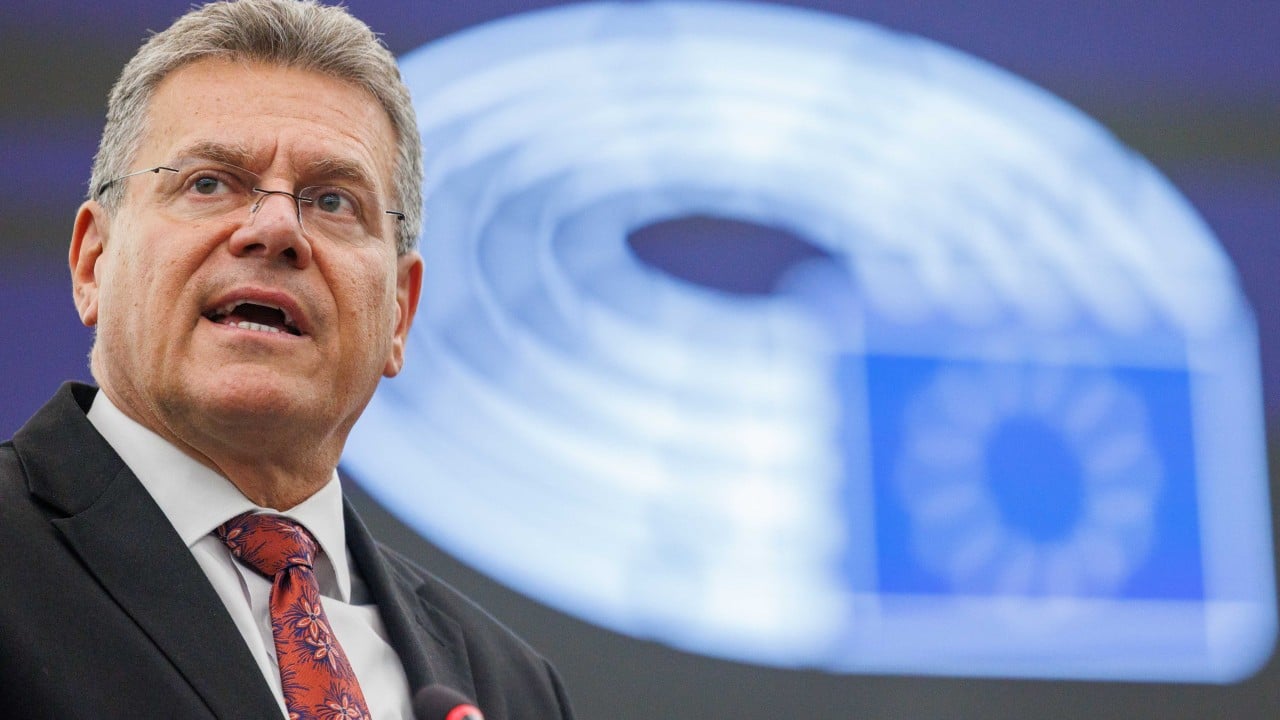
You won't find many cheerful diplomats in Beijing or Brussels this week. European Trade Commissioner Maros Sefcovic has touched down in the Chinese capital for high-stakes negotiations, but the mood is remarkably grim. Trade deficits topping one billion euros a day, surging shipments of green tech, and looming tariff threats have pushed the relationship to a fragile tipping point. If you think this is just another routine diplomatic spat, you're missing the massive economic realignment happening right now.
The core problem isn't complicated. Europe is bleeding a massive trade deficit while its local industries struggle to compete against an avalanche of subsidized Chinese manufactured goods. For years, Western officials focused primarily on traditional exports like household appliances and clothing. Today, the battleground has shifted entirely to the "New Three": electric vehicles, lithium-ion batteries, and solar cells. Beijing wants open markets for its high-tech output, while Brussels is staring down a domestic industrial hollow-out and scrambling to erect protective walls.
Why Optimism Has Evaporated
Diplomats love to talk about finding common ground. Right now, there isn't much ground left to share. Chinese commerce officials have openly expressed deep frustration over what they label European inflexibility and protectionist overreach. On the flip side, European industrial groups argue that China's domestic output continues to outpace its absorption rate, creating an aggressive export wave that floods global markets.
Take the recent data on manufacturing overcapacity. European business associations point out that local factories can't match prices when state-backed output scales at such a ferocious pace. When Beijing shifts production into overdrive without rebalancing toward a service-led consumer economy, European manufacturers pay the price. You can't negotiate your way out of a structural math problem with polite handshakes.
The Stakes Behind Closed Doors in Beijing
Sefcovic is meeting with Chinese Commerce Minister Wang Wentao for intensive two-day talks. The agenda is heavy. Brussels wants tangible commitments to curb surging exports and address the staggering daily trade deficit. At the same time, critical mineral supply chains and rare earth export curbs hang over the room like a loaded gun. Europe needs these materials for its green transition, but Beijing holds most of the cards in raw material processing.
Simultaneously, the political pressure inside Europe is intensifying. The leaders of the bloc's largest economies are openly backing aggressive new trade defenses. They aren't trying to hide their defensive posture anymore. If these Beijing talks collapse, expect a cascade of anti-subsidy tariffs, retaliatory investigations, and a fragmented global supply chain that makes doing business harder for everyone involved.
What Comes Next for Global Markets
You don't need a crystal ball to see where this is heading. A total trade war benefits no one, yet both sides are sleepwalking closer to the edge because neither wants to look weak domestically. Companies relying on steady transcontinental supply lines need to re-evaluate their exposure immediately. Diversify your manufacturing nodes, stress-test your logistics against sudden tariff hikes, and stop assuming that diplomatic pressure alone will keep trade lanes open.
The era of frictionless trade between these two superpowers is officially dead. Prepare your business for a much colder economic reality.