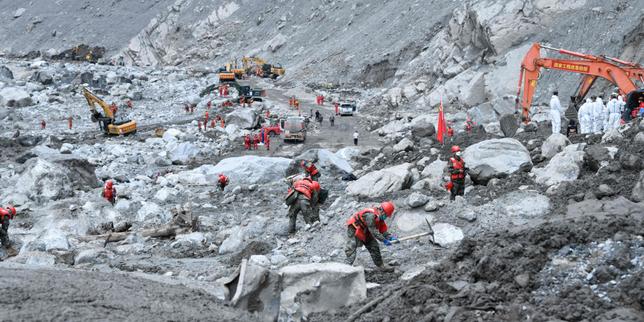
When a massive wall of mud, ice, and roaring water tore down the Himalayas on August 26, 2026, it didn't just smash villages and vital trade routes—it shattered the carefully curated illusion of state control. The disaster, triggered by a catastrophic glacier collapse near the China-Nepal border, flattened the strategic Gyirong Port and unleashed devastation across valleys.
While Nepal opened up to media scrutiny, coordinated recovery efforts, and transparent casualty tallies, Beijing slammed shut the information gates. If you look closely at how authorities handled the aftermath in Tibet, you'll see a familiar pattern. Survival narratives are rewritten, dissent is punished, and independent tracking is treated as a national security threat.
The Tale of Two Disaster Zones
Look at the numbers. They don't just differ; they tell entirely different stories about transparency.
In downstream Nepal, local authorities and rescue teams documented a staggering toll. Thousands were left dead or missing as the violent torrent swept through districts like Rasuwa, carrying debris and victims miles away. Nepal faced the crisis in plain sight, allowing journalists and independent organizations to map out the destruction.
Just across the border in the Tibet Autonomous Region, the official narrative looked radically different. State media initially reported only a handful of casualties, later settling on a fraction of what downstream geography clearly indicated. Why the massive discrepancy? Because information coming out of Tibet is treated as a state secret.
Independent watchdogs and international press groups have repeatedly pointed out that the blackout isn't accidental. It's a calculated strategy to protect the image of the regime. When disasters expose structural vulnerabilities—whether from heavy infrastructure projects, unmonitored mining, or aggressive damming across the plateau—information control becomes the government's primary defensive weapon.
Why Beijing Fears the Truth About the Plateau
The Tibetan Plateau is often called the Water Tower of Asia. It feeds major river systems affecting billions of people down the line in India, Bangladesh, Southeast Asia, and Nepal. But that vital geography also makes it a heavily militarized and strictly monitored frontier.
When climate change accelerates glacial instability, disasters happen. Yet, pointing out that heavy engineering, massive reservoirs, and rapid infrastructure expansion might have weakened the bedrock is strictly forbidden.
Instead of welcoming geologists, climate scientists, or independent journalists to assess the structural integrity of the mountains, authorities blocked access to the epicentre for weeks. Anyone brave enough to share footage on social networks faced swift detention. Even international gestures of solidarity, like a European football club observing a moment of silence, drew fierce diplomatic condemnation from Beijing.
You aren't supposed to question the official line. You are supposed to accept that everything is under control.
The Cost of Silence for Downstream Neighbors
This isn't just an internal censorship issue. It's a regional safety crisis.
When the upper reaches of the Himalayas become an information black hole, downstream countries lose the ability to prepare for cascading environmental threats. Early warning systems fail when crucial hydrological data is classified as a matter of national security. Nepal's local officials admitted they had zero warning before the icy torrent wiped out monitoring stations.
Climate change doesn't care about borders or political sensitivities. Glaciers are melting, mountain stability is eroding, and the third pole of the earth is warning us that current development models are unsustainable.
Treating ecological disasters as political threats instead of shared planetary emergencies guarantees more tragedies. Until transparency replaces censorship across the high Himalayas, the real cost of these disasters will remain buried under rock, mud, and state-mandated silence.