Silicon Valley wants you to believe that the future of artificial intelligence belongs to a tiny group of billionaire frontier labs in California. They want a neat, closed-door system where a US-led agency sets the rules, tests the code, and decides who gets access to the most powerful technology since the steam engine.
Then Xi Jinping walked onto the stage in Shanghai and completely flipped the script.
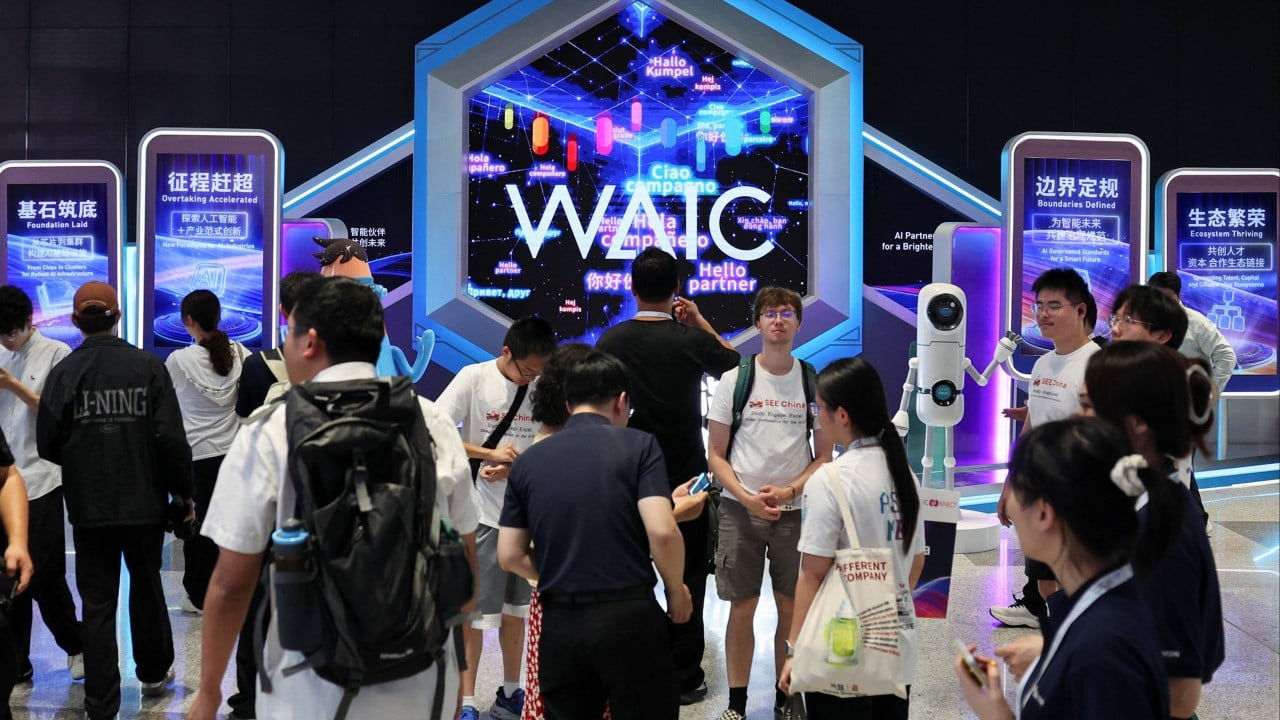
At the World Artificial Intelligence Conference, China’s president didn't just reject American dominance in AI. He launched a massive, open-source counter-offensive designed to make the US tech blockade look completely irrelevant. While American tech leaders try to lock down their algorithms behind corporate walls, Beijing is actively giving away its tech tools to the rest of the world. It’s a brilliant, aggressive geopolitical play that alters the entire trajectory of global technology.
The Collision of Two Rival Global Visions
The battle lines are suddenly crystal clear. On one side, you have the American establishment pushing what critics call "Pax Silica" — an exclusive alliance of Western powers and proprietary tech giants. Google DeepMind CEO Demis Hassabis laid out this exact playbook by calling for a US-led standards body to police frontier models. Hassabis argues that because artificial general intelligence is arriving so quickly, the US federal government needs a Wall Street-style watchdog to test models before they hit the market.
It sounds like a pitch for safety, but it's actually a masterclass in regulatory capture. If you force every developer to pass a US-managed assessment just to deploy their software, you effectively shut out foreign competitors and open-source projects.
China saw the trap and built an entirely separate exit.
Instead of playing by Washington's rules, Beijing established the World AI Cooperation Organisation. They didn't wait for Western approval. Twenty-nine nations, including heavyweights and regional anchors across Latin America, Africa, and Asia, signed the agreement on the spot. The pitch to the Global South is simple: America wants to keep you dependent on their expensive, closed cloud systems. China will give you the underlying code for free.
Breaking the Tech Blockade with Massive Models
Washington has spent years trying to throttle Chinese tech progress through strict export controls on advanced chips and sudden bans on exporting American models overseas. Just last month, the White House abruptly yanked proprietary models from firms like Anthropic out of specific foreign markets due to national security fears.
But blockades only work if the target can't build their own supply.
Right as the US pulled back, Beijing-based startup Moonshot AI stole the headlines by dropping Kimi K3. It isn't just another copycat. Kimi K3 is currently the largest open AI model on the planet by parameter count. By releasing a massive, highly capable model under an open architecture, China proved it can match Western capabilities while defying Washington's restrictions.
Think about the math here. If a developer in Brazil or Indonesia gets cut off from an American API due to shifting political winds in Washington, they don't throw their hands up and quit. They download Kimi K3, run it locally, and build their platform on a Chinese foundation.
The Safety Narrative Flip
For a long time, Western tech executives claimed that China couldn't be trusted with AI because they didn't care about safety. Xi completely neutralized that argument by making his most explicit statements on AI risk to date. He called for urgent international protocols to prevent autonomous software from evading human oversight.
The difference isn't the concern over safety; it's who gets to hold the kill switch.
- The American Approach: A centralized, federal agency heavily influenced by Silicon Valley's elite labs that dictates who can launch a model.
- The Chinese Approach: Multilateral governance run through the United Nations and the newly minted Shanghai-based alliance, allowing developing nations an actual vote on technical standards.
By framing AI safety as a human control issue rather than an American corporate issue, Beijing makes the US look like a hoarding monopolist while casting itself as the ultimate tech equalizer.
Tech Diplomacy is the New Infrastructure
Don't mistake this for pure altruism. This is the next phase of global influence. Over the next five years, China is deploying localized training centers and offering 5,000 AI training slots to officials and engineers across ASEAN, BRICS, and the African Union. They're even gifting an AI-powered weather observation system to 30 countries to handle early climate warnings.
If you train a generation of global engineers on Chinese architectures, datasets, and protocols, you lock them into your tech ecosystem for decades. It’s exactly what China did with physical infrastructure through the Belt and Road initiative, but this time it’s happening entirely in the cloud.
Your Next Strategic Moves
The global AI landscape just fractured into two distinct zones, and you need to adapt immediately.
- Audit your model dependencies. If your business relies exclusively on proprietary US models, you're exposed to sudden export restrictions and regulatory shifts. Start testing massive open-weight alternatives like Kimi K3 or Meta's Llama series inside your tech stack to ensure operational resilience.
- Track the new standards. Don't just watch Western regulatory bodies. Keep a close eye on the technical standards emerging from Shanghai's new alliance, especially if you operate in or export to Global South markets.
- Diversify your cloud strategy. Prepare for a world where certain regions reject American cloud infrastructure entirely. Ensure your software applications are flexible enough to deploy on localized, open-source tech stacks across different global jurisdictions.