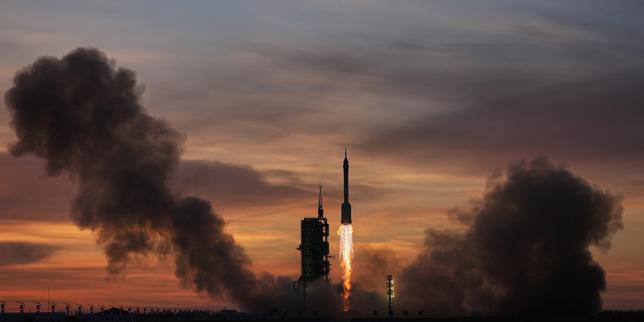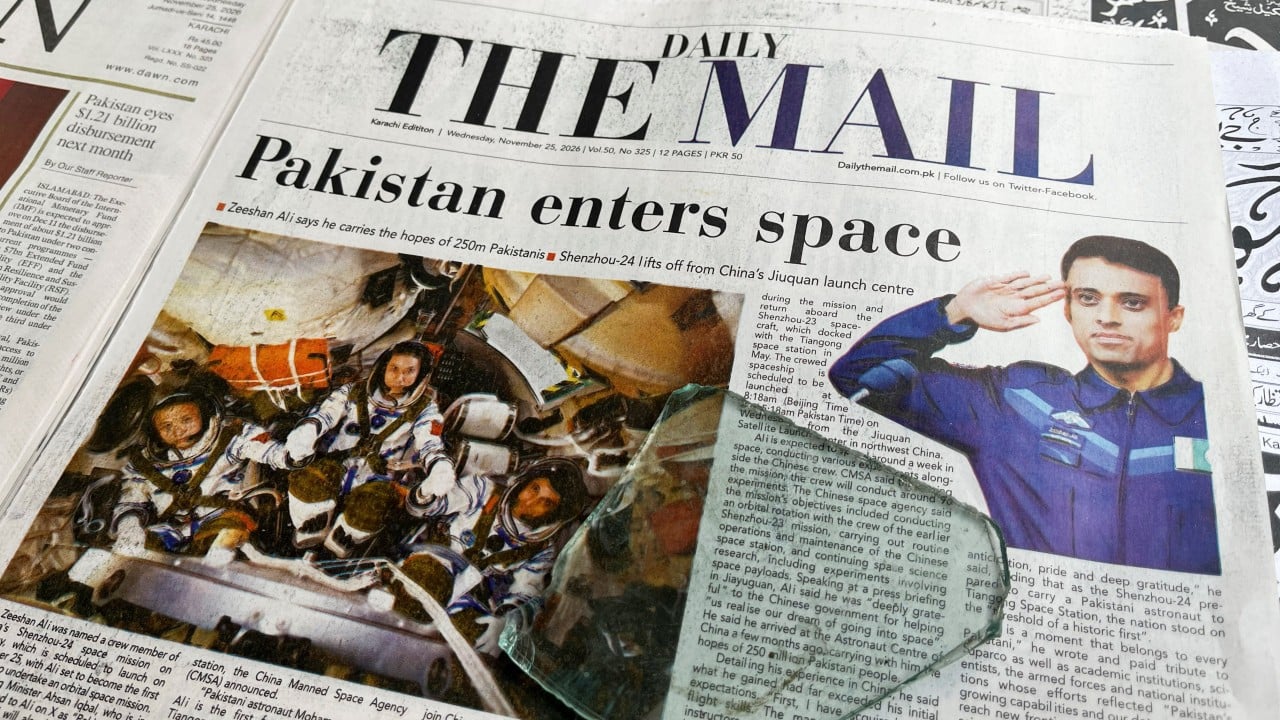
When you watch a rocket lift off from the Jiuquan Satellite Launch Center carrying a foreign astronaut for the first time in China's space program history, it's easy to treat the launch window as the starting line. Honestly, that misses how slow and deliberate space diplomacy really is. The China Pakistan crewed space mission didn't come together over a few diplomatic meetings or a sudden burst of enthusiasm. It grew out of decades of incremental hardware work, satellite launches, and geopolitical alignment that turned a distant ambition into an actual seat on Shenzhou-24.
As Pakistan's Planning and Development Minister Ahsan Iqbal has pointed out in coverage surrounding the flight, the milestone reflects a long-running push rather than an overnight pivot. And if you look closely at what happened between Pakistan's early satellite experiments and the November 25, 2026 launch of payload specialist Muhammad Zeeshan Ali alongside Chinese commander Tang Hongbo and flight engineer Wu Yi, you start seeing why officials talk about a decade-long arc and even longer ties.
What People Miss About the Timeline
Most headlines compress complex bilateral projects into neat soundbites. A minister mentions a decade in the making, and readers either take it literally as a single ten-year crewed-flight blueprint or assume space cooperation just began. In reality, space programs move in overlapping layers.
You have long-term political and technical groundwork on one track, and fast-moving operational execution on another. Once the China Manned Space Agency (CMSA) and Pakistan's Space and Upper Atmosphere Research Commission (SUPARCO) signed their formal astronaut cooperation agreement in Islamabad in February 2025, things accelerated fast. After a three-stage screening process, two Pakistan Air Force pilots—Muhammad Zeeshan Ali and Khurram Daud—headed to Beijing in April 2026 for seven months of intensive training at the Astronaut Center of China, covering centrifuges, simulators, emergency procedures, and Mandarin.
Yet that rapid 2025–2026 sprint sits on top of much older foundations. Pakistan launched its first experimental satellite, Badr-1, aboard a Chinese rocket back in 1990. Over the years, cooperation expanded through satellite projects, joint milestones, and robotic lunar participation, including the iCube-Qamar satellite riding along on China's Chang'e-6 mission in 2024. When officials frame the crewed flight as years in the making, they're pointing to that accumulation of trust, shared infrastructure, and institutional habit. Without years of lower-stakes collaboration, putting a foreign payload specialist inside a Chinese spacecraft would have been far harder to pull off smoothly.
Why Tiangong Matters Beyond One Flight
From a technical standpoint, Zeeshan Ali's roughly one-week stay aboard the Tiangong space station isn't about turning Pakistan into a solo human-spaceflight superpower overnight. Let's be real about the math and engineering here. Building and sustaining a crewed space program takes massive capital, redundant life-support systems, launch infrastructure, and years of flight safety heritage.
Flying as a payload specialist on a short-duration orbital mission works differently. Ali's job alongside Tang Hongbo and Wu Yi involves initiating and installing experiments, verifying that scientific gear survived launch loads and microgravity, and supporting broader station research—with experiments taking roughly six to twelve months to complete. For a country sending its first citizen into orbit, that's a smart, realistic entry point. You learn how microgravity operations actually run in practice before trying to bite off anything bigger.
There's also a strategic angle worth being blunt about. International access to orbital destinations isn't purely a merit-based science fair; it's shaped by alliances, export rules, and geopolitics. China built Tiangong independently after being excluded from the International Space Station, and hosting Pakistan's first astronaut makes Islamabad the first foreign nation to send a crew member to Tiangong. For Beijing, it shows Tiangong isn't just a domestic outpost—it's a platform for partners outside the U.S.-led orbital orbit. For Islamabad, it delivers high-visibility scientific prestige and hands-on astronaut training without needing a domestic crewed launcher.
The Moon Talk Needs a Dose of Caution
Whenever a historic crewed flight happens, ambition ramps up fast. Officials and observers are already looking past low Earth orbit toward lunar cooperation, with discussions around future lunar missions—such as a SUPARCO-developed rover slated for China's Chang'e-8 around 2028—and China's broader goal of landing astronauts on the Moon by 2030.
I'm excited by any expansion of scientific research, whether it happens on Tiangong or near the Moon, but I'm skeptical when short orbital stays get treated like proof that deep-space human exploration is right around the corner. A one-week mission in low Earth orbit is worlds apart from lunar transit, deep-space radiation, precision landing, and surface operations. Even China itself is still working through major lunar hardware milestones like Long March-10, Mengzhou, and Lanyue on the road to its 2030 target.
There are also practical questions that deserve straight talk rather than hype:
- Scientific return vs. symbolic value: Short flights often carry heavy diplomatic and public-morale weight. The real test is whether the experiments installed in orbit produce durable data for Pakistani researchers and engineers back home.
- Schedule slippage: Space timelines slip all the time. Tentatively planned lunar milestones in the late 2020s are targets, not guarantees, and budgets or technical hurdles can shift dates.
- Institutional follow-through: Sending a pilot to space grabs attention for a week. Building lasting aerospace engineering capacity takes steady funding, university pipelines, and technical continuity over decades.
What This Means If You're Following Space or Policy
If you're tracking how space power is shifting—or thinking about how emerging space nations build capability—don't get distracted by launch-day drama alone. Look at the agreements, training pipelines, and payload integration work that happen quietly before liftoff.
You can follow official updates directly from the China Manned Space Agency and the Space and Upper Atmosphere Research Commission to separate confirmed mission milestones from long-range aspirations. Compare what happens during the initial orbit installation phase with the follow-up science results published over the next year, and watch how bilateral space agreements translate into concrete hardware and research opportunities rather than just ceremonial announcements.