If you look at a global maritime chart, China’s economic juggernaut has a glaring weak spot. Around 80% of Chinese oil imports and a massive chunk of its outbound cargo pass through the narrow Strait of Malacca. A single naval blockade there could choke the country’s economy within weeks. That single strategic nightmare explains why Beijing is pouring billions into dirt, asphalt, and steel tracks across Central Asia.
Beijing isn't expanding overland logistics purely to move goods faster. It's doing it for survival. China is aggressively building out terrestrial infrastructure—from high-capacity rail lines in Kyrgyzstan to dry ports on the Kazakh border—to guarantee its energy security, open up captive markets, and secure trade pathways that Western navies can never touch. Meanwhile, you can explore other developments here: Why Ending Federal Workforce Demographic Data Collection Won't Eliminate Corporate Risk.
The Real Reason Behind China's Land Push
For decades, ocean shipping dominated international commerce because floating a container on a barge is dirt cheap compared to pulling it with a locomotive. Freight trains couldn't compete on cost. But cheap ocean freight carries hidden strategic risks that Chinese planners are no longer willing to accept.
Overland logistics corridors transform Central Asia from a landlocked buffer zone into a massive overland transit hub connecting China directly to the Middle East and Europe. By shifting traffic off the ocean and onto tracks, Beijing secures three critical things at once. To see the full picture, we recommend the recent analysis by Bloomberg.
First, it creates a direct hedge against geopolitical blockades in the Indo-Pacific. Second, it develops Xinjiang and China's inland western provinces by turning remote border posts into international logistics hubs. Third, it locks neighboring economies into China's industrial orbit by making Beijing their primary infrastructure financier and commercial customer.
Bypassing Maritime Vulnerabilities and Island Chains
Look closely at China's geography. To reach the Indian Ocean or Europe by sea, ships departing Eastern Chinese ports must navigate past Taiwan, cross the South China Sea, and squeeze through the Strait of Malacca near Singapore. Western strategists call these the "First Island Chain" and the "Malacca Dilemma." In any serious conflict, these oceanic choke points can be shut down fast.
A freight train departing Xi'an or Kashgar faces no hostile fleets. It rolls across the border into Kazakhstan or Kyrgyzstan, travels through Uzbekistan or across the Caspian Sea, and reaches European markets without ever seeing a foreign naval vessel.
While ocean cargo still handles bulk raw materials like iron ore, high-value goods like electronics, industrial machinery, and automotive parts are moving inland. Railways offer shipping times of 12 to 15 days between Western China and Central European terminals, compared to 30 to 45 days by sea. That speed advantage, paired with security against sea-lane disruption, makes land routes worth every cent of investment.
The Breakthrough in the China-Kyrgyzstan-Uzbekistan Railway
For nearly thirty years, the proposed China-Kyrgyzstan-Uzbekistan (CKU) railway sat trapped in committee meetings. Political instability in Bishkek, squabbles over funding, and regional border friction kept the 500-kilometer rail line on ice since it was first drafted in 1997.
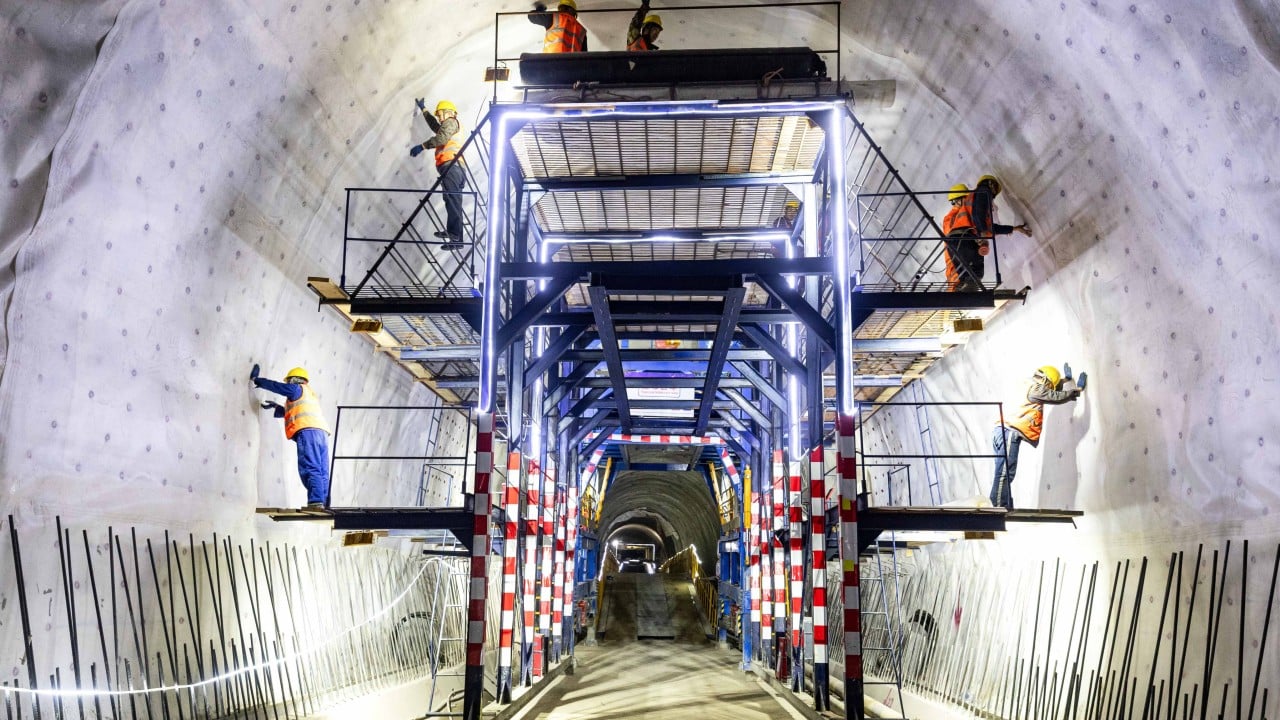
That changed completely when construction began on the project. The $4.7 billion railway cuts through some of the toughest mountain terrain on the planet, requiring over 120 kilometers of tunnels and dozens of bridges across the Jaman-Davan and Fergana ranges.
China holds a 51% stake through its state rail company, with Kyrgyzstan and Uzbekistan splitting the remainder. Once fully operational, this line will shave up to 800 kilometers off the traditional route between China and Europe, saving roughly 7 to 8 days in transit time.
The route starts in Kashgar, crosses the Kyrgyz border at the Torugart Pass, heads through Makmal—where a specialized dry port handles the transition between China's standard gauge tracks and Central Asia's Russian-style broad gauge—and runs into Jalal-Abad before reaching Andijan in Uzbekistan. From Andijan, cargo connects to existing rail networks heading into Turkmenistan, Iran, Turkey, and Europe. It transforms Kyrgyzstan from a transportation dead-end into a primary Eurasian transit center. Kyrgyz officials estimate transit revenue alone could reach $200 million annually, matching the historic output of the country's massive Kumtor gold mine.
Squeezing Past the Russian Bottleneck
Before 2022, the vast majority of overland freight from China to Europe traveled along the northern route, crossing Kazakhstan, Russia, and Belarus into Poland. Known as the Eurasian Land Bridge, it was smooth, predictable, and heavily used.
Sanctions changed that reality overnight. Western European logistics providers pulled back from shipping cargo through Russian territory, leaving shippers desperate for reliable alternatives.
That shift pushed interest straight into the Middle Corridor, formally known as the Trans-Caspian International Transport Route. This multimodal path leaves China, crosses Kazakhstan or Kyrgyzstan, hits the Caspian Sea at ports like Aktau or Turkmenbashi, travels by ferry to Baku in Azerbaijan, and continues through Georgia and Turkey into Southern Europe.
Cargo volume along the Middle Corridor surged by over 60% in recent years, exceeding 4 million tons annually. But the route isn't without headaches. Moving containers from trains onto ferries across the Caspian Sea, dealing with unpredictable sea weather, and navigating custom procedures across six different borders creates serious bottlenecks.
China is stepping in directly to fix these pain points. Chinese engineering and logistics companies are building massive dry ports, like the Silkway Central Asia logistics center near Tashkent designed to process 3 million tons of freight annually. Beijing is also funding digital tracking systems and border modernization projects to cut administrative delays at every crossing.
What Central Asian Nations Actually Stand to Gain
Central Asian governments aren't passive players in this game. Countries like Kazakhstan, Uzbekistan, and Kyrgyzstan are desperate to break their historical landlocked status.
For decades, these nations depended heavily on Russian infrastructure to sell their oil, gas, minerals, and agricultural products to global buyers. Partnering with China gives them direct rail connections to Chinese ports on the Pacific, along with shorter routes to the Persian Gulf and Southern Europe.
The trade stats tell the story. Trade volume between China and the five Central Asian republics expanded past $80 billion, with China replacing Russia as the dominant commercial trading partner across the region.
Central Asian economies get modern rail infrastructure, logistics jobs, and transit fees. However, this growth comes with financial risk. Heavy infrastructure loans from Chinese state institutions leave smaller economies vulnerable to debt stress if transit traffic falls short of long-term projections. Kyrgyzstan and Uzbekistan had to carefully balance project shares to avoid over-leveraging their national budgets for the CKU railway.
How to Track Eurasia's Changing Trade Map
If you want to understand where global trade and geopolitical power are moving over the next decade, stop watching only maritime shipping lanes and start tracking inland rail corridors.
Here is how you can practically evaluate the shift in Eurasian trade dynamics.
- Monitor container volumes at Khorgos and Makmal: These two dry ports are the primary overland gateways between China and Central Asia. Rising container traffic at Khorgos and Makmal signals faster diversion away from sea freight for high-value manufacturing.
- Track Caspian Sea port expansion: Watch development at Aktau (Kazakhstan), Turkmenbashi (Turkmenistan), and Baku (Azerbaijan). The throughput capacity of Caspian ports determines whether the Middle Corridor can scale up to handle major trade volumes.
- Watch gauge-standardization projects: Central Asia uses broad rail gauge (1,520 mm) inherited from the Soviet era, while China uses standard gauge (1,435 mm). Automated wheel-bogie swapping technology and efficient dry port crane infrastructure are the key metrics for reducing route friction.
- Keep an eye on Western European logistics commitments: Major European freight forwarders shifting contracts away from Russian transit routes directly benefits Central Asian corridors.
China’s land trade push is fundamentally reshaping trade across Eurasia. By turning dry inland regions into high-capacity transport veins, Beijing is building an overland commercial network designed to withstand maritime pressures for decades to come.