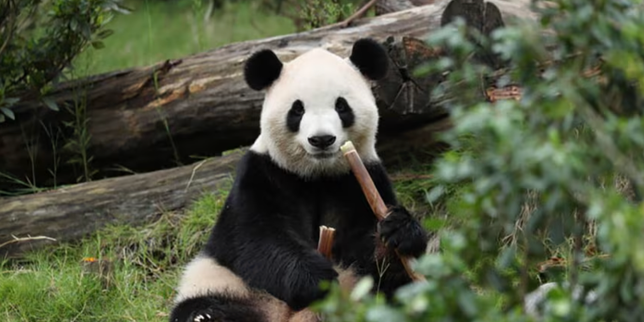
When Chinese President Xi Jinping announced that two giant pandas would soon land at Zoo Atlanta, most headlines framed it as a cute diplomatic gesture. But if you look past the fluffy photo ops, you'll see a calculated geopolitical strategy that has kept Washington and Beijing dancing for over fifty years.
Let's cut through the noise. What's really happening with panda diplomacy in 2026, and why are Ping Ping and Fu Shuang heading stateside right now? Also making news lately: Why Recent Pakistani Strikes Inside Afghanistan Will Change Border Dynamics Forever.
The Real Story Behind Ping Ping and Fu Shuang
During a high-stakes state visit to Washington, D.C., Xi Jinping dropped the news that a male panda named Ping Ping and a female named Fu Shuang would arrive at Zoo Atlanta in a matter of days. Their names carry heavy symbolic weight—Ping Ping translates to peace, while Fu Shuang means double blessing.
Yet, don't mistake a biological loan for a pure act of charity. China owns every single giant panda on Earth. When foreign zoos host these animals, they are paying hefty annual conservation fees under strict, multi-year cooperative breeding agreements. It's high-level wildlife management wrapped in velvet ribbon, designed to soften political friction when bilateral ties get rocky. More information on this are covered by TIME.
How Panda Diplomacy Survived Fifty Years of Cold War and Trade Wars
The modern version of this tradition kicked off back in 1972, right after Richard Nixon's historic trip to Beijing. First Lady Pat Nixon mentioned how much she loved the pandas she saw at the Beijing Zoo, and Chinese Premier Zhou Enlai promptly gifted Ling-Ling and Hsing-Hsing to the American people. That single move melted decades of diplomatic frost overnight.
Since then, the rules have shifted. Back in the 1980s, Beijing stopped giving pandas away as permanent gifts because wild populations were crashing. They moved to commercial leases. If political tensions flare up—like they did a few years ago when several American zoos had to ship their pandas back home as contracts expired—the bears quietly pack their bags and head back to Chengdu.
When relations stabilize, the loans resume. That is why the arrival of Ping Ping and Fu Shuang in Atlanta matters. It signals a calculated thaw, coming on the heels of new pandas arriving at the San Diego Zoo and the Smithsonian National Zoo in Washington in 2024. The U.S. panda population is climbing back up to six, and that number is a barometer for how much cooperation Washington and Beijing are willing to tolerate.
Why Zoos Fight Hard to Keep Pandas
Keeping pandas isn't cheap. Zoos typically shell out around one million dollars a year in conservation fees alone, plus hundreds of thousands more to import fresh bamboo daily and maintain specialized climate-controlled habitats.
So why do institutions like Zoo Atlanta fight for these contracts? Because the economic return is massive. A pair of pandas can boost ticket sales, merchandise revenue, and local hotel bookings by millions. They turn an ordinary regional zoo into a global tourist destination.
At the same time, conservation science has genuinely benefited. Decades of joint research between American scientists and the Chengdu Research Base have moved giant pandas off the "endangered" list down to "vulnerable," proving that captive breeding and habitat protection programs actually work when well-funded.
What to Watch Next
If you're planning a trip to Atlanta to see Ping Ping and Fu Shuang, remember that you're watching a living tradition of soft power in action. Every bamboo stalk they chew represents a tiny diplomatic concession, keeping communication channels open when traditional politics get messy.
Keep an eye on the conservation lease renewals over the next few years. As long as the bamboo keeps flowing across the Pacific, the diplomatic ice is holding.