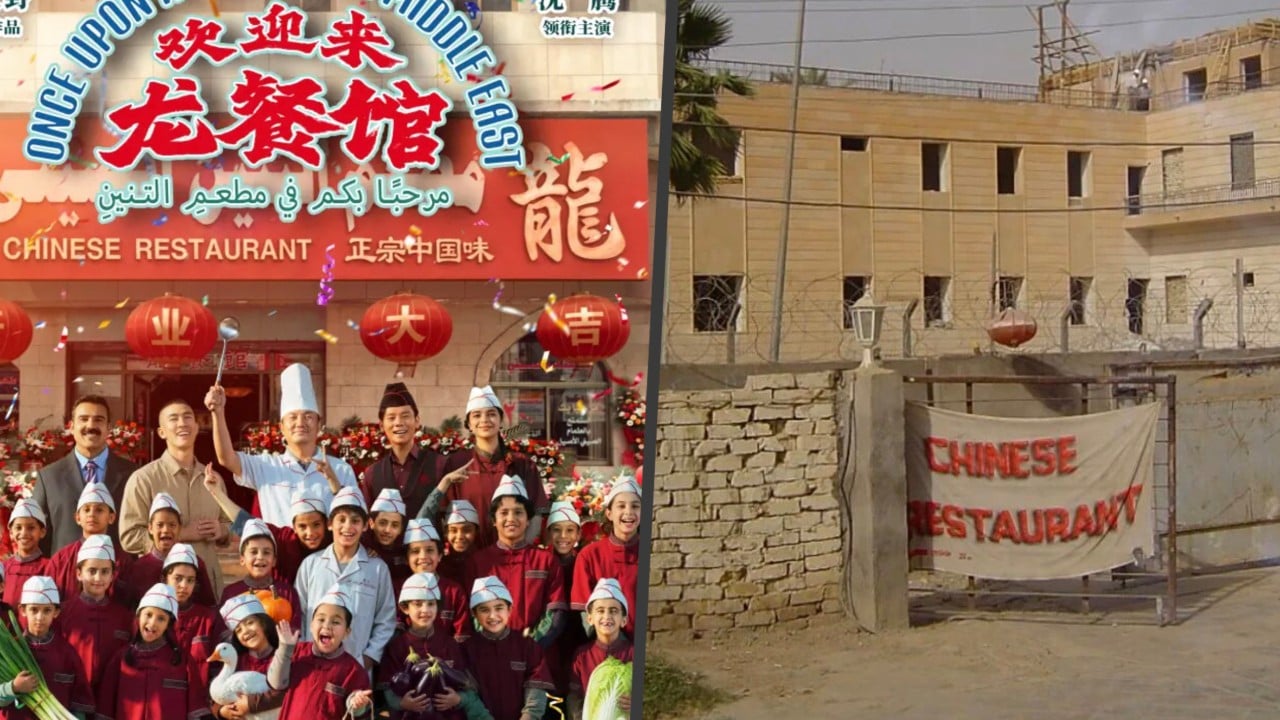
Big-budget blockbusters usually dominate international award submissions, but the Chinese film industry took a sharp turn for the 99th Academy Awards. Instead of high-octane military action or sweeping dynastic epics, mainland selectors picked Once Upon a Time in the Middle East, a film centered around an ordinary Chinese chef running a safe-haven restaurant in a war-torn country.
Written and directed by Wen Muye and starring Shen Teng, the movie pulls inspiration from real-life accounts of Chinese expats and locals who weathered the 2003 Iraq War. It swaps out traditional geopolitical chest-thumping for a kitchen table, proving that stories about human survival often travel farther than flag-waving propaganda.
The Real Story Behind the Restaurant
Most people don't realize that Chinese business owners and workers stayed behind in Baghdad after the 2003 invasion, keeping small establishments afloat amidst constant danger. The film follows Xu Fu, a chef who falls into debt at home and travels to the Middle East for work, only to find himself managing a makeshift hub of hospitality when conflict shatters the region.
Real individuals who lived through the era have stepped forward since the film's release to validate its emotional core. Alobaidi Ameen, an actor and journalist who survived the 2003 invasion as a young child in Baghdad, noted that basic survival during those months boiled down to raw essentials like raw potatoes and flatbread. In a landscape marked by falling missiles, a warm meal wasn't just food—it was proof that humanity still existed outside the blast zone.
Wen Muye made a deliberate creative choice to keep the historical context broad. He didn't want to lock the narrative into a single strict documentary framework of a specific calendar week, opting instead for a timeless anti-war commentary. The kitchen becomes a neutral ground where ordinary people, regardless of uniforms or nationalities, share the basic instinct to eat, connect, and stay alive.
Why This Specific Film Got the Oscar Nod
Sending a comedy-drama about a restaurant worker to the Oscars tells you a lot about how China's film strategy is evolving. Action-heavy war films like Operation Red Sea previously filled this role, relying on adrenaline and modern military hardware to draw crowds. Once Upon a Time in the Middle East takes the exact opposite approach.
It crossed CN¥1 billion at the box office in just eight days after its August release, proving that domestic audiences respond to grounded human vulnerability. By focusing on a character who feeds people instead of fighting enemies, the film offers international voters an accessible entry point into modern Chinese storytelling. It avoids the heavy-handed lecturing that sinks many state-backed artistic exports, leaning instead on universal themes of food, community, and the absurdity of war.
What Hollywood Gets Wrong About Conflict Narratives
Western war cinema has spent decades recycling a very specific formula. You get heroic soldiers, clear battle lines, and a distinct line between saviors and villains. This movie throws that blueprint out the window.
When a film highlights the perspective of an immigrant cook protecting orphans in a ruined city, it reframes the entire discussion around global conflict. It asks viewers to measure the cost of war not by territory gained, but by the simple daily rituals destroyed—like sitting down with family for a hot dinner. That shift in perspective resonates across cultures, which explains why industry watchers view it as a calculated, yet artistically sound, contender for the Best International Feature Film category.
You don't need millions of dollars in CGI explosions to make a war movie sting. Sometimes all it takes is a steaming bowl of braised rice and a door left open for anyone who needs a place to hide.