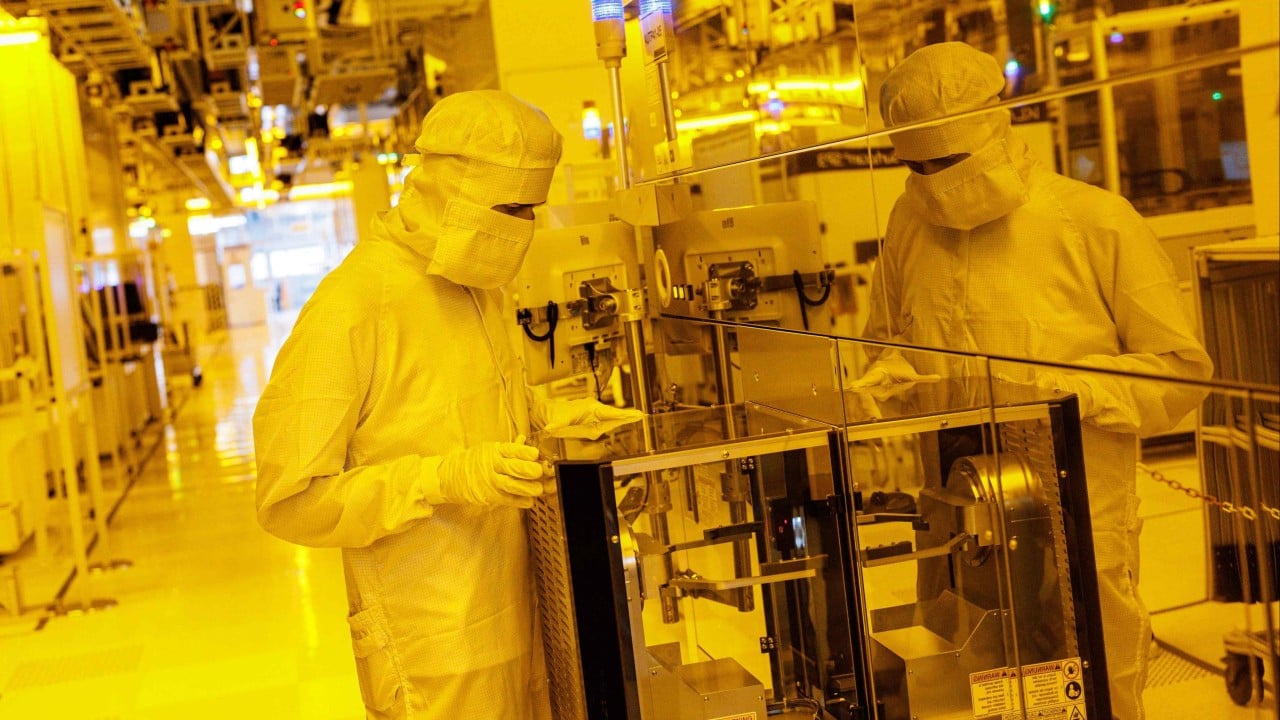
While Western tech giants pour billions into digital chatbots that write essays or generate funny videos, Beijing is doing something entirely different. They're putting artificial intelligence into heavy metal.
The Western media tends to treat artificial intelligence as a software play. We argue about copyright, content creation, and search engines. But go inside a battery factory in Shenzhen or an automotive assembly line in Guangzhou, and you'll see the real shift. China is using AI to give physical machines a brain. They call it "embodied AI," and it is quietly moving traditional factory automation out of simple, repetitive tasks and pushing it into highly complex, variable manufacturing sectors.
This isn't about the future. It's happening right now in 2026. The International Federation of Robotics notes that China already deploys over 50% of the world's annual industrial robots. But those older machines were dumb. They executed the exact same pre-programmed path millions of times. If a part was slightly out of place, the machine jammed.
By adding foundation models to these machines, Chinese manufacturers are forcing robots to adapt, learn, and change tasks instantly. It changes the entire math of global manufacturing supply chains.
The Massive Scale of China's Physical Edge
Western companies face a massive structural handicap in this new race. They don't have enough physical factories to train their models.
To make an AI robot smart, you need data. To get data, the robot needs to perform tasks in the physical world over and over. Because China dominates the production of global electronics, electric vehicles, and lithium batteries, it possesses the largest data factory on earth. According to data from the Merics research institute, Chinese suppliers already command a 57% market share in domestic industrial robot installations, up from just 30% in 2020. In the electronics sector, they install 64% of the world’s industrial robots.
Look at the difference in how this data loop works:
- The Software Loop: An AI model trains on scraped text and images from the internet. It learns to write an email or build a website.
- The Hardware Loop: An AI model inside a factory watches a human worker assemble a complex, irregular wiring harness for an EV. The machine watches through cameras, maps the tactile feedback, and runs parallel simulations.
This is exactly how companies like Shenzhen-based UBTech Robotics are scaling. They aren't just building humanoids for PR stunts. They are putting their Walker series humanoids directly onto active electric vehicle assembly lines to handle tactile quality inspections and sorting. If a rubber seal is slightly bent, the AI detects the variance and alters its grip pressure in real time. Dumb robots can't do that.
Why Humanoids on Stage are a Distraction
Every tech conference features a humanoid robot doing a backflip or dancing. Last year it was the "Yangge" dance; more recently, companies like Unitree showcased robots doing synchronized martial arts routines at major public galas.
Don't let the showmanship fool you. The real breakthrough isn't that a robot can hold a stick. The breakthrough is the underlying tech required to make it happen: multi-robot coordination and compliant manipulation.
When a robot performs a stick-fighting routine with a human, it has to maintain its grip while constantly adapting to unpredictable external force and physical resistance. Translate that specific capability to a dark factory floor, and suddenly you have a machine that can handle heavy, shifting loads, clear unexpected line blockages, or assemble a car door without scratching the paint when the chassis isn't aligned perfectly.
The Chinese government is pushing this hard through its "Robot+" and "AI Plus Manufacturing" roadmaps. The explicit goal isn't just to make humanoid helpers for the home—the real objective is to double China's manufacturing robot density by 2030 and use these adaptable machines to insulate the economy from a shrinking labor pool.
The Strategy Shift You Need to Make
If you manage a supply chain, manufacture hardware, or invest in industrial technology, relying on standard automation is a losing strategy. The cost of smart, AI-driven automation is dropping too fast.
First, stop looking at robotics as a fixed capital expense that takes five years to pay off. When software can reprogram a robot to switch from packing electronics to sorting automotive components in an afternoon, the old calculations about "tooling costs" disappear. You are buying a flexible worker, not a single-purpose appliance.
Second, understand that the competitive advantage is shifting from cheap labor to data integration. If your production line doesn't capture high-fidelity video and tactile data from every single manual assembly step today, you won't have the data required to train the AI models that will replace those steps tomorrow.
The companies winning this race aren't waiting for a perfect, all-purpose robot to arrive in a shipping crate. They are installing basic robotic arms with camera systems right now, letting the software watch their human workers, and slowly handing over small, variable tasks to the computer as it gets confident. That's how you build an autonomous line, piece by piece.