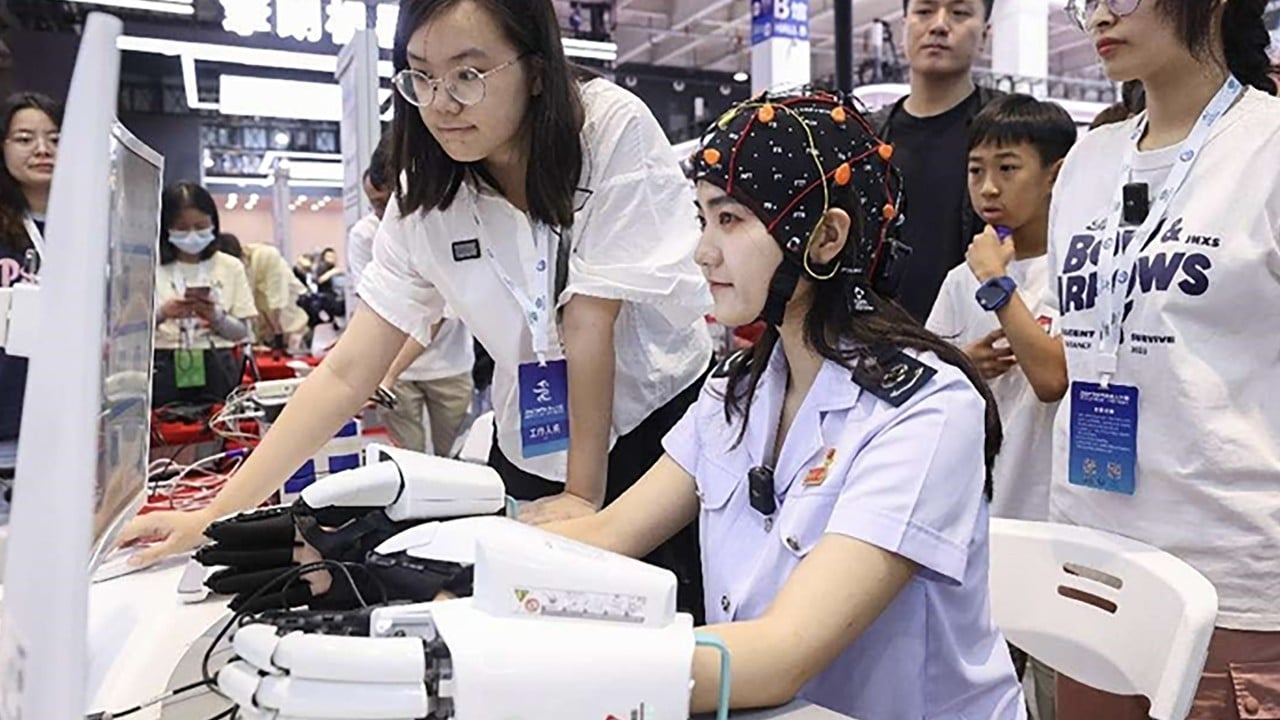
Labs build cool prototypes all the time. Whoever writes the rules owns the market.
That's the quiet shift happening right now in brain-computer interface development across China. For years, headlines around neurotech focused on flashier stuff: surgical robots, high-channel implants, and flashy demos of patients moving cursors or playing games by thought. Those milestones still matter. Still, the real power play has moved from raw hardware demos to technical standards, clinical billing, and data rules.
When I look at how medical hardware matures, the pattern is pretty consistent. Early hype rewards whoever can get a signal out of a neuron first. Later stages reward whoever defines how safety is tested, how data is formatted, and how hospitals get reimbursed. China isn't just chasing clinical breakthroughs anymore. It's building the rulebook that decides what counts as a compliant product, an evaluated dataset, and an approved device.
Why Standards Matter More Than Another Lab Demo
If you spend enough time watching medtech commercialization, you learn quickly that a great bench test can still stall in regulatory review. Regulators don't grade on excitement. They grade on repeatability, safety margins, and traceable data.
In China, that push has sped up dramatically across 2025 and 2026. Rather than treating brain-computer interface projects as isolated hospital experiments, seven central ministries backed an implementation push to treat the sector as a strategic industry, while Beijing and Shanghai moved to cluster research institutes, hospitals, and device makers in dedicated zones. According to Georgetown CSET's policy translation, official policy explicitly frames these interfaces around industrial development and future applications spanning healthcare, wearables, and broader systems.
Standards do two things at once. First, they lower friction at home by giving labs and startups a shared baseline instead of reinventing testing protocols from scratch. Second, they give domestic players a head start in shaping international norms. If a country sets the baseline for how electrode contact is tested, how signals are synchronized, or how training data is judged, foreign companies that want into that market have to adapt to those expectations.
The Layers China Is Actually Standardizing
People tend to lump all brain-computer interface tech into one bucket, which is honestly a mistake. A non-invasive EEG headband for rehab or consumer feedback looks nothing like a closed-loop implantable stimulator or an endovascular stent electrode.
The most interesting part of China's regulatory push is how it targets different layers of the stack rather than just one type of hardware:
- Core terminology and hardware behavior: National medical device standards introduced since late 2025—such as YY/T 1987-2025 on core terminology and YY/T 1996-2025 on testing closed-loop implantable neural stimulators—give reviewers clear definitions and bench benchmarks.
- AI training data quality: As reported by CISEMA's regulatory analysis, China's National Medical Products Administration approved standard YY/T 2029-2026 in September 2026 (taking effect September 1, 2027) to govern EEG dataset quality across collection, annotation, storage, and quality control for AI-driven BCI medical devices.
- Broader technical and data interoperability: Industry specifications rolled out in late 2026 have also pushed toward common signal formats, time synchronization, and evaluation methods so systems and datasets aren't trapped in incompatible silos.
That data standard is a big deal. Modern decoding algorithms live or die by the messy, noisy signals they train on. If two labs label motor imagery or artifacts inconsistently, their models won't generalize cleanly. Putting rules around dataset annotation and quality control forces teams to treat neural data like serious clinical evidence rather than a rough science experiment.
Clinic Reality Beats Hype Every Time
Let's be real for a second. Even with fast-track review pathways and dedicated policy backing, turning neural engineering into routine hospital care is slow, grueling work.
A lot of commentators still talk as if high-throughput implants are right around the corner for everyday use. In practice, invasive and semi-invasive systems face tough clinical realities: surgical risk, tissue response over time, long-term hardware reliability, and multi-year follow-up requirements under high-risk Class III pathways. Non-invasive systems are easier to deploy and scale, yet surface signals pick up electrical noise and have lower spatial resolution than electrodes closer to or inside neural tissue.
What makes a clinical ecosystem actually move isn't just clever decoding. It's hospital adoption. Standalone medical billing codes—introduced in 2025 for BCI procedures—help solve a practical bottleneck that kills many promising medtech tools: if hospitals can't bill cleanly for a procedure or therapy, scaling beyond pilot wards gets much harder.
At the same time, there are real debates and limits worth keeping in mind. Neural privacy and brain data governance are still evolving worldwide, and a standard or recommended guideline isn't a magic wand that solves noisy signals or guarantees long-term clinical outcomes. Localizing clinical evidence across jurisdictions also remains a real hurdle, because approval in one country doesn't automatically clear the bar everywhere else.
What Founders, Clinicians, and Teams Should Do Next
If you're building in neurotech, investing in the space, or tracking how global standards are shifting, waiting around to see how the dust settles is a risky move. Standards written today shape product roadmaps two or three years down the line.
- Audit your data pipeline early: If your software or device uses AI to decode neural signals, document how data is collected, annotated, stored, and quality-checked right now instead of scrambling during regulatory review.
- Design for interoperability from day one: Avoid locking signal formats, timestamps, and session logs into proprietary formats that make multi-center trials or cross-border evaluations painful later.
- Match your regulatory strategy to real clinical risk: Separate near-term rehabilitation and non-invasive workflows from high-risk implantable timelines, and build clinical endpoints that hospitals can actually justify in routine care.
- Track both domestic and international standards bodies: Watch how national medical device standards and broader technical specifications align—or diverge—so your validation plans don't have to be built twice.