The golden era of free-flowing government hand-outs for Chinese electric vehicles is officially winding down. If you have been tracking the global automotive sector, you know Beijing spent the last decade pouring billions into tax exemptions, consumer subsidies, and cheap credit to build an undisputed global juggler. But the training wheels are coming off, and the timing could not be more intense.
In mid-2026, the Chinese Ministry of Finance dropped a policy bomb that reshapes the entire sector. Starting September 1, 2026, Beijing is bringing back a 2 percent consumption tax on lithium-ion batteries. A year later, that tax doubles to 4 percent. For an industry that has been operating on razor-thin margins and locked in a brutal domestic price war, this is a massive wake-up call.
The move signals that the central government believes the industry is mature enough to stand on its own two feet. It also means the weakest players are about to get weeded out fast.
The New Math of Chinese Electric Cars
To understand why this matters, you have to look at how the entire cost structure is shifting. For a decade, lithium-ion batteries enjoyed a total exemption from China's standard consumption taxes. That exemption allowed battery giants like CATL and vehicle makers to slash prices to levels that Western car companies simply could not touch.
Analysts estimate that the initial 2 percent levy will add around 1,000 yuan, roughly 147 US dollars, to the production cost of an average electric car. That does not sound like a deal-breaker on a 25,000-dollar vehicle. But when the tax climbs to 4 percent in 2027, the squeeze intensifies. In a market where automakers are fighting over fractions of a percent in profit, an extra few hundred dollars per vehicle can be the difference between surviving and filing for bankruptcy.
This battery tax isn't the only pressure point. The broader safety net is dissolving across multiple fronts.
- The purchasing tax exemption that once saved buyers up to 30,000 yuan per car has been cut in half for 2026 and 2027, capping the incentive at 15,000 yuan.
- Starting January 1, 2027, plug-in hybrids, extended-range vehicles, and electric commercial trucks will lose their annual vehicle and vessel tax exemptions entirely.
- Only pure electric passenger cars get a pass on the annual property tax, simply because they don't have traditional engine displacements under local tax definitions.
When you stack these policy rollbacks together, the message from Beijing is clear. The era of blind growth is over.
Why Beijing Is Pulling the Plug
You might wonder why a government would tax its own flagship industrial success story. The answer comes down to cold, hard fiscal reality and a desperate need to stop an out-of-control corporate price war.
Conventional gasoline car sales are collapsing across China. Historically, local governments relied heavily on the taxes generated by fossil-fuel vehicles to fund public infrastructure and local budgets. Because electric vehicles have been riding public roads for zero tax cost, local governments are facing terrifying budget shortfalls. Bringing electric vehicles into the tax fold is a move to rebalance the scales and protect the state's balance sheet.
There is also the problem of messy overcapacity. Right now, China has way too many electric car brands. The domestic market is so crowded that companies have been cutting prices to below-cost levels just to maintain market share. Data from the China Passenger Car Association shows the overall automotive sales profit margin in the country fell to a historic low of just 3.4 percent in early 2026.
Beijing wants the bleeding to stop. By raising the cost of entry and removing artificial life support, the state is intentionally forcing a wave of consolidation. They don't want a hundred struggling startups; they want a few dominant champions capable of fighting on the global stage.
The Brutal Profit Reality
Let's look at who is actually making money in this environment. The reality is shocking. Out of dozens of active domestic electric car manufacturers, only three are genuinely profitable right now: BYD, Xiaomi, and Leapmotor.
Everyone else is burning through cash at a terrifying rate. Startups that were market darlings a couple of years ago are now struggling to pay suppliers on time, leading regulators to step in with strict 60-day payment caps to prevent supply chain meltdowns.
The power dynamic between car brands and battery manufacturers makes things even more lopsided. For years, battery makers held all the cards. In 2025, a single leading battery supplier pulled in over 7 billion dollars in profit, which effectively matched or exceeded the combined earnings of over a dozen major listed Chinese automakers. Automakers are tired of being broke while their battery suppliers get rich.
This new battery tax is designed to put heavy pressure on that dynamic. By taxing the cells directly, Beijing is forcing automakers to accelerate plans to build their own internal battery supply lines. If a car brand can manufacture its own packs and optimize the chemistry, it can absorb the tax hit better than a competitor relying entirely on third-party supply.
Exporting the Deflationary Pain
With the domestic market cooling down and domestic retail penetration hovering around 60 percent, these companies have only one real escape valve: international markets. They are exporting their way out of trouble.
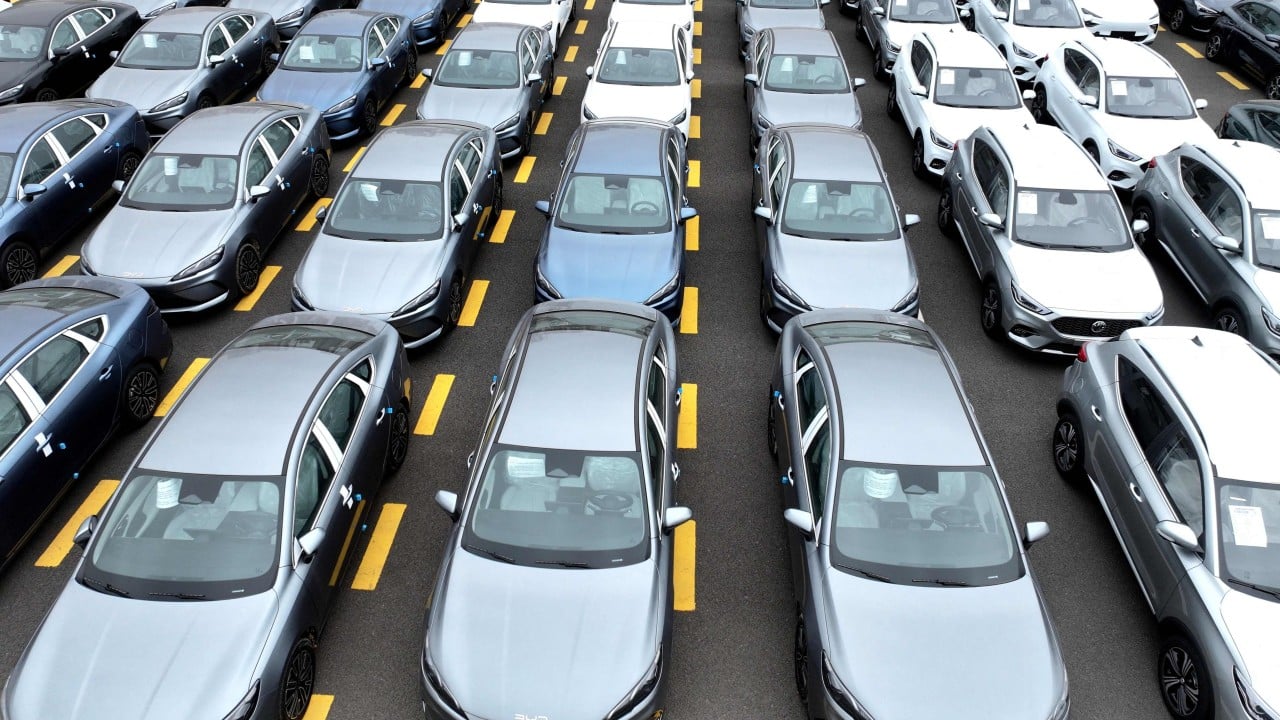
As local sales growth slows, Chinese brands are doubling down on overseas shipments. Current projections suggest that Chinese manufacturers could export roughly 10 million vehicles by the end of 2026, marking an eye-popping 41 percent jump from the previous year.
This massive wave of cheap, high-quality vehicles is hitting global markets like a tidal wave. Western regulators are reacting with aggressive tariffs and trade barriers, trying to protect their legacy brands from an influx of cars built under China's previous, highly subsidized regime. But even with tariffs factored in, the sheer manufacturing scale of companies like BYD allows them to price vehicles aggressively in Southeast Asia, Europe, and Latin America.
The tax changes at home mean that the vehicles leaving Chinese ports over the next few years will have to be structurally leaner. They cannot rely on domestic tax kickbacks to subsidize their global ambitions anymore.
Watching the Next Generation Tech
If you want to see where the government actually wants the industry to go, look at what they didn't tax. The policy structure includes a very deliberate loophole.
While mature lithium-ion technology gets hit with the consumption tax, emerging alternatives like sodium-ion batteries, solid-state cells, and advanced next-generation solar tech remain completely exempt until at least the end of 2028.
This is a classic industrial policy playbook. China currently relies on imports for about 75 percent of its lithium raw materials. Sodium-ion technology uses abundant, cheap salt resources that can be sourced completely within domestic borders. By taxing lithium and sparing sodium, the state is actively tilting the economic scales. They are telling engineers and executives exactly where to allocate their next research and development budgets.
Your Next Steps as an Investor or Industry Watcher
The shifting tax landscape means you need to change how you evaluate this sector. The old metrics of total unit delivery growth don't mean much if companies are losing money on every vehicle sold.
First, focus heavily on vertical integration. Look closely at which Chinese carmakers are producing their own batteries and sourcing their own raw materials. These integrated players are the only ones with enough margin cushion to absorb the battery consumption tax without raising sticker prices and losing buyers.
Second, monitor the rate of technology adoption. Keep a close eye on commercial rollouts of sodium-ion packs in budget city cars. Since these configurations dodge the new tax through 2028, they will suddenly look much more financially attractive to cost-conscious consumers.
Third, stop treating all Chinese EV startups as a single monolith. The end of these tax breaks will trigger rapid corporate bankruptcies and forced mergers over the next eighteen months. Stick to the players that boast positive cash flows and established global distribution networks. The survival of the fittest has officially begun.