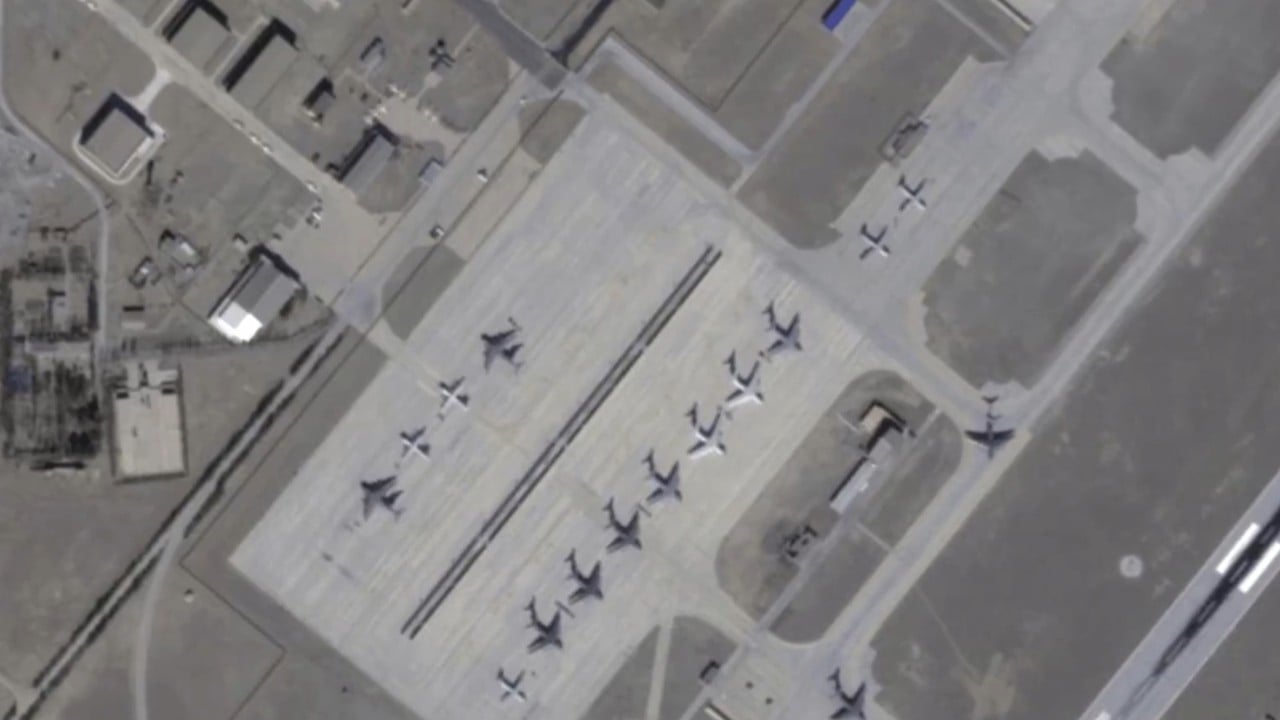
Look at recent satellite imagery across western and coastal airbases in China, and you will see a stark physical reality. Rows of J-20 stealth fighters, KJ-500 early warning aircraft, Y-20 transports, and advanced unmanned combat aerial vehicles are crowding flight lines in numbers that foreign defense planners cannot ignore. Exercises like Red Sword showcase a military that is rapidly scaling up its hardware footprint. But counting hulls on a ramp only tells you half the story.
If you want to understand true combat readiness, you have to look past the hardware hype and examine how these massive formations actually train, sustain themselves under pressure, and manage the hidden administrative friction of modern air power.
The Numbers Game Versus Operational Realities
When state media or defense think tanks point out that hundreds of warplanes can marshal across multiple airbases simultaneously, the knee-jerk reaction is to assume an immediate, unbroken capability to wage high-intensity conflict. Real military experience teaches something different. Parking 30 or 40 jets on a single tarmac proves logistics can move metal, but it does not automatically translate to sustained sortie rates or combat effectiveness.
Commanders know that rapid force generation places an immense strain on maintenance crews, spare parts supply chains, and pilot fatigue. When the People's Liberation Army Air Force (PLAAF) concentrates large numbers of aircraft into localized hubs, it creates a massive logistical footprint. Managing fuel, specialized munitions, and avionics diagnostics for stealth platforms away from primary home stations is brutally complex.
The real metric of readiness isn't how many fighters you can cram onto a satellite photo. It is how fast you can turn those jets around after a high-stress mission, how well disparate units coordinate without dropping off communication nodes, and whether ground crews can maintain mission-capable rates over weeks of continuous operations.
The Shift Toward Unmanned and Networked Warfare
Hardware modernization in China is no longer just about building more crewed fighters. The real evolution lies in how air power is integrating networked systems, electronic warfare platforms, and autonomous drones.
Look at recent disclosures regarding stealth drones like the GJ-11 or the growing family of collaborative combat aircraft. These aren't just parade pieces. They represent a fundamental shift in doctrine. The objective is to push unmanned systems ahead of crewed fighters to suppress enemy air defenses, absorb initial threat vectors, and execute strikes beyond effective detection ranges.
This integration changes the readiness equation entirely. Software reliability, data-link security, and electronic counter-countermeasures matter just as much as thrust-to-weight ratios. Training pilots to manage loyal wingman drones alongside traditional formations requires an entirely new tier of cognitive and technical proficiency. If ground controllers or airborne warning crews lag in processing fused data streams, the numerical advantage of a larger fleet evaporates rapidly.
Testing Logistics Under Regional Pressure
Recent large-scale, unannounced patrols and drills encircling Taiwan and extending toward the Western Pacific reveal an operational ambition that goes far beyond domestic airshows. By synchronizing naval groups, land-based missile units, and diverse air wings—including tankers and electronic intelligence aircraft—Beijing is testing its ability to deny external intervention during a prolonged contingency.
This strategy relies heavily on establishing a new baseline of routine activity. Operating complex aircraft packages day after day normalizes high-tempo flight hours, but it also accelerates airframe wear and tear. Aviation enthusiasts often underestimate the sheer amount of depot-level maintenance required to keep advanced composite materials and low-observable coatings mission-ready in humid or coastal environments.
The Human Element and Institutional Friction
Technology is easy to buy or manufacture; building institutional experience takes decades. One of the quiet bottlenecks facing any rapidly expanding military force is the pipeline for experienced technicians, tactical leaders, and mission commanders.
When a service scales its inventory at a breakneck pace, it risks stretching its experienced cadre too thin. Junior pilots may log impressive flight hours, but managing complex multi-domain kill chains requires seasoned leadership that cannot be manufactured overnight. Furthermore, internal administrative shifts and leadership turnovers within defense hierarchies can introduce friction into operational planning, creating a gap between what equipment is on paper and how smoothly units execute under chaotic combat conditions.
Readiness is ultimately an ecosystem. China's massive warplane build-up demonstrates an undeniable industrial capacity and a serious intent to project power far beyond its immediate shores. Yet, true combat capability is forged in the grueling details of maintenance endurance, software integration, and the ability of human crews to perform when the logistics chain breaks down. The hardware is impressive, but the real test is happening behind the scenes.