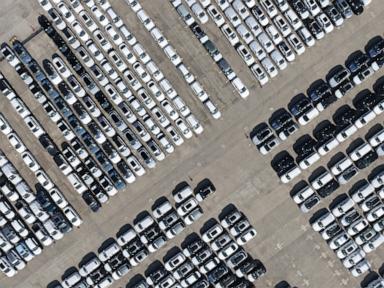
Chinese automakers are pulling off a stunning redirection. While showrooms across mainland China sit empty and local dealerships suffer record losses, the country's ports are jammed with thousands of newly minted vehicles heading across the ocean.
Fresh data from the China Passenger Car Association reveals an astonishing split in the automotive market. June saw China's passenger car exports skyrocket by over 80% compared to last year. At the exact same time, domestic retail sales crashed by more than 23%. This is not a temporary blip. It is a massive structural realignment that is restructuring how the global auto industry operates. If you enjoyed this post, you should check out: this related article.
If you are trying to understand why global car markets feel chaotic right now, this is the epicenter. Chinese manufacturers are facing a brutal reality at home, and their primary survival strategy is to export their way out of trouble.
The Twin Crises Squeezing Chinese Car Buyers
To understand why exports are booming, you have to look at the economic wreckage inside China's borders. The domestic market is a mess. For another look on this event, see the latest coverage from Business Insider.
First, the prolonged property market downturn has absolutely wrecked household budgets. For the average Chinese family, real estate was the primary store of wealth. With property values sliding, consumers are fiercely guarding their savings. They are skipping big-ticket purchases.
Second, the central government has aggressively scaled back the direct cash subsidies that previously incentivized buyers to purchase budget electric cars. The impact was immediate and severe. Domestic sales of entry-level gasoline and cheap electric models priced below 80,000 yuan have plummeted. People with less disposable income are simply choosing to keep driving their old cars. Or they are taking public transit.
The numbers tell a stark story. In June, domestic retail sales of passenger vehicles dropped to 1.6 million units. That marks the ninth consecutive month of year-on-year declines in China. Dealers are desperate. They are slashing prices to move inventory, triggering a vicious price war that has erased profit margins for almost everyone involved.
High Oil Prices and the Global Electric Push
While the domestic picture looks bleak, international conditions have created a perfect backdoor for Chinese brands. Global oil prices are stubborn. Ongoing tensions in the Middle East and shipping disruptions through the Strait of Hormuz have pushed refined fuel costs higher worldwide.
High gas prices make consumers around the world look for cheaper alternatives. Electric options look highly attractive when filling a tank hurts your wallet.
Chinese automakers have spent over a decade perfecting their battery supply chains and manufacturing processes. They can build highly advanced electric options far cheaper than legacy American, German, or Japanese brands. When global interest in electric alternatives spiked due to fuel costs, China was the only country with the massive, unutilized factory capacity ready to meet that demand instantly.
This has resulted in what the industry calls a dual-track expansion. It is not just about battery-powered models. While electric vehicles and plug-in hybrids accounted for a record 57% of China's total exports in June, overseas shipments of traditional internal combustion engine cars also grew by 33%. Chinese brands are essentially replacing western fuel-powered vehicles in developing economies while simultaneously dominating the emerging electric market.
How the Rest of the World is Responding
You cannot dump hundreds of thousands of cheap, high-tech cars into foreign markets without causing massive political friction. Western governments are panicking.
The European Union moved forward with extra tariffs on Chinese electric imports after tracking heavy state subsidies. The United States has enacted strict tariff walls that make direct Chinese imports virtually impossible. Even Canada has stepped in, setting strict annual import quotas to protect its own manufacturing interests.
Yet, these trade barriers are proving to be speed bumps rather than brick walls.
Localizing Production Overseas
Chinese giants like BYD, Geely, and Chery are not giving up on protected markets. Instead, they are changing their tactics. They are rapidly shifting from exporting built vehicles to building local factories directly inside key regions. BYD is actively setting up manufacturing hubs in Thailand, Brazil, Hungary, and Turkey. By assembling vehicles within these trade blocs, Chinese companies can sidestep direct import tariffs completely.
Penetrating Unprotected Frontiers
While the US and Europe grab the headlines, Chinese brands are quietly winning the rest of the world. They are expanding aggressively across Southeast Asia, Latin America, the Middle East, and parts of Africa. In these regions, cash-strapped consumers care far more about getting an affordable, tech-heavy vehicle than they do about geopolitical trade disputes. Chinese manufacturers are giving them exactly what they want.
The Long Term Outlook For Global Automakers
This export surge is altering global pricing power. Auto analysts at firms like S&P Global Ratings and UBS have revised their forecasts to reflect this permanent shift. S&P expects Chinese passenger car exports to maintain a growth rate of 30% to 50% through the remainder of the year.
Meanwhile, consultancy AlixPartners estimates that China's total vehicle exports could hit 10 million units annually in the near future, up from roughly 7 million last year.
For legacy automakers like Volkswagen, General Motors, and Toyota, this is a dangerous moment. They are losing market share inside China at lightning speed. Chinese consumers are no longer interested in traditional western notions of luxury or heritage quality. They want smart vehicles with massive screens, advanced software, and over-the-air updates.
Because foreign joint-venture brands were slow to embrace total electrification, their sales inside China have crumbled. Now, they must face those same hyper-competitive Chinese rivals in their own home markets abroad.
Actionable Steps for Industry Players
The massive wave of Chinese automotive exports will hit different sectors of the global economy in distinct ways. If you operate within the automotive ecosystem, you need to adjust your strategy immediately.
For Independent Car Dealerships
Look closely at the emerging brands entering your regional market. Chinese manufacturers are looking for established dealership networks to handle distribution and local service. Partnering with a rising brand early can secure exclusive regional rights before the market becomes saturated. However, ensure that the contract includes ironclad guarantees regarding spare parts availability, as supply chains for new overseas players can be notoriously inconsistent during their first few years of operation.
For Automotive Component Suppliers
The transition of Chinese automakers from pure exporters to local manufacturers creates an opening. These companies need to build localized supply chains in Europe, Southeast Asia, and Latin America to meet local content requirements and avoid residual tariffs. Position your business to supply these new regional factories. Focus on components that are expensive to ship across oceans, such as heavy structural elements, interior assemblies, and specialized glass.
For Traditional Fleet Managers
If you manage corporate fleets, municipal transit vehicles, or rental car operations, the influx of competitive electric options from China will pressure standard pricing downward across the board. Use this trend as leverage when negotiating volume purchases with legacy domestic suppliers. Even if you choose not to buy Chinese vehicles directly due to political or compliance reasons, you can use their aggressive market pricing to demand better financing terms, extended warranties, and steeper discounts from your traditional fleet providers.


:max_bytes(150000):strip_icc()/GettyImages-938335974-5bf42147c9e77c00517e1140.jpg)