When Elon Musk rolled out a rocket-boosted Tesla Roadster capable of brief airborne hops, car enthusiasts lost their minds. Headlines screamed about sci-fi transportation finally arriving. But if you look past the hype of cold-gas thrusters and track demonstrations in Texas, a much more grounded reality is taking shape half a world away.
Executive leadership at XPeng pointed out a glaring truth shortly after the spectacle: building an exotic sports car that can perform a stunt is miles away from creating a commercially viable flying vehicle network. While Silicon Valley leans into cinematic showmanship, Chinese manufacturers are building industrial ecosystems. If you want to understand where personal aviation is actually heading, look at supply chains, regulatory sandboxes, and manufacturing lines rather than promotional teaser events. Building on this idea, you can find more in: Why The Latest Billion Dollar Crypto Freeze Changes Everything You Know About Digital Security.
The Problem With Stunt Engineering
Tesla's updated Roadster design relies on SpaceX-derived tech, including negative-pressure suction systems and thrusters. It is undeniably cool. It also faces an administrative nightmare. You cannot drive a vehicle outfitted with rocket nozzles on public asphalt without rewriting every traffic and safety law on the books.
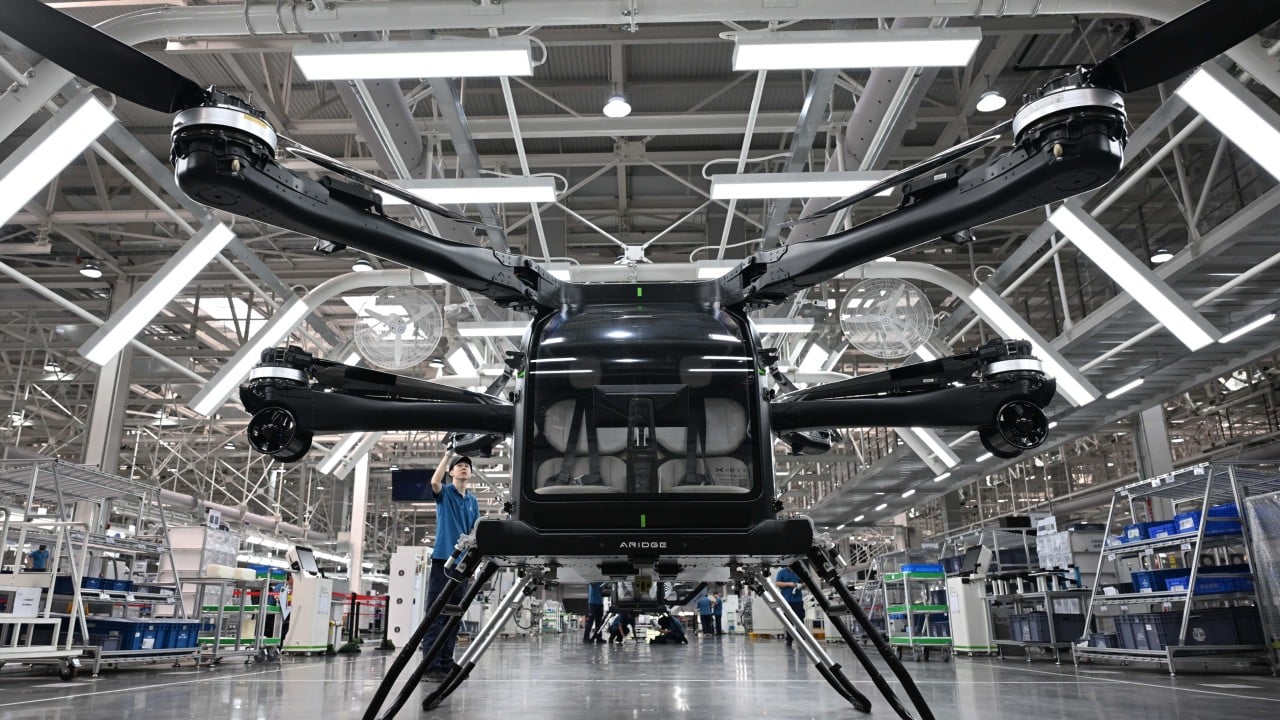
Real commercial viability requires certification, scalability, and everyday usability. XPeng’s aviation division, AeroHT, has taken a fundamentally different route. Instead of modifying a hyper-car for temporary flight, they engineered a modular "Land Aircraft Carrier." This system pairs a six-wheeled ground vehicle with a detachable, purpose-built electric vertical takeoff and landing (eVTOL) aircraft. Analysts at TechCrunch have provided expertise on this situation.
It is designed to operate within structured logistical frameworks. You drive the mothership to a designated departure zone, release the cabin, and take to the air. It looks less like a Hollywood prop and more like a tool meant for utility, tourism, and eventual urban transit.
Regulatory Realities Versus Silicon Valley Ambitions
The biggest bottleneck for any flying car isn't physics. It's paperwork.
Aviation authorities like the Civil Aviation Administration of China (CAAC) have spent years establishing specific low-altitude economic zones and testing corridors. Companies like EHang and XPeng AeroHT operate within these tightly monitored regulatory testbeds. They are working directly with government bodies to draft airworthiness standards.
When Tesla states that Roadster production targets 2028, it comes with massive asterisks regarding local homologation laws. A vehicle that depends on rocket thrusters for lift sits in a legal gray zone that traffic police and aviation regulators are completely unequipped to handle.
Chinese EV makers understand that manufacturing is only half the battle. Securing commercial licenses for low-altitude flight paths is where businesses actually live or die. By treating the low-altitude economy as a national infrastructure priority, China has given its mobility firms a massive head start in mass production logistics.
What Manufacturing Scale Actually Looks Like
Let's talk numbers. Tesla's high-end performance vehicles serve a niche enthusiast market. They are low-volume halo products designed to generate excitement and headlines.
Conversely, Chinese electric vehicle manufacturers have spent the past decade obsessing over vertical integration and cost reduction. XPeng’s push into robotics and multi-mode transit aims for high-volume output. When you look at their manufacturing facilities, the goal is clear: bring unit costs down to a level where specialized transport ceases to be a toy for billionaires.
If a flying car costs two million dollars and requires a team of aerospace engineers to service, it's a rich person's golf cart. If it can be mass-produced, modularly repaired, and integrated into regional travel networks, it changes society.
The Core Misconception About Future Mobility
Most commentators treat the race for flying cars as a drag strip competition. Who goes faster? Who looks flashier?
That framing misses the forest for the trees. The real victory belongs to whoever solves traffic congestion by utilizing three dimensions safely and legally. Musk gave the world an incredible marketing moment with a rocket car. But XPeng and its peers are quietly laying down the unglamorous bricks of mass production, pilot training programs, and airspace management software.
Stop waiting for a sports car to leap over highway traffic. The actual shift will happen quietly, utility vehicle by utility vehicle, in skies governed by structured rules and scaled manufacturing.