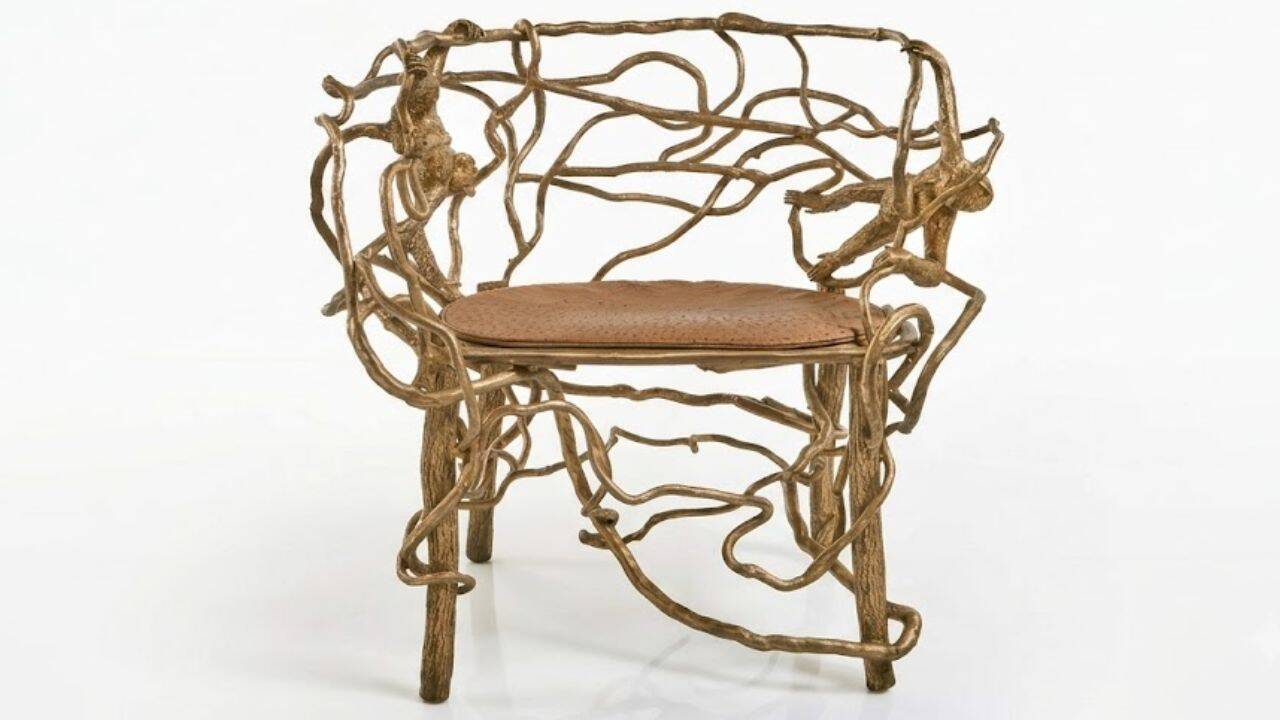
A single piece of furniture can sometimes completely alter how we look at design. When a rare gilt-bronze armchair crafted by French artist Claude Lalanne fetched $1,079,500 at Sotheby's, it sent a clear message to the art world. This wasn't just a chair. It was a cultural artifact wrapped in patinated vines, cheeky bronze monkeys, and an unexpected ostrich-leather seat.
If you've been tracking the trajectory of high-end design objects, you know the market has shifted dramatically. People are no longer content with sterile minimalism. They want character, history, and a touch of surrealism in their living spaces. This particular sale proved that online consignment portals are changing how multimillion-dollar masterpieces reach the auction block. You might also find this related article insightful: Why One Saskatoon Designer Is Rescuing Thousands Of Saris From Landfills.
The Story Behind the Million-Dollar Monkey Armchair
Produced in 1998, this extraordinary seating sculpture belongs to Claude Lalanne’s famous Singerie series. If you look closely at the details, you'll understand why collectors fight over her work. The frame isn't built from standard wood or molded plastic. Instead, it features intricate bronze vines that twist and climb around the structure, populated by playful monkeys cast in patinated bronze.
Margaret Wood, a specialist in Sotheby's Design Department, pointed out that this specific piece represents the earliest of Lalanne's Singerie armchairs ever to appear at public auction. Being edition number one from an edition of one makes it even rarer. No two Lalanne creations are identical. The exact placement of the bronze monkeys and the way the vines swirl differ from piece to piece, giving each item a distinct personality. As reported in recent coverage by Apartment Therapy, the implications are widespread.
Pairing these heavy, organic bronze elements with a sleek ostrich-leather seat creates a striking contrast. It's tactile, luxurious, and slightly eccentric. That combination of nature and sculpture defines the collaborative and individual legacies of Claude and her husband, François-Xavier Lalanne.
How an Online Portal Delivered a Million-Dollar Sale
What makes this sale fascinating isn't just the final price tag. It's the journey. The armchair didn't arrive at Sotheby's through a dusty estate sale or a private back-channel negotiation. It reached the auction house via its digital consignment portal.
For years, consigning a seven-figure artwork meant meeting specialists in person, scheduling private viewings, or navigating exclusive gallery networks. Today, digital submission tools allow owners anywhere in the world to upload high-resolution photos and provenance details directly to major auction houses.
This friction-free entry point is democratizing high-end art consignment, even if the buyers remain part of an elite financial bracket. When a collector can submit a 1998 bronze masterpiece through an online form and watch it sell for over a million dollars, the entire secondary market accelerates.
Why Demand for Claude Lalanne Is Surging
The late Claude Lalanne spent decades blurring the line between functional furniture and high art. Alongside her husband, she created whimsical sheep benches, cabbage-leaf porcelain, and bronze plant sculptures that were initially overlooked by traditional purists. Today, those same purists look foolish.
Collectors are waking up to the enduring value of zoomorphic and botanical design. Demand for the Lalannes' works has skyrocketed over the past few years, driven by a new generation of interior designers and high-net-worth buyers who refuse to live in boring homes. When bronze furniture can command prices usually reserved for Renaissance paintings, you know tastes have permanently changed.
If you are looking to invest in designer furniture or decorative arts, keep an eye on unique editions rather than mass-produced designer items. True scarcity combined with iconic artistry always holds its ground, no matter how the broader financial markets fluctuate.
Stop treating furniture as an afterthought. Treat it as the sculptural anchor of your space.