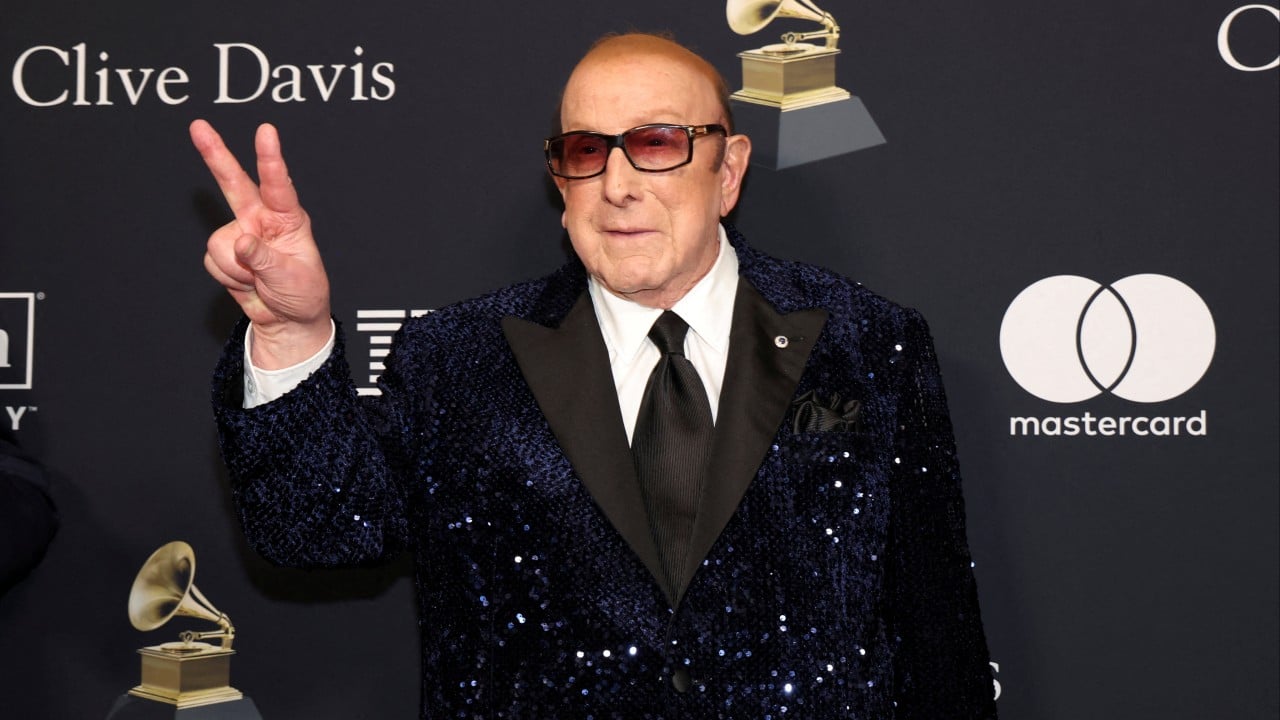
Clive Davis didn't play an instrument. He couldn't read music. He started his career as a straight-laced corporate attorney with a Harvard Law degree, yet he single-handedly dictated what the world listened to for over 50 years.
With the news of his passing at age 94 on June 22, 2026, the music industry lost its ultimate hitmaker. He died peacefully in his Manhattan home from age-related illness. His death marks the absolute end of the monolithic record mogul era.
Most obituaries lean on a familiar list of names when talking about Davis. They will mention Janis Joplin, Whitney Houston, and Barry Manilow. But focusing only on the discoveries misses the real narrative. The true genius of Clive Davis wasn't just finding raw talent. It was his uncanny, almost mathematical ability to match a specific voice with a specific song, dragging underground sounds straight into the American mainstream.
The Lawyer Who Stumbled Into Rock History
Davis grew up as an orphaned teenager in Brooklyn. He had no safety net. He put his head down, earned scholarships, and made it through Harvard Law School. When he took a job as an in-house attorney for Columbia Records in the early 1960s, it was just a legal gig.
Then came 1967. Davis had just been named president of Columbia, a label then known for safe, traditional acts like Mitch Miller and Barbra Streisand. He decided to attend the Monterey International Pop Festival.
That single weekend altered his life and the entire music business.
Watching Big Brother and the Holding Company on stage, Davis didn't see an underground counterculture act. He heard a massive, global superstar in lead singer Janis Joplin. He signed her immediately. He threw Columbia Records headfirst into the rock revolution, transforming a conservative corporate entity into the home of Blood, Sweat & Tears, Santana, Chicago, and Aerosmith.
Bruce Springsteen later recalled that Davis treated him with the exact same respect and kindness when he was a 22-year-old nobody as he did after finding worldwide success. That mix of legal sharpness and genuine artist respect became his signature style.
The Arista Era and the Anatomy of a Hit
In 1973, a major corporate shakeup led to Davis being abruptly ousted from Columbia amid accusations of fund mismanagement. He paid a small fine for tax issues, denied wrongdoing, and bounced back instantly. He didn't look back. Instead, he founded Arista Records in 1974.
At Arista, Davis proved his ears weren't just a fluke tied to the 1960s counterculture. He built a pop machine. He signed a young jingle writer named Barry Manilow and gave him a track called "Brandy." Davis insisted on changing the name to "Mandy." It became a number one smash hit.
His real masterpiece arrived in 1983. He walked into a New York club and heard a 19-year-old gospel singer performing with her mother, Cissy Houston. Her name was Whitney Houston. Davis spent two full years carefully curating her self-titled debut album. He rejected hundreds of tracks, hand-selecting only songs that could showcase her multi-octave range to a massive audience. The result was an album that sold over 22 million copies worldwide.
What made Davis different from modern tech executives or algorithm-driven playlists was his obsession with song craft. He didn't rely on data analytics to tell him what people wanted to hear. He sat in rooms with artists, listened to demos, and picked the hook.
Championing Black Music Culture
While many white executives in the 1980s and 1990s kept R&B and hip-hop siloed in urban divisions, Davis backed those sounds with mainstream money.
He didn't pretend to understand hip-hop culture directly, so he trusted the people who did. He partnered with Antonio "L.A." Reid and Kenneth "Babyface" Edmonds to back LaFace Records, which launched TLC, Usher, and OutKast. Later, he joined forces with Sean "Puffy" Combs to form Bad Boy Records, providing the infrastructure that broke The Notorious B.I.G. into global pop culture.
He understood that great art needs an aggressive machine behind it. When older acts were written off by radio stations, Davis engineered massive late-career comebacks. In 1998, he reunited with Carlos Santana for the album Supernatural. By pairing the classic guitarist with contemporary pop voices like Rob Thomas and Lauryn Hill, Davis turned a legacy act into a multi-platinum, Grammy-sweeping juggernaut.
The Blueprint for Navigating the Music Industry
If you're an independent artist or an aspiring music professional reading about Davis, his career offers a clear set of rules that still apply in the era of streaming platforms.
- The song is everything: A massive marketing budget cannot fix a forgettable hook. Focus on the writing before you focus on the promotion.
- Diversify your ears: Davis succeeded because he didn't trap himself in one genre. He moved seamlessly from folk-rock to disco, R&B, and hip-hop.
- Protect the artist's identity: Barry Manilow famously noted that while he and Davis argued constantly over choices, it always felt like family because Davis focused entirely on making the artist shine.
The music landscape has changed completely. Power has shifted from all-powerful gatekeepers like Davis to social media algorithms and viral trends. But algorithms don't mentor teenagers in clubs or convince a rock band to record an iconic pop ballad. Clive Davis leave behind a distinct catalog of American music that will play on radios, streaming services, and films for the next century.