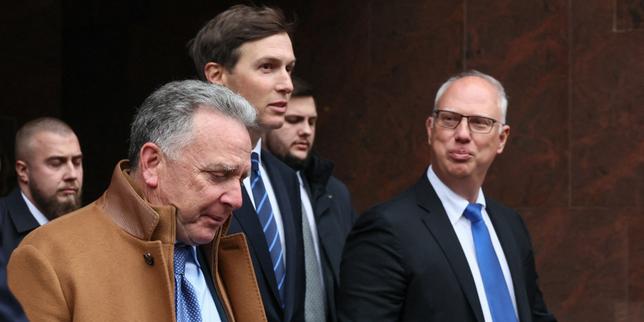
Diplomacy rarely moves in a straight line. Right now, it is moving like a car stuck in deep mud. US emissaries Jared Kushner and Steve Witkoff found themselves flying from the ornate halls of the Kremlin straight to Dublin to brief Ukrainian leadership. The stakes couldn't be higher. After more than four grinding years of total war, everyone is talking about a potential ceasefire window before 2027, but the actual gap between Moscow and Kiev remains as wide as ever.
The Reality Behind the Abu Dhabi Breakthrough
To understand what happened in Moscow, you have to look back at the direct negotiations held in Abu Dhabi. For the first time in over eight months, Russian and Ukrainian delegations sat across the table from each other. Sure, they agreed on a massive prisoner exchange. That's a tangible win for the families waiting at home. But let's not kid ourselves about the heavy political roadblocks.
The Kremlin's team, led by nationalist historian Vladimir Medinski, came in with maximalist demands. Moscow wants the complete withdrawal of Ukrainian forces from the heavily fortified Donetsk region. They want strict limits on the size of the Ukrainian military. They want permanent blocks on NATO membership.
Kiev's negotiators, headed by Rustem Umerov and David Arakhamia, rejected those terms flatly. You don't spend years defending fortified lines only to hand them over on a diplomatic whim.
Why the US Shuttle Diplomacy Matters Now
Washington is trying to force a breakthrough. When Kushner and Witkoff landed at Vnukovo airport in Moscow to sit down with Vladimir Putin, they carried messages directly from the latest round of talks. Putin wants a comprehensive political deal on his terms before agreeing to stop shooting. He fears that a simple ceasefire would just give Ukrainian brigades time to rearm and regroup.
The US emissaires then packed their bags for Dublin to debrief President Volodymyr Zelensky. Zelensky has openly pointed to a narrow window of opportunity to settle the conflict before next year. Yet, Kiev insists that an immediate, unconditional cessation of hostilities must come first, followed by strict security guarantees backed by Western allies.
The Missing European Piece at the Table
Here is the elephant in the room that nobody in Washington or Moscow wants to address honestly: European security cannot be designed without Europe.
While the US acts as the primary broker, European capitals are watching with anxiety. The Kremlin has consistently tried to sideline the European Union and NATO from the core bargaining table. Moscow knows that European leaders are far less likely to accept compromises on territorial integrity or long-term defense architectures.
Meanwhile, the war on the ground doesn't pause for negotiations. Daily air raids, drone attacks, and infrastructure strikes continue to remind civilians in Kiev and across the country of the brutal cost of this stalemate. A woman killed by a drone strike in Kiev isn't just a casualty statistic; she is proof that the skies remain lethal even as diplomats chase headlines.
What Comes Next in the Push for 2027
The diplomatic dance will shift to follow-up meetings in European capitals, where Ukrainian officials will coordinate with EU and NATO partners to review the ideas floated by Washington. Don't expect a sudden, magical peace treaty next week. The fundamental disagreement over land, security guarantees, and sovereignty remains entirely unresolved.
Keep a close eye on whether the US pressure can force either side to bend on timing. If a temporary ceasefire materializes before the snow melts, it will be because exhaustion finally outweighed ambition on both sides of the front line.