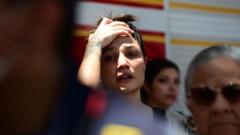
A massive 7.4 magnitude earthquake struck western Colombia, turning streets into dust and plunging the nation into sudden crisis. Freshly sworn-in President Abelardo de la Espriella barely had time to unpack his office before facing the ultimate administrative trial. When the ground shook violently on Monday, August 10, 2026, it didn't just rattle infrastructure. It immediately stress-tested a brand new government, emergency networks, and civilian resilience across cities like Cali, Pereira, and Manizales.
Deadly disasters expose political competence faster than any election campaign. Let's look at how Colombia is handling the chaos, where the rescue efforts stand, and why this disaster hits differently than past tragedies.
Racing Against the Golden Hours
Every second counts right now. Search and rescue teams operate under a strict 48-to-72-hour window to pull living survivors from crushed concrete. In cities like Cali and Pereira, that window is closing fast.
Over 60 buildings completely collapsed across the affected region, trapping residents beneath heavy debris. Local firefighters, police officers, and ordinary citizens formed long human chains to pass chunks of broken brick and mortar by hand. Miracles do happen in the dust. Rescuers successfully pulled a 35-year-old man and a 31-year-old woman out alive after grueling, multi-hour operations.
Yet, the scale of destruction is staggering. Death tolls have climbed past 180, with thousands more reported missing. Makeshift clinics overflow into school gymnasiums as hospitals struggle to treat hundreds of injured patients.
A Brutal Welcome for a New Administration
President de la Espriella took office in Cali just days before the disaster. Stepping into power is hard enough. Managing the country's most powerful earthquake of the century on day one is a nightmare scenario.
Unlike the sluggish and opaque initial response seen during Venezuela's devastating twin earthquakes earlier in the year, Colombia's administration moved quickly. De la Espriella declared a national state of emergency, unlocked immediate funds, and deployed over a thousand troops to assist with recovery and prevent opportunistic looting. He flew directly to hard-hit areas like Quibdó and Cali to promise financial relief and temporary rental subsidies for displaced families.
Critics and political experts note that early energy is easy, but long-term reconstruction is where governments usually fail. Rebuilding thousands of shattered homes requires sustained funding and logistical wizardry.
The Regional Vulnerability Factor
The epicenter hit near San José del Palmar in the remote, impoverished Chocó region. Chocó is largely accessible only by boat, jungle paths, or small aircraft, making damage assessment painfully slow.
Decades of historical neglect and internal armed conflict complicate the humanitarian response in western Colombia. Aid organizations like the Norwegian Refugee Council have pointed out that disaster relief must navigate deeply entrenched poverty and displacement issues. When an earthquake strikes an area already vulnerable to systemic issues, the baseline fragility multiplies the damage.
Furthermore, civilian-run databases report thousands of missing individuals, far outpacing official tallies. Families are taking to social media and makeshift community boards to post pictures of missing relatives, desperate for news from isolated towns like El Cairo, where local officials report that a staggering majority of structures suffered severe damage.
What Happens Next on the Ground
The immediate crisis focuses on pulling survivors from the rubble and treating the wounded. Yet, the upcoming phases will dictate the success of the current administration:
- Securing Infrastructure: Engineers must inspect hundreds of thousands of potentially compromised buildings before evacuees can safely return home.
- Managing Aftershocks: Colombia's Geological Service warns that dozens of aftershocks will continue to rattle the region for weeks, keeping anxiety high and stalling permanent repairs.
- Distributing Aid: Getting clean water, food, and medicine to isolated pockets in Chocó and rural Risaralda requires military-grade logistics.
The next few weeks will prove whether the government's swift opening response transforms into an effective, lasting recovery. For now, rescue workers keep digging against the clock.