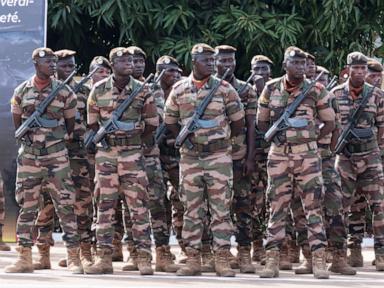
Forget what you think you know about modern warfare and international headlines. Right now, the central Sahel region of West Africa holds an unwanted crown. According to the Global Terrorism Index, this stretch of land accounts for over half of all global terrorism deaths, making it the epicenter of extremist violence on earth. At the heart of this storm sits Mali, a country caught in a multi-layered civil war, military juntas, economic blockades, and an expanding jihadist insurgency that threatens to destabilize entire neighboring coastlines.
If you want to understand why global security experts are losing sleep over Mali, you have to look past the superficial media summaries. The crisis isn't just a localized rebellion. It's a shifting ecosystem of terror, broken governance, climate stress, and shifting foreign alliances that affects far more than West Africa.
The Reality of the Conflict in Mali
For years, the ruling military junta in Bamako has insisted that its security strategy is turning the tide against insurgent groups. But reality tells a very different story. The security landscape shifted dramatically when coordinated offensives—such as the large-scale assaults by the Al-Qaeda affiliate Jama'at Nusrat al-Islam wal-Muslimin (JNIM) alongside Tuareg separatists—struck multiple regions simultaneously, hitting political and military hubs near the capital.
These aren't random hit-and-run strikes. Militant groups are administering territories, controlling major trade arteries, and tightening economic blockades around urban centers. When fuel tankers are intercepted and supply routes into Bamako face persistent disruption, everyday citizens pay the price through soaring inflation, food insecurity, and shattered livelihoods.
Why the Central Sahel Became the Epicenter
How did a nation with a rich historical legacy become the world's most terrorized zone? Several compounding factors created the perfect storm:
- The Collapse of Regional Security Partnerships: Mali booted out French forces and UN peacekeepers, turning instead to Russian-backed security contractors to handle the insurgency. Rather than stabilizing the country, this shift coincided with a sharp rise in civilian casualties and intensifying territorial losses in the north.
- Unlikely Strategic Alliances: Ideological lines have blurred. Groups that once fought each other—such as radical Islamist factions and secular Tuareg separatists—have found tactical alignment in their opposition to the central government.
- The Economy of Insurgency: Extortion, kidnapping for ransom, and taxing illicit trade routes provide militant groups with multi-million-dollar war chests. They aren't just surviving; they are outfunding and outmaneuvering traditional state militaries.
The Human Cost Behind the Statistics
Numbers on a page don't capture the human toll. Millions of people across the central Sahel are now internally displaced or living as refugees. Entire communities have vanished as families flee the crossfire between state militias, foreign mercenaries, and extremist networks.
What makes matters worse is that heavy-handed government tactics have frequently backfired. When state security forces commit abuses against local populations out of suspicion of rebel collaboration, it drives alienated civilians straight into the arms of extremist recruiters. It’s a vicious cycle where every military counter-offensive risks fueling the next wave of insurgency.
Looking Beyond West Africa
The crisis in Mali doesn't stay in Mali. International monitors warn that extremist networks are actively pushing south toward the Gulf of Guinea, eyeing coastal states that have long remained stable. Drug trafficking, arms smuggling, and transnational organized crime feed directly into these insurgencies, creating a criminal-jihadist pipeline that reaches well beyond African borders.
Stop viewing the conflict in Mali as a distant, isolated regional dispute. It is a live stress test for international security, modern counter-terrorism, and the survival of democratic governance in the developing world. The longer the international community looks away, the deeper these extremist roots grow.
Mali conflict deepens as arrests mount and rebels claim territorial gains
This video provides an on-the-ground look at how shifting military dynamics, regional blockades, and rebel territorial gains are reshaping the crisis in Mali.