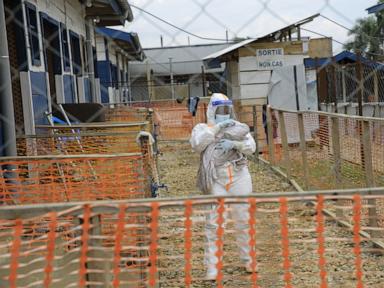
The numbers don't lie, but they rarely tell the whole story. Official data from the Congolese Ministry of Health confirms that confirmed Ebola cases in the Democratic Republic of the Congo have officially pushed past 11,042, with the death toll sitting at 5,387. If you've been following global health headlines, you know this makes it the deadliest epidemic in the country's history, trailing only the massive 2014–2016 West Africa crisis globally. But focusing purely on the body count misses the actual crisis unfolding on the ground.
This isn't just about a large tally. It's about a relentless strain, a lack of standard approved vaccines for this specific variant, and a geographic spread that has health officials scrambling across multiple countries.
The Strain Driving the Chaos
Most people assume every Ebola outbreak behaves the same way. It doesn't. The current epidemic, which was declared back in mid-May, is driven by the Bundibugyo virus species.
Here's the terrifying part that medical professionals deal with daily: there are no approved treatments or licensed vaccines specifically targeting the Bundibugyo strain. During past outbreaks involving the Zaire strain, health workers had powerful tools like the Ervebo vaccine to build an immediate ring of immunity. This time, frontline workers are flying blind with supportive care based purely on symptoms. While groups like Doctors Without Borders have pushed for wider off-label deployment of existing vaccines hoping for cross-protection, the lack of tailor-made countermeasures has left communities extremely vulnerable.
Why This Outbreak Spreads Faster Than Past Epidemics
Speed is the enemy here. When outbreaks hit remote areas, containment usually relies on fast contact tracing and isolating suspected cases before they travel. In eastern Congo, that playbook broke down almost immediately.
Delayed detection played a massive role in the early weeks. By the time public health surveillance caught up to the clusters, the virus had already seeded itself across multiple provinces. Factor in active regional conflict, deep distrust of institutional health services, and crumbling infrastructure, and you get a recipe for rapid transmission.
Many patients are still dying outside formal treatment centers, hiding symptoms out of fear or lack of safe transport. When people manage health emergencies at home, every family member and visitor becomes a potential new vector. That's how you turn a localized flare-up into a massive national emergency.
Crossing Borders and Raising Global Alarms
A localized health crisis rarely stays local for long when it hits a central hub of movement. This outbreak has already stretched far beyond its original borders.
Cases have popped up in East, Central, and West Africa, giving this epidemic the widest geographic spread of any Ebola event on the continent. When nations like Nigeria, Uganda, and Kenya start detecting cases or tracking cross-border contacts, the World Health Organization shifts from a localized response to panic-management mode.
International health agencies recently approved clinical trials for new candidate vaccines, but trial results aren't expected until early next year. Months of waiting mean thousands of additional exposures in high-risk zones.
What Needs to Happen on the Ground Right Now
We can't wait for a miracle vaccine rollout to fix the bleeding. Stopping the trajectory of this outbreak requires brutal operational efficiency.
- Fix community engagement: Local resistance and fear kill faster than the virus. Public health messaging must be anchored by trusted community leaders, not outside bureaucrats.
- Secure safe burial protocols: Traditional burial customs involve washing bodies, which remains a primary transmission driver in rural sectors. Safe, dignified burials are non-negotiable.
- Protect frontline workers: Healthcare workers are falling ill because personal protective equipment supplies fluctuate wildly in conflict zones.
The 11,000-case milestone is a grim reminder that viral pathogens don't care about our geopolitical fatigue. Until funding, security, and medical logistics align in eastern Congo, this epidemic will keep writing its own rules.