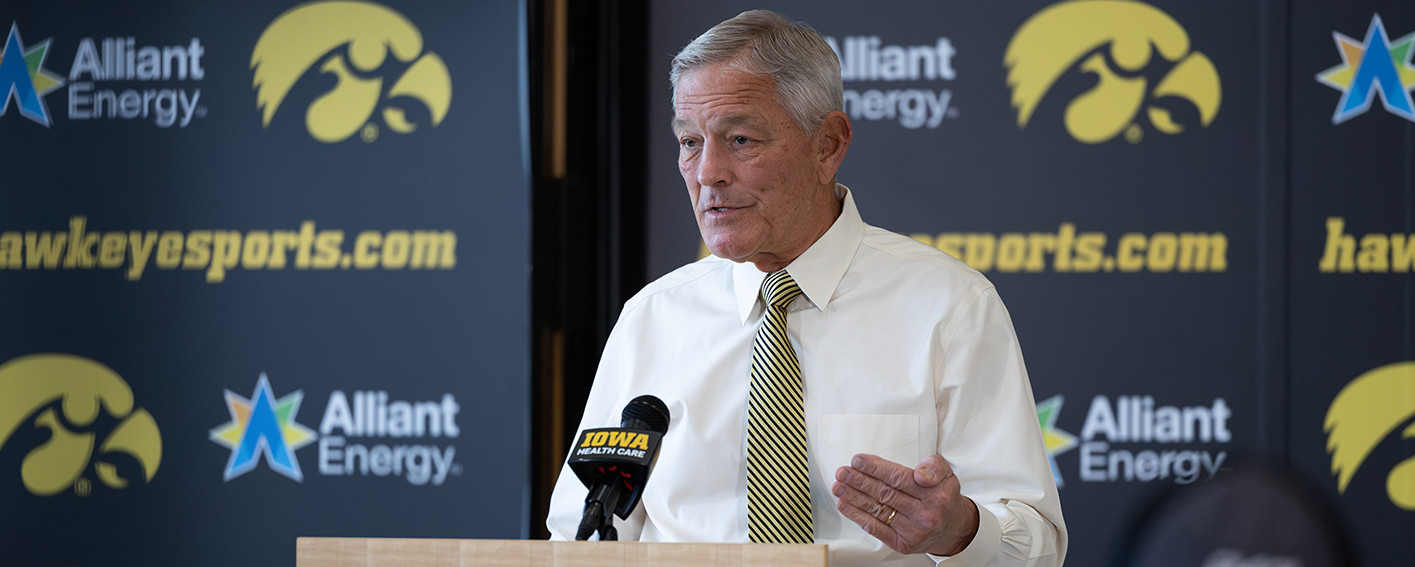
Every fall, an athletic director or newly hired head coach watches Iowa win nine or ten games with a roster ranked in the bottom half of the Big Ten in recruiting stars, and decides they want to replicate what Kirk Ferentz built in Iowa City. I've seen this happen dozens of times across Power Four and Group of Five programs over the last two decades. They install a pro-style zone blocking scheme, preach patience, dial back offensive tempo, and wait for the magic to happen. By year three, the booster donations have dried up, the transfer portal has gutted the two-deep, and the athletic department is writing a $12 million to $20 million buyout check while wondering why a proven blueprint failed so miserably.
The mistake isn't admiring the longevity or the win totals—it's mistaking the visible surface of this approach for the invisible engine underneath it. When you strip away twenty-five-plus years of institutional alignment, elite strength and conditioning continuity, and an obsessively specific developmental pipeline, copying the aesthetic of conservative, complimentary football isn't a strategy. It's a slow-motion collapse. Meanwhile, you can read similar stories here: Why Dropping Rizwan And Masood Changes Pakistan Cricket.
Mistake 1 Treating Conservative Offense as a Style Instead of a Math Equation
Most coaches who try to emulate this model think playing conservative offense simply means running the ball on first down, avoiding risky throws over the middle, and punting from the opponent's 40-yard line. They adopt the restraint without building the mathematical preconditions that make restraint viable.
In my experience, a low-possession, field-position offense only works when three specific metrics hold simultaneously: your net punting average sits above 42 yards, your red-zone touchdown conversion rate clears 65%, and your turnover margin finishes at plus-8 or better over a 12-game season. If you miss even one of those benchmarks, playing slow doesn't protect your defense—it starves your team of possessions needed to overcome a single blown coverage or a fluke tipped-ball interception. To understand the bigger picture, we recommend the detailed report by Yahoo Sports.
The underlying reason programs fail here is that they treat offense, defense, and special teams as three separate departments holding weekly status meetings. In Iowa City, special teams isn't an afterthought delegated to a quality-control assistant; it's the primary weapon that turns a stalled drive at midfield into an opponent starting inside their own 10-yard line. When an outside staff copies the offensive conservatism without investing scholarship priority and prime practice periods into coverage units and elite punters, they aren't playing smart football. They're willingly surrendering possession count in an era where top offenses score on 45% to 50% of their drives.
The Fix Build Special Teams First and Audit Possession Value
Before you slow down your offensive tempo or shrink your passing tree, audit your net field position over a 10-game sample. If your punt unit isn't flipping the field by at least 40 net yards per kick, you cannot afford to play for field goals and punts.
Allocate your top defensive athletes to punt and kickoff coverage during spring ball, not the walk-ons who just need reps. Track hidden yardage every Monday—specifically the starting field position differential between your offense and your opponent's offense. Unless you're consistently winning that battle by 8 to 12 yards per game, running a risk-averse offense will bury you against any team with average quarterback play.
Mistake 2 Confusing Developmental Patience With Roster Neglect
Every new coach loves to say they're building a developmental program during their introductory press conference. It buys time. The problem is that genuine development requires a ruthless, multi-year evaluation system that most staffs don't have the stomach or the job security to execute.
I've watched staffs bring in three-star offensive linemen and tight ends, redshirt them, and assume that four years in the weight room will automatically turn them into NFL draft picks. That's a fantasy. For every two-star recruit who becomes an All-Big Ten tackle, there are four others who plateau physically by sophomore year. If you don't identify those plateaus early and manage your roster numbers aggressively, you end up with a senior-heavy depth chart that lacks functional athleticism.
Consider how this plays out in an illustrative example comparing two Big Ten programs trying to build through the trenches. In the wrong approach, a coaching staff signs five developmental offensive linemen in 2021, leaves them on the roster regardless of conditioning benchmarks, and enters 2024 with four fifth-year seniors who have high football IQ but can't anchor against a 290-pound defensive tackle with a 1.6-second ten-yard split. The offense averages 3.1 yards per carry, and the quarterback gets hit 28 times in conference play.
In the right approach, the strength staff tracks objective power-to-weight ratios, squat velocity, and ankle mobility every single quarter starting in January of freshman year. By the end of year two, any lineman who hasn't hit specific explosive-power thresholds is either moved to defensive tackle, transitioned to a short-yardage blocking role, or counseled toward opportunities elsewhere. By year four, the remaining two players from that five-man class aren't just older—they're physically dominant, allowing the offense to run outside zone into stacked boxes and still generate 4.6 yards per carry.
Mistake 3 Underestimating the Kirk Ferentz Approach to Staff Continuity
When people analyze why Iowa has sustained success since 1999, they usually point to schematic simplicity. That's backwards. The scheme is simple because the teaching vocabulary hasn't changed in decades, and the vocabulary hasn't changed because key coordinators and position coaches stayed in place for ten, fifteen, or twenty years.
When you fire an offensive coordinator every 24 months—which has become standard practice across college football—you reset the entire developmental clock for your roster. A junior tight end who has learned three different blocking terminologies in three offseasons plays slow because he's translating concepts before the snap instead of reacting to leverage.
In my experience, every coordinator change costs a developmental program roughly 12 to 18 months of execution efficiency. High-recruiting programs like Ohio State or Georgia can mask that learning curve with five-star athletic margin. Developmental programs cannot. If your offensive line coach and strength director aren't completely aligned on footwork, hand placement, and hip mobility drills, your players spend half their energy unlearning last year's habits.
The Fix Standardize Terminology Above the Coordinator Level
If you can't guarantee ten-year staff continuity in today's coaching market, you have to own the institutional playbook yourself. The head coach must lock down the core run-game rules, protection calls, and defensive front mechanics so that incoming assistants adapt to the program's language—never the reverse.
Write a 40-page foundational manual covering stance, first-step angles, leverage rules, and base coverage checks. When you hire a new position coach, give them that manual during the interview process and make adherence non-negotiable. You can let a new coordinator bring fresh passing concepts or red-zone wrinkles, but if they change the base run-blocking terminology, you've just destroyed your developmental advantage.
Mistake 4 Ignoring the Modern Transfer Portal Reality
Trying to run a pure redshirt-and-develop model in 2026 without adapting to the transfer portal is like trying to run a retail store without a website. Back in 2012, if a redshirt sophomore wide receiver or cornerback didn't like sitting behind a fourth-year starter, he had to sit out an entire season if he transferred. That rule acted as a natural retention mechanism that kept depth charts intact for four or five years.
That world is gone. Today, the moment a developmental player breaks out as a redshirt sophomore—say, a three-star cornerback who records four interceptions and grades out in the top ten percent of the conference—programs with larger NIL collectives will quietly offer him $400,000 to $750,000 to enter the portal in December. If your entire roster strategy relies on keeping 85% of your recruiting class together through year four, your best developmental wins will become another school's starting lineup.
I've seen mid-tier programs spend three years coaching up an undersized edge rusher from 215 pounds to 255 pounds, only to watch him leave for a playoff contender the week after his breakout junior season. Without a retention budget and a targeted portal counter-strategy, you're effectively operating as a free minor-league farm system for wealthier athletic departments.
The Fix Bifurcate Your Roster Investment
Stop spreading NIL and retention resources evenly across the roster or dumping them all into high school recruiting. Divide your roster into two distinct buckets and fund them differently:
- Developmental core positions (Offensive line, tight end, linebacker, interior defensive line): Invest 70% of your retention dollars here to lock down redshirt sophomores and juniors who have already survived the physical conditioning curve and know the system.
- Immediate-impact perimeter positions (Wide receiver, cornerback, edge pass rusher): Accept higher turnover at these spots and keep 30% of your budget liquid for targeted December and April portal additions who already have two years of college strength training under their belt.
This hybrid model preserves the physical identity of a trench-first program while acknowledging that perimeter talent moves too freely to rely solely on five-year development cycles.
Mistake 5 Misreading the Defensive Bend-Don't-Break Philosophy
Another costly error happens on the defensive side of the ball. Coaches watch Phil Parker's units at Iowa routinely finish in the top ten nationally in scoring defense and yards per play, and assume the secret is playing soft two-high shell coverage and refusing to blitz.
So they install a passive quarters coverage scheme, tell their defensive backs to keep everything in front of them, and watch opposing offenses march 75 yards down the field in 14 plays, eating up seven minutes of clock and scoring touchdowns anyway.
A true shell defense isn't passive—it's violently disciplined. According to publicly available NCAA efficiency data and long-term Big Ten defensive tracking, top-performing quarters defenses rely on two non-negotiable traits: defensive linemen who generate pressure with a four-man rush on at least 32% of dropbacks, and defensive backs who tackle ball carriers on contact with a missed-tackle rate under 8%. When you play off-coverage without four-man pass rush or elite open-field tackling, you aren't bending without breaking. You're just letting the opponent choose how slowly they want to beat you.
The Fix Master Zone-Match Rules and Open-Field Tackling Angles
If you want to run a disciplined two-high shell, throw out passive spot-drop zone drills. Teach pattern-matching rules so your safeties and linebackers trigger aggressively on intermediate routes once receivers cross specific landmarks.
Spend 15 minutes every single practice on angle-tackling circuits in space—specifically training corners and nickels to leverage the sideline and strike through the near hip without lunging. If your defense misses more than 6 tackles per game, you don't have the discipline required to play bend-don't-break football, and you'll need to manufacture pressure with simulated blitzes until your tackling efficiency improves.
Mistake 6 Failing to Evolve Offensive Passing Concepts When Defenses Adjust
Even the best developmental systems hit a wall when opposing defensive coordinators figure out how to suffocate their base tendencies. Across the Big Ten between 2021 and 2023, defenses realized they could play single-high safety, load eight or nine defenders inside the box to stop the outside zone run, and dare the offense to beat them with vertical timing routes outside the numbers.
When an offense lacks the quarterback accuracy, receiver separation, or modern play-action spacing to punish a loaded box, the entire complementary football equation breaks down. Three-and-outs spike, the defense plays 75 to 80 snaps per game, and even an elite defensive unit eventually wears down in the fourth quarter.
Loyalty to a scheme should never become blindness to defensive math. When eight defenders are within five yards of the line of scrimmage on first down, handing the ball off into a negative-leverage box isn't toughness—it's stubbornness. You don't have to abandon a pro-style identity or turn into an Air Raid offense to solve that problem, but you do have to incorporate modern condensed formations, pre-snap motion, and defined half-field reads that give your quarterback easy answers against man coverage.
The Fix Pair Pro-Style Run Action With Modern Spacing
Keep your heavy personnel groupings—12 personnel (one running back, two tight ends) and 21 personnel (two backs, one tight end)—because they force defenses to stay in base personnel rather than nickel packages. Then use pre-snap shifts and motion to create passing matchups against linebackers and strong safeties.
- Identify the box count pre-snap: Give your quarterback a simple automatic check whenever the defense aligns with eight or more defenders inside the tackle box on first down.
- Use tight splits to create natural rubs: Align receivers within two yards of the offensive tackles to generate clean releases against press-man coverage without needing elite 4.3-second speed.
- Attack the intermediate middle off play-action: Force linebackers to step up toward the line of scrimmage on convincing run fakes, then hit crossing routes at 12 to 16 yards behind their ears.
The Reality Check
If you're thinking about building a program around this blueprint, stop and ask yourself whether your athletic director, your boosters, and your locker room actually have the stomach for what it costs.
This model doesn't produce flashy 45-point September blowouts that generate viral social media clips and spike recruiting momentum overnight. It requires winning ugly, low-scoring games in November where one blown blocking assignment or one shanked punt decides the outcome. It requires an athletic director who won't flinch when fans boo conservative third-down calls at home, and a strength and conditioning staff that operates with near-total autonomy over player conditioning and physical standards.
More importantly, it takes at least four full recruiting cycles before your line of scrimmage looks noticeably heavier, stronger, and better conditioned than your opponents'. In today's college football environment, where coaches get fired 30 months into a five-year contract and players transfer after one frustrating autumn, almost nobody gets four clean years without institutional chaos. Unless you have ironclad alignment from the university president down to the weight room floor—and a realistic plan to fund roster retention—trying to copy this formula won't turn your program into the next Iowa. It will just leave you explaining to a search firm why your offense ranked 115th in scoring while your buyout clock ticked down.


