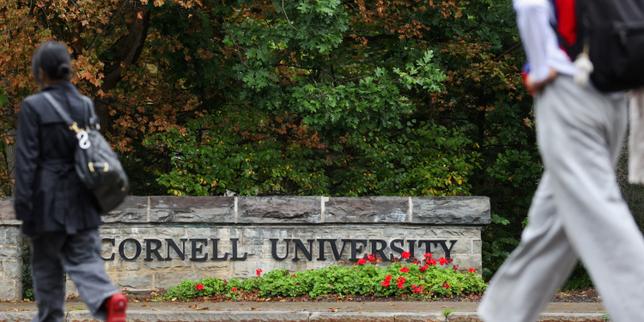
Justice shouldn't depend on whether you stayed sober or how loud public outrage gets. Yet, for months, that's exactly what happened in Ithaca, New York, after an undergraduate student at Cornell University reported being drugged and assaulted at a fraternity house. Now, the state has stepped in, appointing a special prosecutor to take over an investigation that many feared had stalled out entirely in local hands.
If you've been following the headlines, you already know the raw details are brutal. A 101-page civil lawsuit filed recently laid out allegations detailing a multi-hour assault involving seven men at the Chi Phi fraternity house back on October 19, 2024. The student, who was 20 at the time, alleged she was given ketamine and marijuana after arriving at the house, subsequently blacking out while being targeted by multiple individuals.
What makes this case a watershed moment isn't just the severity of the accusations. It’s the total institutional failure that followed.
Where the System Broke Down Early On
When the survivor reported what happened to the Cornell University Police Department in November 2024, the reaction should have triggered an immediate, rigorous criminal investigation. Instead, according to legal filings and statements from her attorney Thomas Giuffra, local investigators with the Tompkins County District Attorney's Office barely engaged with her. No criminal charges were filed at the time.
Meanwhile, Cornell handled the matter internally. The university ultimately expelled two members of the fraternity, while handing down much lighter punishments—ranging from suspensions to workshops and essay assignments—to five others. None of the men faced immediate arrest. The Chi Phi chapter was later banned from campus, but for survivors and student advocates, administrative slaps on the wrist felt like a cruel joke in the face of violent crime allegations.
Critics immediately pointed out a glaring flaw in state statutes. New York law has long created steep hurdles for prosecuting sexual assault cases where a victim was voluntarily intoxicated prior to an assault. Lawmakers are now facing intense pressure to rewrite these archaic definitions. If you're incapacitated by substances—whether you chose your first drink or not—your legal protection shouldn't evaporate.
Why the Appointment of a Special Prosecutor Changes the Game
Public pressure and the sheer volume of national outrage forced a pivot. The New York Attorney General's office stepped in to name a special prosecutor to lead the renewed inquiry.
When a special prosecutor takes over an active probe, the dynamic shifts completely. Local conflicts of interest disappear. Resources scale up. Investigators who specialize in complex survivor-centered interviews get brought in. Tompkins County officials previously mishandled or overlooked crucial testimonies, but a state-level independent mandate means every piece of evidence—including the disturbing Snapchat group chat logs highlighted in the lawsuit—will face fresh, uncompromised scrutiny.
The lawsuit itself names seven specific men—Matthew Ingalls, Johnathan Newell, Winston Lee, Gillio Lopes, Diego Sarabia, Scott Norris, and Scott Kretzschmar—alongside the university, the fraternity, and the survivor's sorority for negligence, breach of contract, and violations of state laws.
The Broader Reckoning for Ivy League Accountability
Elite universities love to market themselves as bastions of progressive thought and student safety. But when fraternity culture shields perpetrators behind closed doors, elite institutions often choose reputation management over actual accountability.
Cornell is far from alone here, but the sheer visibility of this case has turned Ithaca into the epicenter of a national debate on campus safety. When victims drop out of school because the aftermath of reporting is more traumatic than the silence, the system is fundamentally broken.
The appointment of a special prosecutor won't instantly fix the systemic loopholes embedded in state law, but it signals to universities that local cozy relationships won't protect them from independent oversight. Accountability is finally catching up.