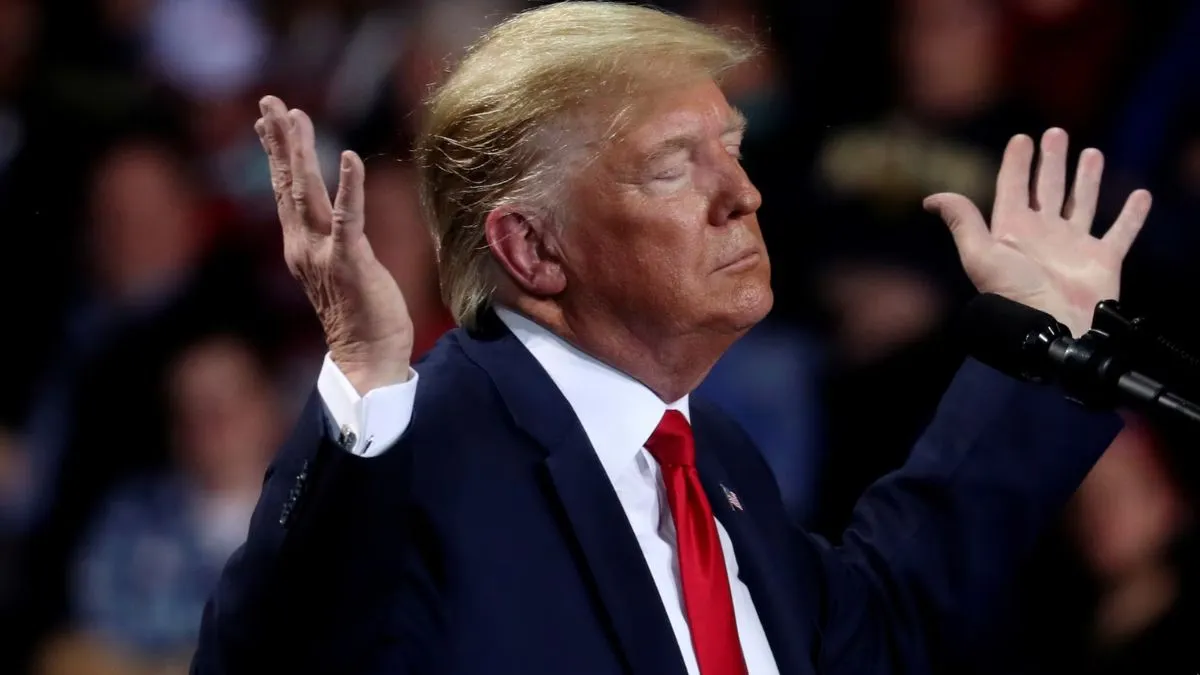
We love treating data like a crystal ball. Feed enough text into a machine, run some sentiment analysis, count every repetition, and you will supposedly unlock the secret psychology of a political figure. That is the promise behind massive computational journalism projects, including recent deep dives into the staggering volume of text generated by Donald Trump.
When analysts sift through roughly seven million words of transcribed speeches, interviews, and rallies, the resulting charts look impressive. They track keyword frequencies, emotional shifts, and narrative digressions across years of public life. But if you think a massive word count tells you why a politician connects with millions of people, you are missing how human communication actually works.
The Illusion of Computational Rigor
Counting words is easy. Understanding meaning is hard. When newsrooms analyze millions of words uttered by a prominent political figure, they tend to treat text as a static mathematical object. They graph the frequency of words like "border," "economy," or "rigged," charting spikes and valleys over time.
Yet, public speaking is performance art, not a textbook. A transcript strips away tone, timing, physical gestures, crowd response, and the shared cultural shorthand between a speaker and an audience. Reading a cold transcript of a political rally is like reading sheet music without hearing the instruments. You see the notes, but you miss the music entirely.
Analysts often look for policy substance inside streams of consciousness where none was ever intended to exist. When a speaker rambles for ninety minutes, keyword density maps don't reveal a hidden master strategy; they often just reflect associative thinking amplified by an arena full of cheering supporters. Treating raw conversational noise as a meticulously engineered literary text leads to bizarre conclusions.
Why Repetition Works Better Than Novelty
One of the most common findings in large-scale speech analysis is redundancy. Figures are repeatedly tracked returning to the exact same grievances, nicknames, and catchphrases. To data journalists, this looks like a limitation—a shrinking vocabulary or a lack of new policy proposals.
In reality, repetition is the core feature of persuasion.
Political communication doesn't win by introducing complex, nuanced policy papers every Tuesday. It wins by hammering a few simple themes until they become emotional touchstones for the listener. When you hear the same phrases thousands of times across multiple years, they stop being mere words and start functioning as tribal markers.
If you evaluated a pop song by counting how many unique words it used, most hit songs would look remarkably impoverished. But nobody goes to a concert for a vocabulary lesson. They go for the rhythm, the emotional release, and the shared experience. Political rallies operate on the exact same psychological frequency.
The Real Story Behind the Data
If you want to understand what those seven million words actually signify, look away from the frequency charts and look at the feedback loop between the speaker and the crowd.
Every speech is an improvisation guided by audience applause. If a line gets a laugh, it stays in the rotation. If it falls flat, it gets discarded. The corpus of text isn't a pre-written manifesto; it is a collaborative product shaped by thousands of hours of live interaction.
This is why text analysis of political speeches so frequently fails to predict political outcomes. Analysts look at the text in isolation, assuming that words persuade voters in a quiet room. Voters, however, experience those words as part of a high-energy cultural event. The data captures the vocabulary, but it completely erases the theater.
Moving Beyond the Word Count Trap
We need to stop pretending that processing millions of words brings us closer to objective political truth. It just gives us a very sophisticated way to count things that don't matter while ignoring the visceral, emotional dynamics that actually drive politics.
Next time you see a sprawling computational analysis of political rhetoric, check your skepticism. Ask yourself whether a computer counting synonyms can ever capture the raw electricity of a packed stadium shouting in unison. It can't. And until we admit that politics is driven by emotion and identity rather than keyword frequencies, our deep-dive journalism will keep missing the forest for the trees.