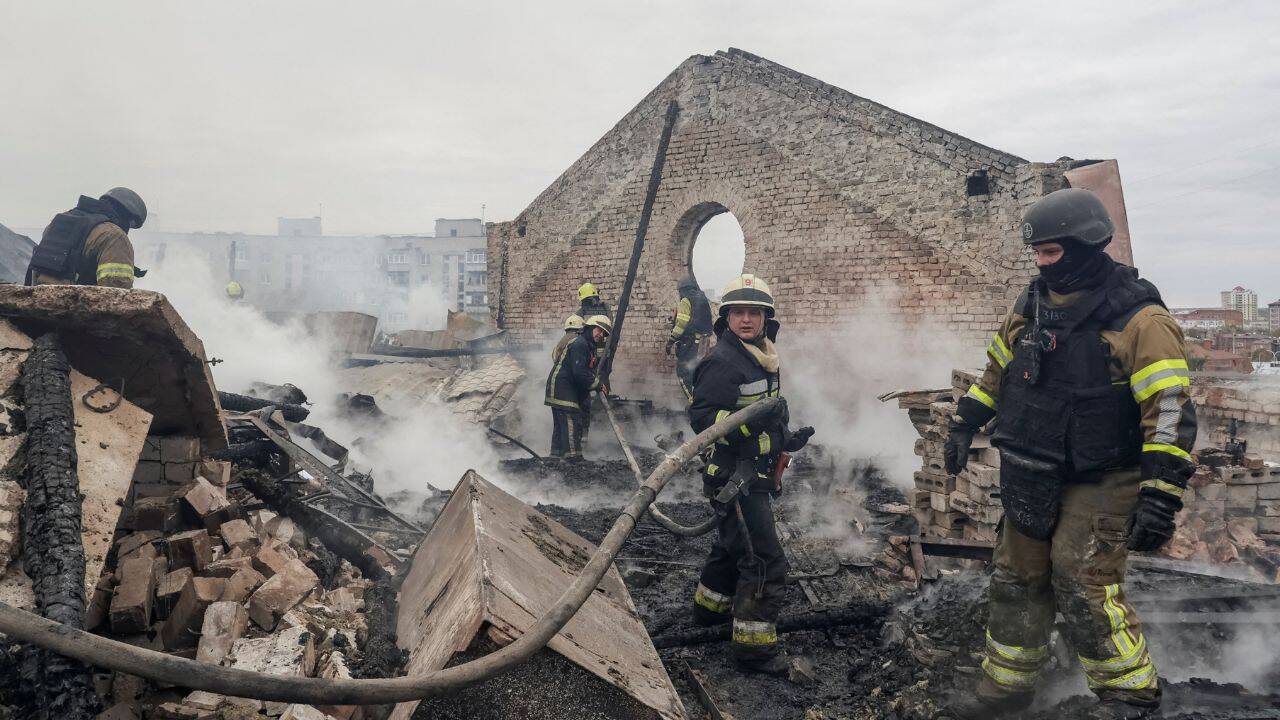
The border between Ukraine and Russia isn't just a frontline on a map anymore. It's a revolving door for unmanned aerial vehicles that strike civilian areas with zero warning. When a series of overnight drone attacks slammed into Russia's Belgorod region, the human toll hit close to home immediately. Three people lost their lives, and fourteen others sustained injuries.
Local officials, including Belgorod regional governor Alexander Shuvayev, confirmed the grim statistics after the dust settled. But the numbers alone miss the broader reality of how this conflict keeps creeping further into everyday Russian neighborhoods. Let's look at what's actually happening on the ground and why these regional escalations matter. If you found value in this post, you should look at: this related article.
The Immediate Impact on Belgorod and Shebekino
The overnight strikes didn't just target military installations. They ripped through civilian housing blocks and local commerce. In the city of Belgorod itself, explosions lit up the night sky before emergency crews rushed to handle the aftermath. Shuvayev reported that the destruction touched dozens of residential structures. Thirty blocks of flats, thirty-five cars, four houses, three administrative buildings, eight commercial premises, and three social facilities suffered varying degrees of damage.
Just a few miles away near the town of Shebekino, the violence claimed another life and left a separate individual wounded. This dual-pronged impact shows how thin air defenses are spread across border towns. You're looking at a region where grocery shopping or sleeping in an apartment building carries a frontline hazard, even though the primary battles are miles away. For another look on this development, check out the recent update from Associated Press.
Why Border Regions Bear the Brunt
If you live in Belgorod, Voronezh, or Kursk, the war isn't something you watch on an evening news broadcast. It wakes you up at three in the morning. Ukraine's strategy relies heavily on asymmetric warfare, using low-cost long-range drones to disrupt Russian logistics, stir up domestic pressure, and answer the relentless bombardment Ukrainian cities face daily.
The math of modern drone warfare favors the attacker. Building a basic quadcopter or fixed-wing loitering munition costs a fraction of the multimillion-dollar air defense batteries required to stop it. When dozens of these craft cross the border simultaneously, intercepting every single one becomes an impossible engineering puzzle for local defense networks. That's why civilian areas keep absorbing the shockwaves.
The Escalation Cycle Shows No Signs of Stopping
Every time a strike hits Belgorod, the retaliation cycle spins faster. Moscow uses these incidents to justify intensified missile barrages on Ukrainian energy grids and urban centers. Kyiv maintains that striking inside Russian territory is a military necessity to degrade supply lines and force the Kremlin to reconsider its invasion.
Meanwhile, ordinary residents get caught in the meat grinder of tit-for-tat escalations. Evacuations have become routine in the most exposed border settlements, but many people stay behind simply because they have nowhere else to go.
Expect more of the same as long as diplomatic off-ramps remain completely closed off. The war has settled into a brutal, grinding phase where technological adaptation moves faster than any peace talks. Keep an eye on how local defenses evolve in these border zones, because the next wave of aerial tactics will likely set the tone for the rest of the year.