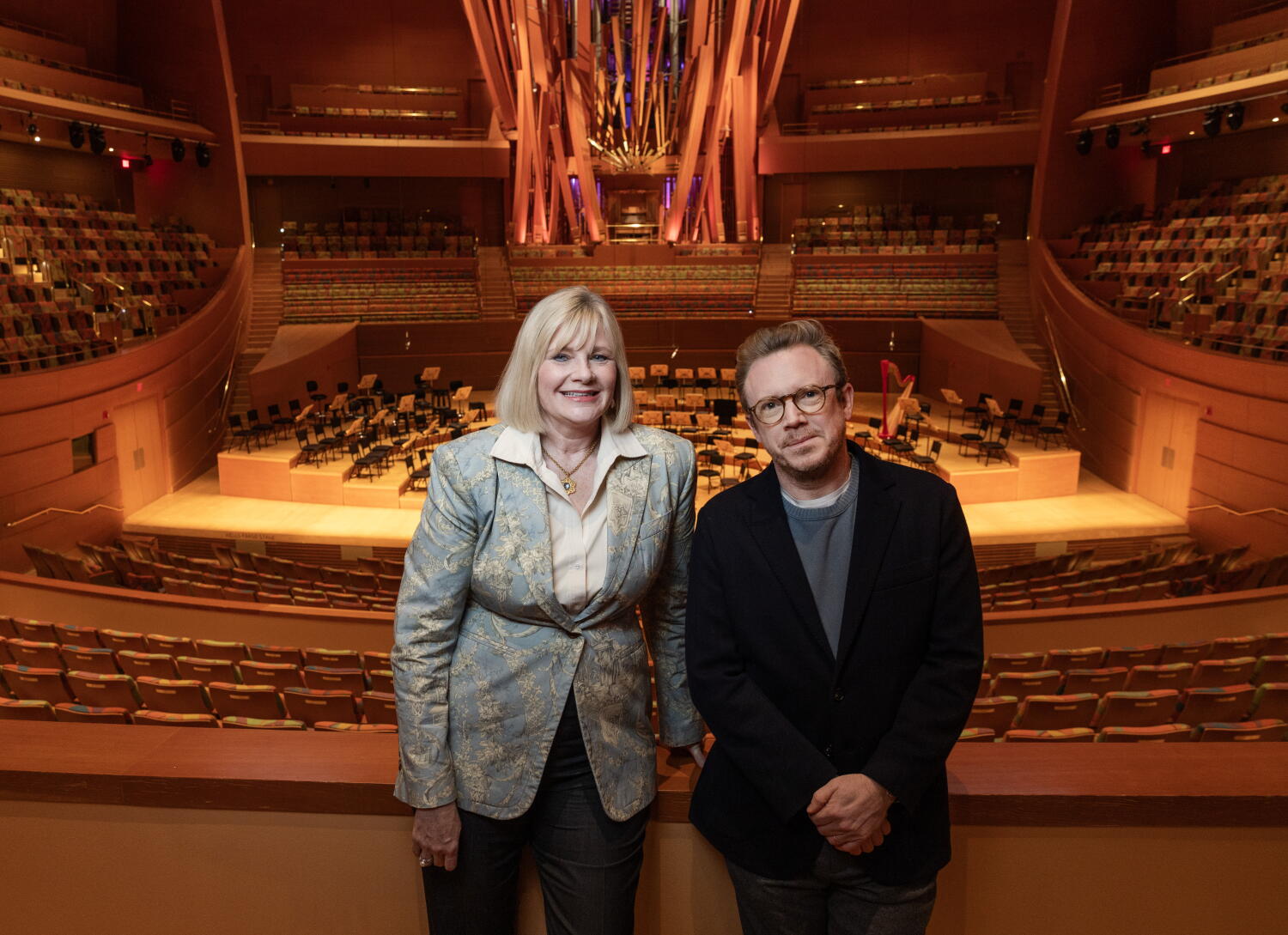
The Los Angeles Philharmonic isn't just swapping one podium star for another. When an institution of this caliber enters a transition, ordinary organizations panic. They hire a clone of their previous leader, cross their fingers, and hope nobody notices the magic fading.
The LA Phil did the exact opposite.
Following Gustavo Dudamel's legendary tenure, the orchestra didn't just name Daniel Harding as its next music director starting in the 2027/28 season. They completely rewired the entire artistic leadership grid. It is a calculated, sprawling reorganization that moves away from the traditional single-autocrat model of orchestral governance and embraces a decentralized web of creative forces.
If you think classical music is a stagnant museum art form bound to dusty scores, look at what's happening at Walt Disney Concert Hall right now.
Breaking the Mold of the Traditional Maestro
Most major orchestras treat the music director role like a crown. One person holds total artistic dominion, choosing every piece, shaping every program, and carrying the weight of the organization's identity on their shoulders. That model works until it breaks. When that single leader leaves, the institution plunges into an identity crisis.
The LA Phil saw that trap coming from miles away.
Daniel Harding stepping into the role isn't a simple handoff. Harding brings a famously rigorous, detail-oriented European sensibility combined with an unexpected day job—he's a commercial airline pilot. That perspective matters. He views ensembles not as personal fiefdoms, but as complex, high-stakes systems requiring absolute trust, precision, and collective focus.
Instead of concentrating all power in Harding's hands, executive leadership—led by President and CEO Kim Noltemy and Board Chair Jason Subotky—expanded the structural framework around him. They built an ensemble of heavyweights designed to share the cultural and artistic weight.
The Architecture of the New Leadership Team
Take a close look at the roster appointments rolling out for the 2026/27 and 2027/28 seasons. It's a masterclass in institutional diversification.
Esa-Pekka Salonen steps into the first-ever Judith and Thomas L. Beckmen Creative Director position as Conductor Laureate, anchoring historical institutional memory while fueling ongoing innovation. Meanwhile, rising star Anna Handler takes over as Conductor-in-Residence, injecting fresh energy into the podium ranks after proving her mettle as a Dudamel Fellow.
The composition side is undergoing an equally dramatic evolution. John Adams, who defined the modern sound of the orchestra for nearly two decades, will transition to Creative Chair for New Music Emeritus, handing the baton to Thomas Adès beginning in the 2027/28 season. Adès brings a brilliant, iconoclastic compositional voice that guarantees the orchestra won't rest on its historical laurels.
Then there is the expansion into genres that traditional classical institutions usually ignore or treat as afterthoughts. Silvana Estrada joins as the organization's inaugural Creative Chair for Latin Music, cementing Los Angeles' deep cultural ties to Latin America. Jazz icon Herbie Hancock shifts to an emeritus role after more than a decade of reshaping what an orchestra can do when it opens its doors to America's true native art form.
This isn't a shakeup born of desperation. It's an expansion born of ambition.
Why This Strategy Works Where Others Fail
Orchestras struggle when they try to manufacture charisma. You can't fake cultural relevance. You either build a deep ecosystem where diverse artistic voices thrive, or you become a glorified cover band playing nineteenth-century hits to empty seats.
By building a collaborative matrix, the LA Phil insulates itself against the turbulence of leadership changes. If a traditional music director is away flying planes or guest-conducting in Europe, the institution often stalls. Under this multi-tiered framework, the artistic engine keeps roaring because multiple cylinders are firing at once.
Harding himself understands this balance intimately. Having spent decades leading bodies like the Mahler Chamber Orchestra and the Swedish Radio Symphony, he knows that true leadership is about enabling others to play at their absolute peak.
What Comes Next for L.A. Culture
The real test of any leadership overhaul happens on the stage and in the community. Los Angeles is a sprawling, chaotic, endlessly inventive cultural laboratory. An orchestra trying to serve this city needs to be just as multifaceted as the streets outside its doors.
By pairing Harding's meticulous orchestral discipline with a wide-ranging bench of creative chairs and resident conductors, the LA Phil is betting that classical music's future belongs to networks, not monoliths.
Watch how these relationships unfold over the next few seasons. You're looking at the blueprint for how 21st-century cultural institutions must adapt if they want to survive and lead. Stop looking at the podium as a single seat of power. The real story is the entire grid lighting up around it.