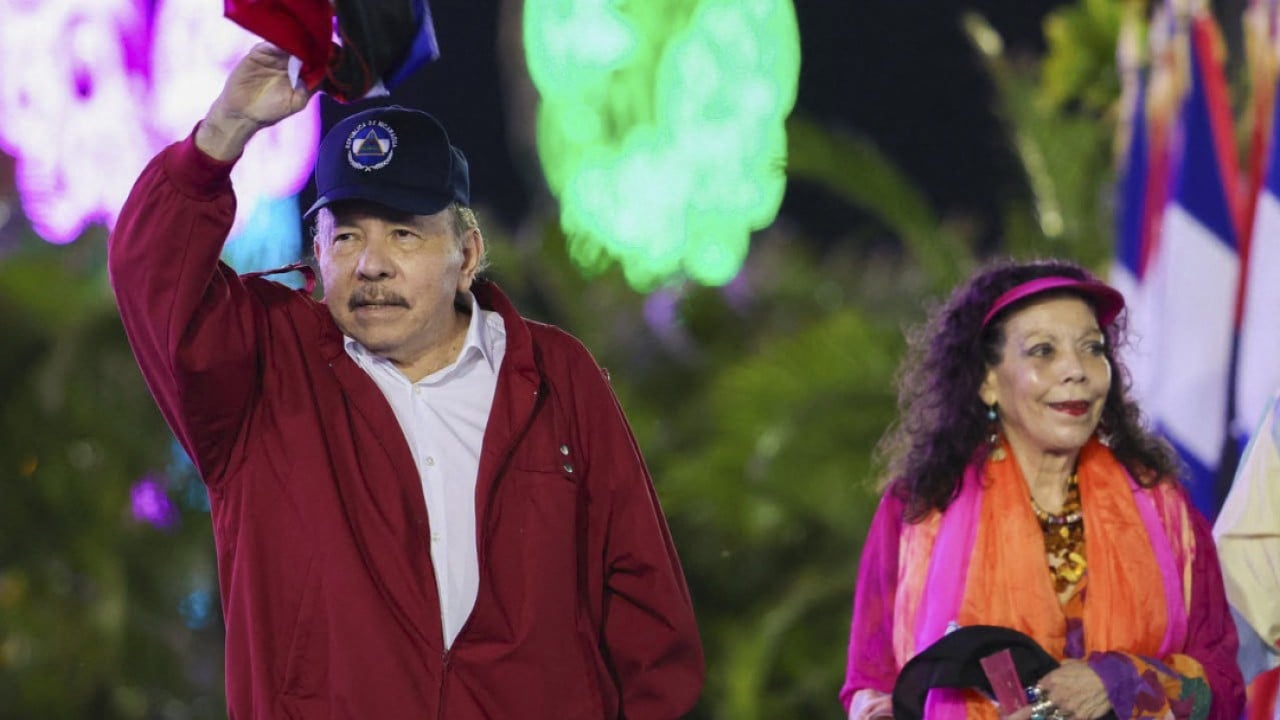
Daniel Ortega stood on a stage in Managua on July 19 and made official what observers had known for years. Democracy in Nicaragua is finished. Speaking at the 47th anniversary of the 1979 Sandinista revolution, the 80-year-old president announced that the Central American nation will no longer hold elections.
He didn't sugarcoat it. He didn't frame it as a temporary suspension or a security measure. He explicitly stated that elections are over so the political opposition can never take power again.
For anyone tracking Nicaragua over the last decade, this wasn't a shock. It was a formalization. The regime had already spent years stripping away every pretense of democratic governance. But declaring the end of voting altogether marks a grim milestone. It completes the country's transition into a total family dictatorship run by Ortega and his wife, co-president Rosario Murillo.
The End of the Ballot Box
During his address, Ortega claimed that eliminating elections was necessary to protect the country from "coup plotters" and foreign interference. He promised to work directly with the National Assembly, which his party completely controls, to enact new laws building a legal wall against opposition groups.
"There will be no more elections here so that they can try to seize the government," Ortega told a crowd composed largely of state employees.
The move eliminates even the illusion of electoral competition. The next presidential vote was originally slated for 2027. Now, citizens won't even get a rigged ballot.
This announcement isn't happening in a vacuum. It follows a relentless campaign to dismantle every independent institution in the country.
How Nicaragua Reached This Point
The collapse didn't happen overnight. It was a methodical process that started years ago.
In 2018, massive public protests broke out over pension cuts and broader government corruption. The regime responded with brutal force. Police and armed pro-government paramilitaries cracked down on demonstrators, leaving over 350 people dead and hundreds injured.
Instead of opening the door to political reform, the government doubled down.
Before the 2021 presidential election, Ortega made sure he wouldn't face a real challenge. His security forces arrested all seven main opposition candidates, along with dozens of journalists, business leaders, and civic activists. Ortega ran against pre-approved candidates from minor parties and declared victory. International observers widely condemned the vote as a total sham.
Since then, the repression has only intensified. Consider these numbers:
- Over 5,600 non-governmental organizations have been forcibly closed.
- At least 29 universities have been seized by state authorities.
- More than 58 independent news outlets have been forced offline or out of the country.
- At least 546 critics, dissidents, and former political figures have been stripped of their Nicaraguan citizenship and forced into exile.
The regime didn't stop at political rivals. It went after the Catholic Church, arresting priests and bishops, shuttering religious radio stations, and banning traditional religious processions across the country.
A Family Dynasty Encased in Law
Ortega and Murillo didn't just break the rules; they rewrote the constitution to solidify their power.
In late 2024 and early 2025, the regime pushed sweeping constitutional changes through the National Assembly. Those amendments fundamentally altered the structure of the Nicaraguan state.
First, they formally created the position of "co-president," officially elevating Rosario Murillo to equal executive power alongside Ortega. This move solved a long-standing internal question regarding succession. If Ortega's health fails, Murillo automatically assumes full control without needing an election.
Second, the reforms extended presidential terms from five years to six and gave the executive branch direct control over the legislative, judicial, and electoral branches of government.
Third, the government granted constitutional status to the "volunteer police"—masked civilian groups that played a key role in crushing the 2018 demonstrations.
With those legal changes in place, holding elections—even rigged ones—became an unnecessary risk for the regime.
Why Ortega Made the Move Now
Staging fake elections takes money, administrative effort, and international coordination. More importantly, it creates a moment where public discontent can leak out.
Analyst Tiziano Breda from the Armed Conflict Location and Event Data project pointed out that Ortega and Murillo fear even the smallest political opening. Allowing any form of opposition activity, even strictly monitored campaigns, gives people a reason to organize.
By eliminating elections completely, the regime removes the deadline. It doesn't have to explain voting irregularities to international bodies. It doesn't have to manage domestic optics every five or six years.
It also sends an unmistakable message to the domestic population and the international community: the Sandinista National Liberation Front will not relinquish power under any circumstances.
The International Reaction and What Comes Next
The reaction from foreign governments was swift but familiar.
The United States State Department has repeatedly condemned the Ortega-Murillo regime as an authoritarian dictatorship. Over recent years, Washington has imposed targeted sanctions on dozens of high-ranking Nicaraguan officials, family members, and state-owned companies. Visa restrictions have been applied to thousands of government insiders.
However, sanctions have so far failed to alter the regime's trajectory. Nicaragua has tightened its diplomatic and economic ties with Russia, China, and Iran to offset Western isolation and economic pressure.
For the people of Nicaragua, the path forward is bleak. With internal dissent criminalized and independent media wiped out, opposition inside the country has been effectively silenced or driven underground.
The immediate focus for international observers and human rights groups now shifts to protecting the political prisoners who remain in Nicaraguan jails and monitoring the regime's growing pressure on exiled communities across Central America and North America.
Nicaragua has officially entered a new era. The ballot box is gone, and a family dynasty now holds absolute authority over the state.