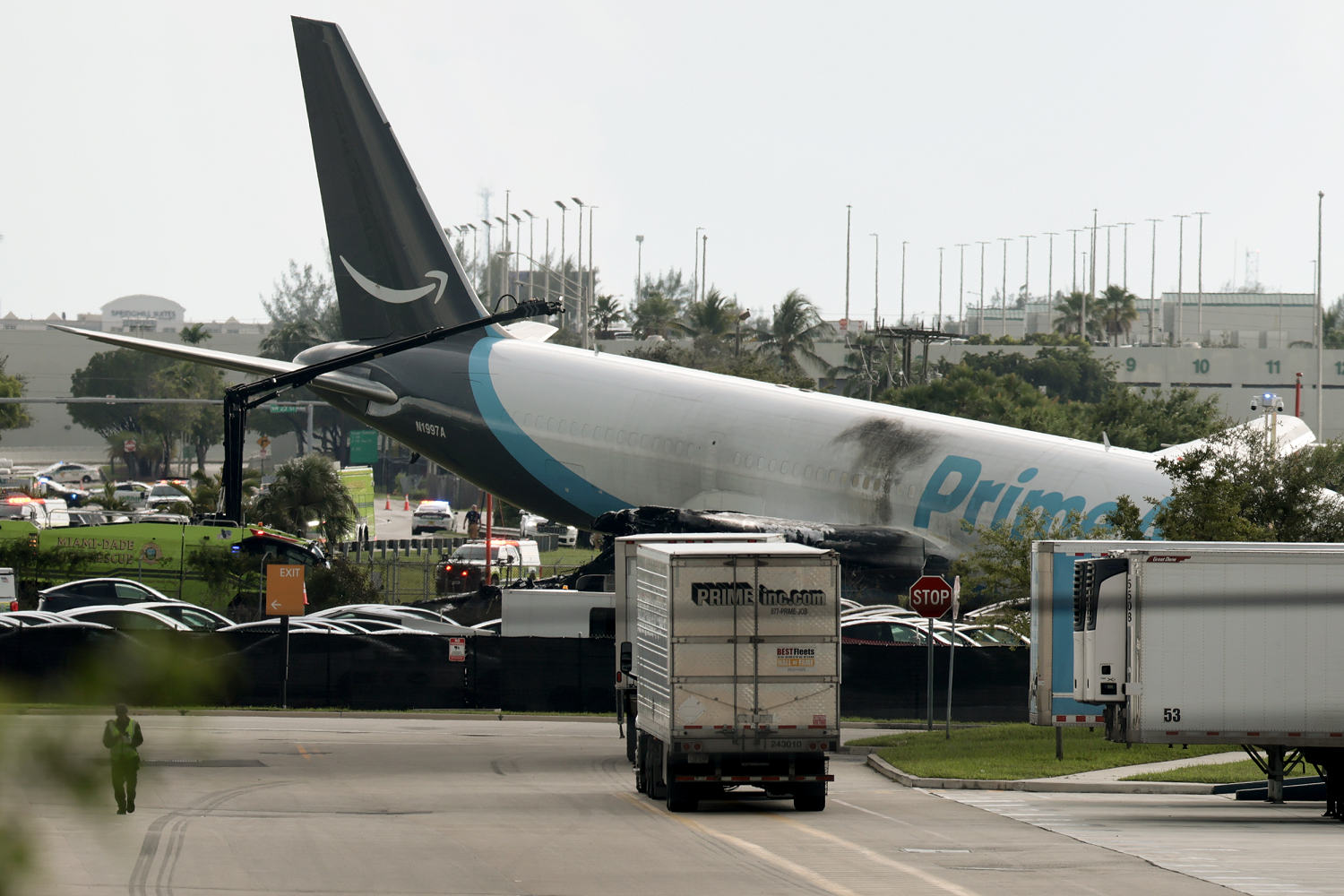
Five people are dead because a Boeing 767 cargo jet came in too fast, blew past a runway at Miami International Airport, and plowed straight into a service van.
If you think air cargo logistics are immune to the systemic pressures facing the rest of the supply chain, look at what happened on September 6. Operated by 21 Air for Amazon Prime Air, Flight 7598 arrived from San Juan, Puerto Rico, barreled roughly 1,300 feet past the pavement end, and smashed into vehicles on a public perimeter road before catching fire. Every single person who died was inside that van, working for a local plane cleaning company.
Corporate giants like Amazon rely on third-party air carriers to keep two-day shipping promises humming along. But when fatal disaster strikes, the immediate fallout exposes the fragile boundaries between contracted operators and multi-trillion-dollar retail ecosystems.
The Anatomy of a Runway Excursion
National Transportation Safety Board data reveals a terrifying sequence in the cockpit. Flight data recorders show the aircraft was unsteady as it approached the ground amid shifting winds. One of the pilots explicitly warned their counterpart about excessive speed, both as they closed in and immediately after touchdown.
Instead of executing a go-around while they had time, the crew touched down roughly halfway down the 9,360-foot runway. They briefly tried to throttle back up to take off again, abandoned that attempt four seconds later, and failed to stop the heavy jet before it ran out of tarmac.
A 32-year-old Boeing 767 originally built for passenger use cannot stop on a dime when it crosses the threshold at high velocity with tailwinds pushing it forward. The physics are brutal.
Accountability and the Third-Party Carrier Model
Amazon didn't waste time trying to insulate its brand once the NTSB began digging into operational records. The retail titan officially suspended its partnership with 21 Air.
It's a familiar corporate playbook. Subcontract out the actual flight operations, maintenance, and crew scheduling to regional or boutique carriers, then distance yourself when the machinery fails.
Investigators are actively reviewing 21 Air's safety culture, maintenance logs, and the specific training of the flight crew. Former aviation officials point to clear breakdowns in cockpit resource management. When a junior first officer or co-pilot flags dangerous speed, why didn't the captain take immediate evasive action? Why did the crew press on with an unstable landing instead of circling back around?
These questions go beyond one bad afternoon in South Florida.
What the Logistics Industry Refuses to Face
The explosive growth of e-commerce created an insatiable appetite for dedicated air lift capacity. Prime Air expanded rapidly to match FedEx and UPS, often utilizing leased aircraft and outsourced wet-lease or charter operators.
When you contract out the sky, oversight gets murky. Pilots and safety advocates have spent years warning that hyper-fast delivery schedules trickle down into operational pressures for regional cargo outfits. While investigators haven't pointed to corporate scheduling as a direct cause of this specific crash, the public scrutiny on how these subcontracted fleets operate is long overdue.
Five families are mourning workers who just showed up to clean airplanes on a Sunday afternoon. Three other people suffered critical injuries, and several more were hospitalized.
Pausing a contract after the fact doesn't bring them back. True reform requires federal regulators to look past the corporate firewall and examine whether the relentless push for speed is compromising basic aviation safety.