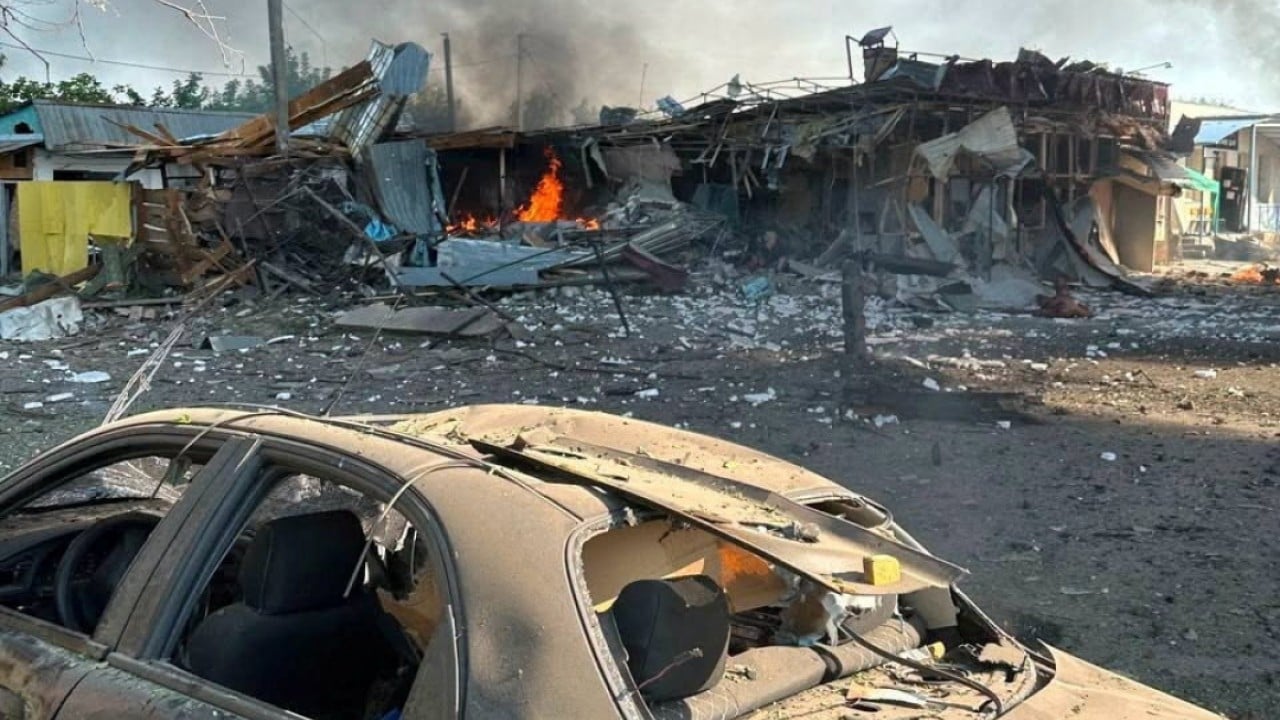
Ten people died this morning in a quiet corner of the Kharkiv region. A Russian missile slammed into a busy intersection in the village of Pechenihy, turning a local post office and neighborhood shops into rubble. It’s a tragedy that’s become all too familiar in this four-and-a-half-year conflict, yet the specifics of this strike highlight a grim reality about how the war is evolving.
When I look at reports of these strikes, I’m not just seeing the casualty count. I’m seeing a calculated strategy to disrupt civilian life in areas that have been under immense pressure for months. President Volodymyr Zelenskiy has vowed a response, but for the families of the ten victims and the seventeen others injured, that promise doesn't change the immediate destruction.
The Reality on the Ground in Kharkiv
Pechenihy isn't a military base. It's a village. When you target a post office, a café, and a store, you're not hitting soldiers. You’re hitting the infrastructure that keeps a community functioning. Governor Oleh Syniehubov confirmed that ten private houses were damaged, along with at least seven cars parked in the area.
This is the frontline of a war that isn't just fought between armies in trenches. It’s fought through the systematic targeting of the places where people try to maintain a semblance of normalcy. The use of Banderol cruise missiles, as reported by the Prosecutor General’s Office, suggests a desire to cause maximum damage to static targets.
People often ask why these specific villages are hit. It’s rarely random. By targeting communication hubs and supply points, these strikes aim to isolate populations and complicate the logistics of survival.
Understanding the Escalation
We’ve seen a clear shift in the last few months. July 2026 was the deadliest month for civilians in Ukraine since the early stages of the invasion. According to the United Nations Human Rights Monitoring Mission in Ukraine, we’re looking at a 30 percent increase in casualties compared to June. That’s not just a statistic. That’s a massive jump in the human cost of this stalemate.
Why is this happening now?
- Strained Air Defenses: Russia knows that Ukraine’s air defense systems are stretched thin across a massive front. They're testing the gaps.
- Logistics Pressure: By hitting centers like Pechenihy, they’re effectively forcing the Ukrainian military to divert resources to civilian aid, rescue operations, and repairs instead of focusing entirely on counter-offensive efforts.
- The "Gray Zone" Strategy: Russia is aggressively expanding contested "gray zones" in the northeast. Striking villages behind the immediate frontline is part of a broader push to make these areas uninhabitable or impossible to hold.
What Happens Next
Zelenskiy’s promise to respond is standard rhetoric, but what does it actually mean in the context of late 2026? We’re seeing a new phase of the war where Ukraine is taking the fight directly to Russian logistics centers. Just recently, we’ve seen successful Ukrainian strikes against major logistics hubs like the Wildberries warehouses, which were being used to support Russian military needs.
The next steps won’t be limited to the battlefield. Expect an increase in:
- Deep-Strike Campaigns: Ukraine will likely continue to target Russian oil refineries and defense manufacturing facilities far from the border to try and degrade the enemy's ability to produce the very missiles that hit Pechenihy today.
- Asymmetric Warfare: With fewer resources than Russia, Ukraine has to play a smarter game. Using long-range drones and local sabotage units to hit high-value targets is the only way to balance the scales.
- Humanitarian Crisis Management: Local administrations in the Kharkiv region are already struggling. The focus for local officials is shifting from simple governance to emergency disaster management on a daily basis.
If you’re watching the news today, don’t just focus on the casualty number. Look at the geography. Look at the pattern. Every strike on a civilian center like Pechenihy is a move in a much larger, darker game of attrition. The war isn't coming to an end; it's simply finding new, more brutal ways to grind on.
The people in the Kharkiv region are living through the consequences of a stalemate that is increasingly being written in the blood of those just trying to run a post office or get a cup of coffee. That’s the reality you need to understand if you want to see where this is going.