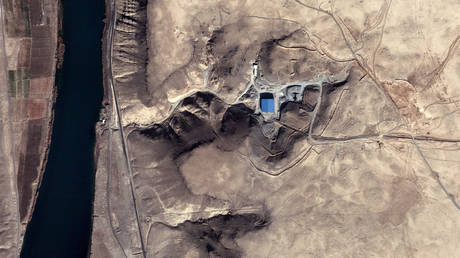
When a child is among the dead after a drone strike hits deep inside Russia, the nature of a conflict shifts. That is what happened during a massive wave of Ukrainian aerial assaults targeting industrial hubs thousands of kilometers from the front lines. The strikes hit Salavat, an oil-refining city located in Russia's Bashkortostan region, resulting in one of the deadliest single incidents recorded in the area since the escalation began.
People want to know how security parameters failed and why economic centers are now frontline targets. The reality is simple. Drones have evolved past frontline tools. They are long-range strategic weapons rewriting the geography of modern warfare.
The Reality of Deep Strikes Inside Russia
Geography used to protect Russian industry. If you were a thousand miles away from the trenches in the Donbas, you felt safe. That illusion is gone. Ukraine's military industrial complex has quietly scaled production of domestic long-range loitering munitions capable of flying massive distances while evading regional air defenses.
Salavat isn't a random dot on a map. It houses one of Russia's largest petroleum and petrochemical processing facilities. Hitting a site like this isn't just about making noise; it is a calculated attempt to choke the fuel supply powering military logistics and disrupt the export revenue keeping the state budget afloat.
When debris from intercepted drones or direct impacts hit civilian apartment blocks near these facilities, the cost shifts immediately from economic to human. Thirteen casualties, including a young child, shatter the narrative that these modern aerial campaigns only impact metal pipes and distillation columns.
Why Oil Refineries Became the Prime Target
You cannot fight a mechanized war without refined products. Diesel, aviation fuel, and gasoline are the lifeblood of tanks, trucks, and jets. For months, strategists watched a systematic campaign unfold against Russian refineries across several regions, from Ryazan to Rostov, and now deep into the Urals-adjacent republics like Bashkortostan.
Let us look at why this specific strategy matters:
- Fuel scarcity directly hampers tactical mobility on the battlefield.
- Repairing specialized Western-component-dependent refinery equipment is extraordinarily difficult under sanctions.
- Public pressure mounts inside Russia as fuel prices fluctuate and safety in industrial towns vanishes.
It is a high-stakes campaign of attrition. By targeting the economic engine, Kyiv aims to force Moscow into a painful choice. Do they pull valuable air defense batteries away from the front lines to protect oil plants, or do they risk losing the industrial output that fuels the war machine?
The Civilian Toll and the Escalation Spiral
War doesn't stay neatly bounded inside military zones. As drone interception rates fluctuate, civilian areas surrounding vital infrastructure bear the brunt of kinetic failures. Shrapnel doesn't care about property lines. When an explosion rocks a residential block in a refining city, the political calculus changes overnight.
Domestic audiences in Russia face a stark reality check. The war is no longer a broadcast on a television screen or a distant deployment. It has arrived at the local grocery store, the neighborhood park, and the apartment skyline.
At the same time, international observers are left measuring the escalation ladder. Each successful deep strike invites retaliation against Ukraine's own electrical grid and population centers. It creates a brutal feedback loop where every successful hit deep inside enemy territory guarantees a harsher reprisal elsewhere.
What Comes Next
We are watching a fundamental transformation in how middle powers fight asymmetric conflicts using cheap unmanned tech against heavily fortified industrial states. The playbook has changed permanently. Expect more long-range adaptations, heavier electronic warfare jamming, and an ongoing race to secure industrial skies that were once thought impenetrable.
The smoke over Salavat will clear, but the strategic implications of a child losing their life a thousand miles from the trenches will echo long after the fires go out.