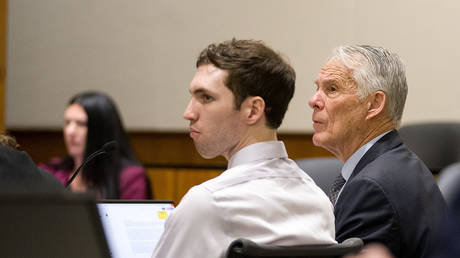
The legal battle over the murder of conservative activist Charlie Kirk just took a sharp turn. Lawyers defending Tyler Robinson are aggressively pushing to take the death penalty off the table. Their core argument hinges on a precise legal distinction: the shooter hit his intended target, and nobody else was put in real danger.
If you're following this high-profile case out of Utah, you know the stakes couldn't be higher. Prosecutors want capital punishment. The defense is trying to dismantle that path before the case even reaches a full trial. Meanwhile, you can read similar events here: Why Germany’s Spy Agency Overhaul Sparked A Massive Political Storm.
Let's break down what's actually happening in the courtroom and why this defense strategy matters.
The Core Defense Argument on the "Zone of Danger"
The prosecution’s case for capital punishment isn't just built on the fact that a murder took place. Under Utah law, prosecutors can seek the death penalty if they prove aggravating factors—specifically, that the defendant knowingly created a great risk of death to multiple people. To understand the complete picture, check out the excellent article by TIME.
State attorneys argued that by loading his rifle with four bullets, Robinson showed he expected to miss and put the thousands-strong crowd at Utah Valley University at risk. They claim people were inside a dangerous zone where a stray or ricocheting bullet could have easily struck a bystander.
Robinson’s defense team completely rejects this logic.
In court documents filed late Tuesday, defense lawyers pointed out that the bullet traveled above the crowd, not through it. They argued that there were zero threats to other attendees. Their phrasing is direct: the shooter hit his exact intended target, and it's just as likely that Robinson never believed he would miss in the first place.
Without proof that others were endangered, the state's path toward a capital conviction gets a lot harder.
Disputing Motives and Political Overtones
Another major battleground in this case involves the suspect's motivation. Prosecutors allege that Robinson targeted Kirk over his political beliefs, pointing to a comment made to a roommate where the defendant reportedly stated he "had enough of his hatred." The state also brought up ideological differences regarding gender issues and politics to build an enhancement case.
The defense counters that a single statement doesn't equal a provable political assassination motive.
Investigators searched Robinson's apartment, phone, and computers. According to his lawyers, those deep dives didn't uncover a coordinated political vendetta or extensive proof backing up the prosecution's narrative. Testimony from acquaintances indicated that while political topics occasionally came up, Kirk wasn't a frequent topic of conversation prior to the shooting.
Where the Evidence Stands Now
The prosecution spent weeks laying out what they call overwhelming evidence, including DNA tests linking Robinson to the suspected weapon and statements framed as confessions. Meanwhile, the defense has consistently poked holes in the reliability of those tests and challenged how the state handles pre-trial publicity. State District Judge Tony Graf previously rejected an earlier attempt by the defense to strip away the death penalty over a prosecutor contempt issue, forcing lawyers to pivot to these new statutory arguments.
Prosecutors have until August 18 to formally respond to the defense team's latest filing. Robinson has yet to enter a formal plea.
Practical Next Steps to Watch
If you want to track how this case develops over the coming weeks, keep your eyes on a few specific milestones:
- The State's Response: Watch for the prosecution's filing by the August 18 deadline to see how they counter the claim that nobody else was endangered.
- Judge Graf's Rulings: Pay attention to how the state district court evaluates the "zone of danger" legal threshold under Utah capital statutes.
- Pre-Trial Hearings: Monitor upcoming motions regarding the admissibility and reliability of the forensic and DNA evidence presented so far.
The legal arguments being tested right now will dictate whether this trial becomes a battle over capital punishment or standard aggravated murder charges.