If you look at recent talking points from Democratic lawmakers, you might forget that the planet is warming at a historic rate. Torrid heatwaves blanket entire states, torrential rains wash away neighborhoods, and wildfire smoke chokes millions. Yet, inside political campaign offices, a strange silence has taken hold.
Party strategists call it climate hushing.
The strategy is straightforward, even if it is cowardly. Following election losses and mounting anxiety over the cost of living, political consultants convinced many Democrats to muzzle their environmental rhetoric. They worry that talking about carbon emissions or renewable energy transitions alienates working-class voters who are stressed about grocery and utility bills. They think you can't care about a warming planet and an affordable grocery bill at the exact same time.
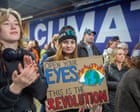
Activists are sick of it. Grassroots organizations across the country are using the summer congressional recess to call out politicians who refuse to say the word climate. They are turning up the volume because they know the consultant class is completely misreading the room.
The Data Dismantles the Hushing Myth
For months, timid strategists claimed that mentioning global warming was electoral poison. They argued it handed easy ammunition to opponents. Recent data completely shatters that narrative.
Research published by the University of California, Santa Barbara's 2035 Initiative reveals that emphasizing climate policy is either neutral or outright beneficial for candidates. When researchers tested voter behavior in competitive scenarios, candidates who made climate change a top priority saw a measurable bump in support. Crucially, it didn't alienate swing voters.
People aren't annoyed by hearing about extreme weather; they live through it. A July poll from Data for Progress shows that sixty-one percent of likely voters notice that extreme weather events are becoming more frequent. Nearly half of self-identified Republicans agree.
When politicians pretend the crisis isn't happening, they sound disconnected from reality.
Grassroots Pushback Takes Center Stage
Elected officials might want quiet corridors, but the streets are loud. The Climate Action Campaign has mobilized networks spanning at least twenty states during the current legislative recess. Local Sierra Club chapters, senior-led climate groups like Third Act, and racial justice advocates are cornering lawmakers at town halls and district offices.
Figures like environmental author Bill McKibben point out an obvious historical truth. Change never bubbles down from cautious consultants. It always bubbles up from fierce grassroots pressure.
Activists are demanding direct action. They are circulating petitions directed at congressional leadership, including House leader Hakeem Jeffries and Senate leader Chuck Schumer, demanding that climate policy return to the forefront of the legislative agenda. They want a clear, unapologetic link drawn between soaring summer temperatures, fossil fuel reliance, and economic instability.
The Fear of Losing the Narrative
Why are national Democrats so terrified?
After losing the White House, party leadership hyper-focused on inflation. They bought into the notion that any minute spent discussing carbon taxes or clean energy mandates is a minute stolen from talking about housing prices or wages.
Some policy wonks suggest a quieter approach. They argue for sneaking green energy subsidies into larger infrastructure bills without drawing media fire. They want stealth legislation.
Stealth doesn't inspire a movement. It certainly doesn't motivate voters to stand in line on election day.
Voters who care deeply about the environment are intensely motivated. When candidates refuse to champion the issue, those passionate voters stay home or lose enthusiasm. Muzzling the message suppresses the very base required to win tight congressional races.
Reality Catches Up to Politics
You can't hide a smoke-filled horizon behind a talking point about economic growth.
Public opinion surveys from Yale University consistently demonstrate that roughly two-thirds of Americans worry about global warming. The gap between public concern and the rigid skepticism found on the far right is massive. It is arguably one of the widest ideological divides in modern American politics.
Leaving that gap vacant is political malpractice.
When politicians shy away from big problems, they cede the narrative to opponents who claim environmental protection is a luxury the country cannot afford. In truth, ignoring the mounting costs of climate-driven disasters is the most expensive path forward possible.
What Needs to Happen Now
If Democrats want to energize voters ahead of upcoming midterms, the pivot away from climate hushing must happen immediately.
- Connect local economic pain directly to environmental shifts, showing how extreme weather drives up insurance rates and food costs.
- Stop treating climate policy as a niche special interest and frame it as foundational infrastructure for human survival.
- Answer voter anxieties about cost-of-living head-on by proving that renewable energy transitions lower long-term utility bills.
Stop whispering about the future of the planet. Turn up the volume.