Football on Thanksgiving in Detroit goes way back to 1934, yet the real test of loyalty happens off the field when families try to put dinner on the table. When the Detroit Lions step up to feed their community each November, they aren't just checking a PR box before kickoff. They're stepping into a city and state where food insecurity hits hard every single day.
Direct answer first. The Detroit Lions fight holiday and year-round hunger across Detroit and Michigan by assembling and distributing thousands of Thanksgiving meal kits, partnering with regional food banks like Gleaners Community Food Bank and South Michigan Food Bank, hosting player-led turkey and side giveaways, and teaming up with sponsors like Ford Philanthropy and Feeding America to turn their holiday tradition into real food access.
How Detroit Lions Thanksgiving Outreach Works on the Ground
If you think holiday charity is just a quick photo op with a few boxes, you haven't looked closely at how food logistics actually run in November. A single Thanksgiving meal kit takes cold-chain coordination, warehouse space, volunteer shifts, and neighborhood distribution points so perishables don't spoil and families don't wait in freezing lines without clear pickup windows.
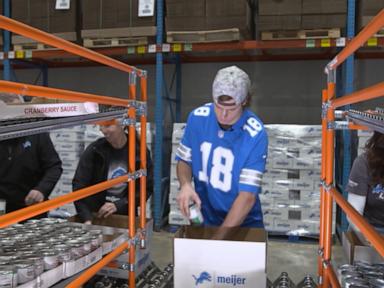
According to the Detroit Lions community initiatives page, the franchise ties its holiday outreach directly to its long-running Thanksgiving roots, working alongside organizations such as Gleaners Community Food Bank and Lineage Foundation for Good. Over recent seasons, the team's efforts have scaled dramatically—moving from packing 2,500 meal kits in 2023 to distributing 10,000 meal kits across Michigan with Meijer and Gleaners, and hitting 15,000 Thanksgiving meal kits in the 2026 outreach push.
Players get directly involved in those assembly lines and neighborhood drops rather than staying isolated at the training facility. In November 2026, Lions players including Aidan Hutchinson, Josh Dobbs, Isaac TeSlaa, Anthony Lucas, Sione Vaki, Jabari Small, Blake Miller, and rookie defensive tackle Skyler Gill-Howard joined volunteer sessions at Gleaners Food Bank. Individual players also host targeted neighborhood drives—such as Kerby Joseph and Keith Abney II organizing a turkey and side dish giveaway at the Detroit Public Library's Edison branch on the city's west side ahead of a home game.
Here is why that mix of large-scale food bank packing and hyper-local drops actually matters. Big warehouse operations move volume fast, while neighborhood giveaways at schools and libraries—like meal kit pickups at Detroit Lions Academy and distributions coordinated with South Michigan Food Bank across counties like Branch, St. Joseph, and Calhoun—reach families who might not make it to a central hub.
The Numbers Behind Hunger in Michigan and Why Holiday Drives Aren't Enough
Let's be honest about what a turkey and a box of stuffing can and cannot fix. In Michigan, roughly 1.5 million people face hunger, including 1 in 5 children, as highlighted in the Detroit Lions and Ford Philanthropy campaign announcement. One holiday dinner eases pressure for a few days, and it brings a moment of normalcy around the table. Still, chronic food insecurity doesn't vanish on the Friday after Thanksgiving.
That's the gap smart food bank operators talk about constantly. Holiday meal kits are high-visibility and emotionally resonant, which makes them great for rallying donors and volunteers. Yet year-round hunger requires steady supply chains, fresh produce, protein, and consistent pantry funding through winter and summer—not just November spikes.
The second annual Feeding America Lions Thanksgiving Day Classic Campaign with Ford Philanthropy tries to bridge that gap by pairing a broader national fundraising push with local logistics, using Ford's vehicles, dealer network, and employee volunteers alongside Lions outreach. Even then, I think fans and civic leaders should stay clear-eyed. A sports team can amplify awareness and move serious volume with corporate partners, but NFL franchises aren't a substitute for long-term economic stability or public-private food infrastructure.
What Most Fans Miss About Player Involvement and Food Insecurity
When you see a defensive lineman stacking meal boxes on local news, it's easy to treat it like standard sports marketing. Sometimes it is, at least partly. Teams have community relations departments, corporate sponsors, and brand calendars.
Other times, it's personal. Skyler Gill-Howard spoke openly after helping pack meal kits at Gleaners about growing up with food insecurity himself, noting what it meant to be on the giving side after experiencing that struggle as a kid. When athletes who actually lived through tight food budgets show up to pack boxes, the tone shifts from charity spectacle to lived solidarity.
Common mistakes happen on the receiving and volunteering side too, especially around big holiday giveaways. People show up hours early without checking first-come, first-served rules, or they assume every event includes full hot meals rather than uncooked meal kits and grocery staples. Checking exact times, addresses, and redemption rules—like bringing a school flyer when picking up at a designated school parking lot—saves families wasted trips in cold weather.
How You Can Actually Help Beyond Watching the Game
If you're watching the Lions on Thanksgiving and want to do more than cheer from the couch, you don't need an NFL contract or a massive budget to make a dent. Start with what's practical and local.
- Donate to established regional food banks rather than buying random retail extras. Organizations like Gleaners Community Food Bank, South Michigan Food Bank, and Feeding America network partners stretch cash donations and bulk food sourcing much further than individual grocery runs.
- Volunteer during off-peak shifts, not just Thanksgiving week. Holiday shifts fill up fast with corporate groups and casual volunteers. January, February, and March often have bigger volunteer gaps even though winter utility bills squeeze household food budgets hard.
- Check official pickup details before sharing or attending drives. If you're helping a neighbor find food resources or heading to a community distribution yourself, verify exact start times, addresses, and whether supplies are first-come, first-served so nobody gets stuck out in the cold.
- Support year-round pantry staples over novelty items. Shelf-stable proteins, grains, canned vegetables, and family-friendly staples help households stretch meals long after the holiday weekend ends.
Football brings people together on a Thursday afternoon in late November, and there's real value in a team using its spotlight to feed neighbors. Keep the focus where it belongs: on the families at the table and the work that lasts all year.