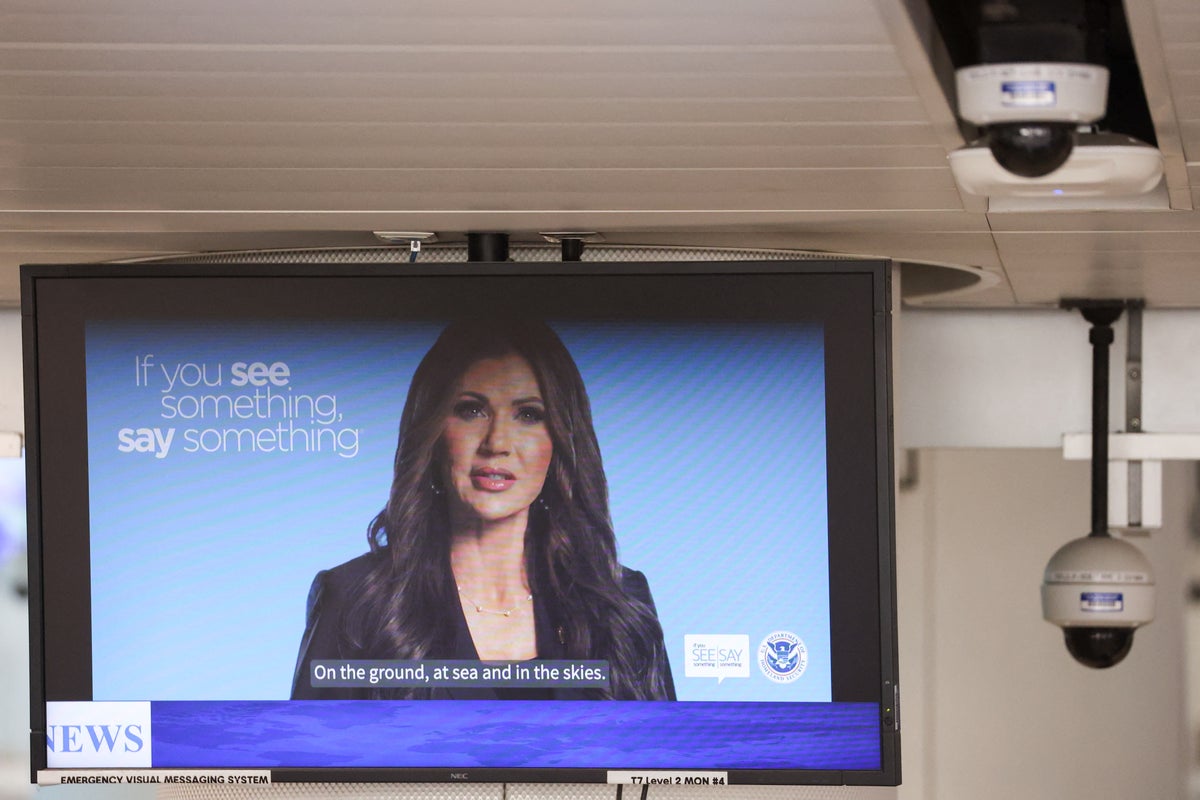
The Department of Homeland Security is moving fast to erase the public footprint of its former leader. If you have walked through an international arrivals terminal or a major U.S. airport checkpoint recently, you might have seen her face on the digital monitors. That is changing right now. The office of the new Homeland Security Secretary, Markwayne Mullin, sent a direct order to Customs and Border Protection. The directive was clear and urgent. Find every video featuring the ousted Kristi Noem at ports of entry and take them down immediately.
This isn't just a routine update of government promotional materials. It's a swift scrub of a highly controversial tenure that ended in a dramatic political ouster. Noem was removed from her post by President Trump following months of mounting backlash over aggressive immigration enforcement tactics and deep friction with local leaders. Now, the department wants her gone from the screens before travelers even get their bags.
Moving fast to clear the screens
The order from Mullin's team didn't come with a polite transition timeline. It came as an immediate demand for compliance. Staffers inside the agency confirmed that the secretary's office explicitly asked whether any media assets featuring Noem were still active across the country's vast network of airports and border crossings. When they found out some loops were still running, the instruction was to pull the plug fast.
For travelers, those video clips were a regular fixture of the security line experience. Some were basic informational public service announcements about Real ID deadlines or agricultural restrictions. Others were far more politically charged. During the height of the federal government shutdown, Noem filmed videos that played at TSA checkpoints openly blaming congressional Democrats for funding lapses and unpaid staff.
That blending of public information and partisan finger-pointing irritated airport administrators across the country. Major hubs in New York, Atlanta, and Texas previously flat-out refused to air the shutdown clips, citing local rules against political advertising and raising serious questions about potential violations of the Hatch Act. Now, the internal purge covers everything. It doesn't matter if the video is a partisan message or a completely harmless explainer about passport renewal. If Noem is in it, it gets deleted.
The chaos that led to the ouster
You can't understand why the agency is working this hard to erase her image without looking at how her time at the top fell apart. Noem's departure wasn't a standard resignation to spend more time with family. She was pushed out in March after her signature enforcement efforts turned into a legal and political nightmare for the administration.
The boiling point happened in places like Illinois. Noem and her hand-picked Customs and Border Protection commander-at-large, Gregory Bovino, spearheaded what they called Operation Midway Blitz. It was supposed to be a show of force in the Chicago area. Instead, it turned into months of open warfare between federal agents and local governments.
Chicago Mayor Brandon Johnson and Illinois Governor JB Pritzker frequently clashed with Noem as reports emerged of indiscriminate detentions, heavy-handed tactics, and chaotic operations in suburban neighborhoods. Federal courts repeatedly stepped in to restrain CBP actions and demand strict accountability structures. When the political damage started tracking back to the White House, the decision was made. Noem was out.
Markwayne Mullin takes the reins
The arrival of Markwayne Mullin, the former Oklahoma Senator, marks a sharp shift in how the department intends to present itself to the public. Mullin inherited an agency under heavy scrutiny and locked in the middle of a historic funding crisis. His first priority seems to be lowering the political temperature, starting with the literal faces of the agency.
A transition of power in a massive federal department always involves some rebranding, but the speed of this digital cleanup suggests a desire to completely distance the current administration from Noem's specific brand of leadership. Leaving her face on monitors at major international gateways sent a confusing message to foreign visitors and domestic travelers alike. It suggested her policies and her standing remained intact. By cutting her out of the rotation, Mullin is signaling that the old playbook has been shelved.
What this means for everyday travelers
If you're flying this week, you probably won't notice the exact moment a file gets deleted from an agency server. What you will notice is a shift away from aggressive public-facing messaging at the checkpoint. The empty airtime on those monitors will likely be filled with standard, non-controversial safety instructions or left blank until new assets can be produced.
Managing the public image of an agency with over 260,000 employees isn't easy, especially when those employees handle everything from airport security to disaster response. The constant churn of political messaging at security lines has long been a source of frustration for regular passengers who just want to get through screening without a lecture on congressional budget battles.
Turning the page at the border
The removal of the videos is the visible symptom of a much larger administrative reset happening behind closed doors. Customs and Border Protection officials are quietly auditing more than just their media libraries. They are evaluating the lingering operational directives from the previous leadership team to avoid further costly court battles and local pushback.
Mullin has a tough road ahead. He has to maintain border security protocols while repairing broken relationships with major metropolitan police departments and state officials who refused to cooperate with his predecessor. Cleaning up the literal monitors at the airport is an easy logistical win, a visual clean slate before the harder policy work begins.
Your next steps for smooth airport travel
While the federal government rearranges its media strategy, your practical focus should stay on navigating the actual airport environment without getting caught in the administrative crossfire.
- Check your Real ID status: Despite the shifting faces at the top of the department, the underlying enforcement deadlines for travel identification remain in place. Don't let the lack of a video reminder cause you to miss the cutoff.
- Monitor airport wait times independently: With agency operations recovering from recent funding gaps, security line lengths can fluctuate wildly. Use independent airport tracking apps rather than relying solely on terminal screens.
- Keep your documents updated: Border crossing requirements and passport processing times are subject to change during leadership transitions. Ensure your paperwork is handled months before an international flight.
The digital screens at the TSA checkpoints will look a little different next time you travel. The partisan blame games and high-profile political faces are being scrubbed away in favor of standard operational compliance. For an agency trying to move past a season of severe political turbulence, turning off the old video loops is the fastest way to pretend it never happened.