Sports rarely stay inside the lines. Sometimes the arena bleeds straight into a massive cultural firestorm.
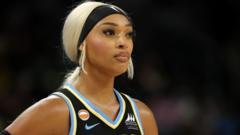
That is exactly what happened when Chicago Sky player DiJonai Carrington found herself ejected during a tense matchup against the Indiana Fever after a hard foul on Sophie Cunningham. What followed wasn't just standard post-game media chatter. It exploded into a digital storm involving a two-word social media post, accusations, a wave of online criticism, and a blunt demand for critics to do their homework.
If you only caught the highlights, you missed the entire context of how modern sports, social commentary, and fierce athletic competition collide in real time.
The Play That Started the Fire
Let's look at what actually happened on the court. During the heat of a fast-break play, Cunningham attempted a layup. Carrington made heavy contact, catching her around the head and neck area.
Referees initially whistled a Flagrant 1 foul. After video review, officials upgraded it to a Flagrant 2, which mandates an immediate ejection.
In basketball, hard fouls happen. Tempers flare. Players contest calls. But the aftermath shifted the narrative entirely away from the box score. Shortly after leaving the court, Carrington took to social media and posted "WHITE PRIVILEGE," explicitly tagging the opposing franchise.
The internet did what the internet does. Backlash arrived instantly. Commentators, fans, and analysts rushed to pick sides, turning a standard basketball penalty into a proxy war over race, sportsmanship, and player conduct.
Why Critics Got It Wrong About the Backlash
The immediate wave of condemnation missed a crucial point. Athletes today operate under intense public scrutiny while navigating real-world social dynamics. When critics demanded an apology or claimed the social media post came out of nowhere, they ignored the long-standing tensions that frequently bubble up in professional women's basketball.
Carrington later pointed frustrated critics toward doing proper research. She argued that surface-level reactions ignore systemic biases and the historical treatment of players of color within sports media spaces.
Cunningham herself addressed the physical altercation downplaying the racial element, noting she believed the play was unnecessary but treating it as a competitive flashpoint. Meanwhile, coaches tried to keep the peace. Chicago Sky coach Tyler Marsh admitted he was unaware of the post during the game and noted the team would handle internal matters privately. Fever coach Stephanie White acknowledged the severity of the contact while dismissing claims of malicious intent.
Yet, public opinion refused to cool down.
The Real Issue Beneath the Surface
Why does this specific incident matter beyond a single WNBA game? Because it highlights a growing chasm in sports media consumption.
- Fans consume sports through hyper-partisan lenses.
- Players use direct-to-consumer platforms like social media to bypass traditional PR filters.
- League offices face mounting pressure to police speech just as strictly as physical play.
When a player calls out a perceived double standard using loaded terminology, it forces a uncomfortable conversation. Is the criticism directed at Carrington fueled by objective analysis of a dangerous foul, or does it stem from an underlying discomfort with athletes speaking their minds?
The WNBA has experienced exponential growth in viewership, media deals, and cultural relevance. With that boom comes a harsher spotlight. Every hard foul, every referee review, and every single keystroke gets dissected by millions of viewers who treat the league as a living soap opera.
Where the League Goes From Here
The fallout doesn't end with a simple fine or a temporary social media blackout. League executives face a delicate balancing act. Suppress player expression, and you risk alienating the roster. Let everything slide, and you invite chaos into the brand ecosystem.
Carrington's stance forces everyone involved—from casual viewers to veteran journalists—to look past the initial highlight reel clip. Whether you agree with her choice of words or side with the critics demanding accountability, the underlying friction isn't going away anytime soon.
Stop looking at this as an isolated locker room feud. It is a preview of how professional sports will operate moving forward. Athletes refuse to stick to sports, and the audience must either keep up with the nuance or get left behind in the noise.